Changements pour le Mondial 2026 : IFAB modifie le VAR, sévit contre les remplacements et les temps morts
Source: nbcsports.brightspotcdn.com
La Coupe du Monde 2026 verra des règles radicales : carton rouge pour couvrir la bouche, fin des pauses tactiques, gardiens limités à 8 secondes, VAR révisé, et sortie des remplacés par la ligne de touche la plus proche.
The 2026 World Cup, set to kick off on June 11 across the United States, Mexico, and Canada, will not only be the largest in history but also a laboratory for a radical overhaul of football's laws
The International Football Association Board
(IFAB) has approved a sweeping set of changes, explicitly designed to tackle discrimination, eliminate time-wasting, and enhance the match tempo for players and fans. As FIFA's Chief Refereeing Officer Pierluigi Collina confirmed, “The FIFA World Cup 2026 will be the first major tournament to use them,” setting the stage for a tournament where the rulebook could prove as decisive as any star player's performance.
The Crackdown on "Mouth Covering" and On-Field Conduct
One of the most dramatic and immediate changes is a zero-tolerance policy on players covering their mouths, a gesture that has become a common sight in elite-level confrontations. Under the new amendment, any player who covers their mouth with a hand, arm, or shirt during a confrontational situation will receive an automatic red card. This rule, highlighted in sources including Reuters via HuffPost, stems from a desire to prevent gamesmanship and clandestine verbal jabs that can inflame tensions. According to FIFA's own explanation, this is part of a broader package aiming to “tackle discrimination,” suggesting that the opaque nature of such exchanges has no place in the modern game. The ban extends beyond mouth-covering: Nassr's Cristiano Ronaldo, whose provocative celebrations have become a trademark, will need to adjust, as the act of cupping one's ears toward opponents or fans is now a yellow-card offense. Similarly, players who scale perimeter fences to celebrate with supporters will be booked, marking a significant restriction on the emotional, physical engagement between players and the crowd.
England's Past Conduct as a Reference Point
The regulations are not merely theoretical. Sports Illustrated reported that FIFA's refereeing chief specifically cited England as an example of now-forbidden conduct, a nod to incidents where players have been seen covering their mouths during heated exchanges with opponents or officials. This direct reference clarifies the IFAB's intent: the World Cup's biggest matches, often decided by fine margins of emotion and discipline, will be policed with an unprecedented level of scrutiny on player interactions. The consequence for teams like England, Argentina, or Brazil, whose players frequently engage in intense psychological battles, is a tactical shift where verbal jousting must be visible and, implicitly, less provocative.
A Radical Overhaul of VAR and Match Tempo
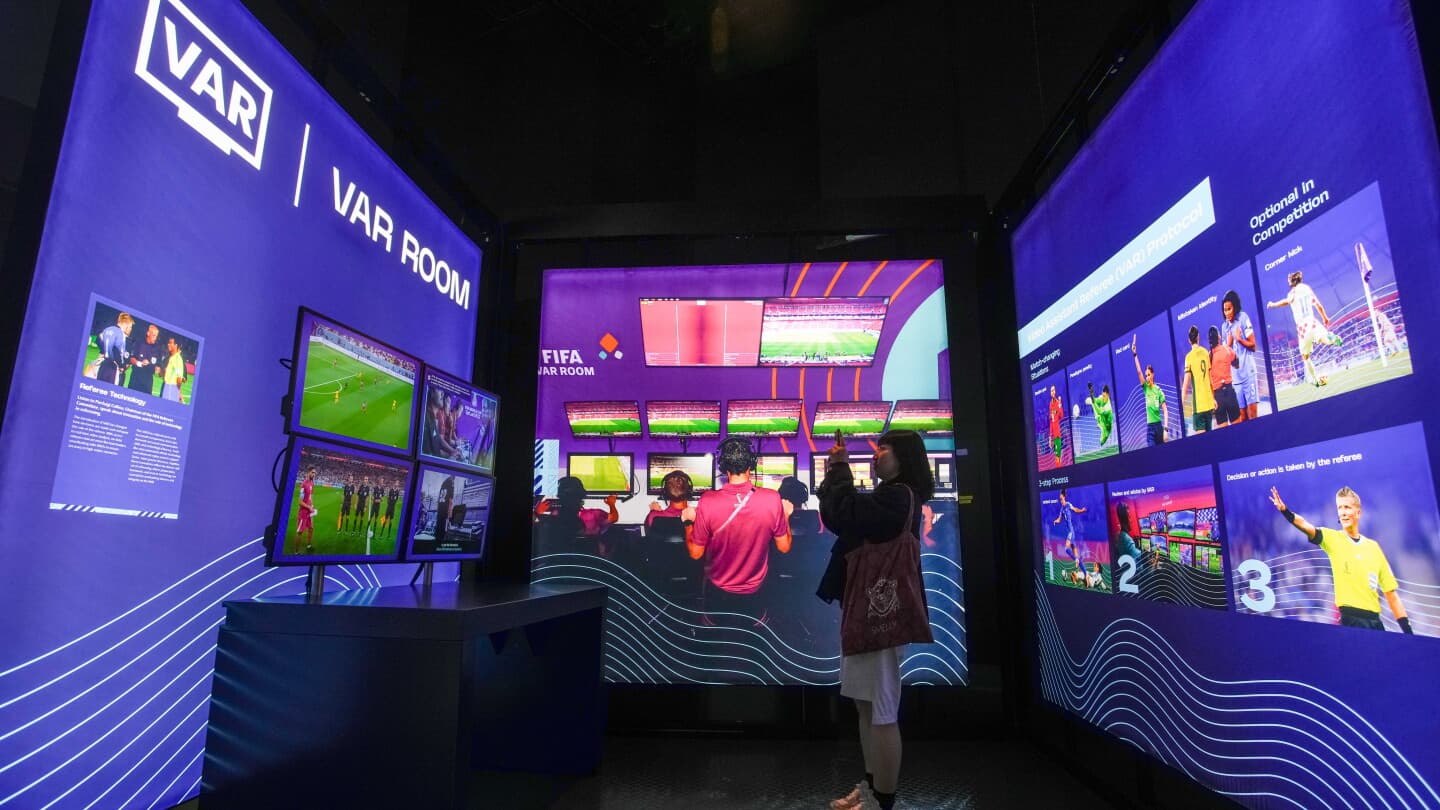
The IFAB is not just targeting player behavior; it is fundamentally altering the relationship between the on-field referee and technology. In a move likely to be met with both relief and intense debate, referees will now be required to review pitchside monitors only following recommendations from the Video Assistant Referee. This ends the practice of match officials undertaking lengthy, self-initiated reviews that have contributed to the sort of excruciating delays that John Textor's viral “three-minute wait” protest at the Premier League shareholders' meeting highlighted, as noted by Sky Sports. The new protocol aims to shorten stoppages and return authority to the central referee, who will now explain the final VAR decision and any resulting restart for stadium and broadcast audiences via a public address system. This transparency measure is a direct attempt to quell fan frustration and confusion.
The End of “Cooling Breaks” and Six-Second Rule
Beyond VAR, the IFAB is attacking time-wasting from multiple angles. The much-criticized mandatory “cooling breaks,” essentially tactical timeouts, are being abolished entirely, as reported by Sports Illustrated. International matches will see a tightened 15-minute halftime window, down from a more lax interpretation, and a stricter enforcement of the six-second rule for goalkeepers. From this World Cup onward, a goalkeeper holding the ball for more than eight seconds will concede a corner kick. This specific numerical shift — from a vague, rarely-enforced guideline to a concrete, eight-second limit with a severe sporting penalty — codified by IFAB after trials, poses an immediate challenge to goalkeepers like Argentina's Emiliano Martínez, whose deliberate, time-consuming style and psychological gamesmanship during penalty shootouts and dead-ball situations will need a drastic retooling. The threat of conceding a corner for a moment's hesitation could drastically increase late-game set-piece pressure on dominant teams.
The Substitute Shift and Match Control
A further layer of tempo management is being bolted onto the substitution process. Confirming a shift many leagues have already adopted, IFAB will now require that a substituted player must leave the field at the nearest boundary line, rather than trotting across the pitch to the technical area. This directly targets a classic time-wasting tactic, as noted across multiple sources, and will be enforced rigorously, with offenders liable for a yellow card. The rule prevents a player from killing precious seconds by slowly crossing the entire playing surface, simultaneously forcing tactical substitutions to be quicker and less disruptive to the overall flow. For tournament football, where managing the final ten minutes of a knockout game is a science, coaches will lose a reliable tool for breaking the opponent's rhythm.
AI Perspective and Tournament Implications
These changes, collectively, will punish leagues and teams that have historically relied on the dark arts. England, explicitly named by FIFA according to SI, must urgently drill discipline into a squad that has occasionally cloaked confrontation. Argentina, the reigning champions, face a dual crisis: Emiliano Martínez's goalkeeping routine is now a high-wire act under the eight-second rule, with a single lapse gifting a corner in a tied knockout game, while the squad's emotionally charged on-field persona must avoid the new red-card traps around mouth-covering and celebrations. Brazil, another emotional powerhouse, must adapt similarly. The tactical timeout in the form of a water break is gone, eliminating a crucial coaching tool for mid-half resets, which will disproportionately affect teams from hotter climates or those heavily reliant on structured pressing triggers that rely on rest periods. Teams like Spain and Germany, with their emphasis on continuous positional play and ball circulation, may benefit from the stricter time penalties and increased effective playing time. The VAR reforms place a premium on the central referee's communication skills and the VAR's decisiveness; any technological hesitation that forces a mandatory review could still create flashpoints, but the expected result is fewer but clearer interventions. The 2026 World Cup will not simply crown the best footballing side but the one that most swiftly internalizes a rulebook designed to expose the old tricks.
Sources et lectures complémentaires
- https://www.skysports.com/football/news/12098/13549645/world-cup-ifab-confirm-new-var-powers-10-second-substitutions-and-tactical-timeout-ban-in-major-rule-changes
- https://www.huffpost.com/entry/2026-world-cup-new-laws_n_6a1d5c7ee4b0ba317300c19a
- https://www.si.com/soccer/2026-world-cup-introduce-drastic-rule-changes
- https://www.nbcsports.com/soccer/news/rule-changes-confirmed-for-2026-world-cup-as-ifab-alters-var-cracks-down-on-subs-and-timeouts