World Cup 2026: Palestinian FA Chief Stranded as US Visas Spark Iran Row
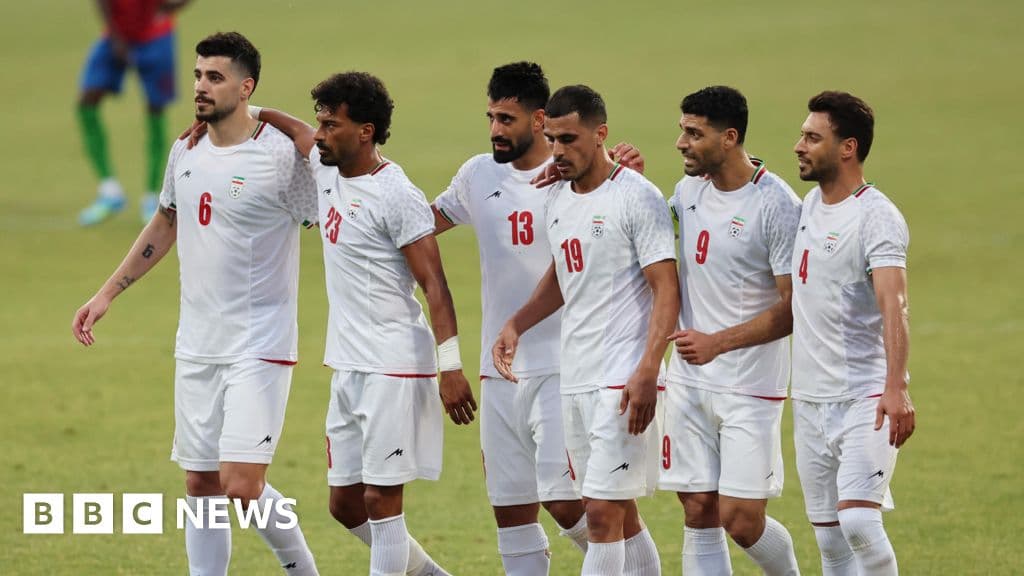
Source: ichef.bbci.co.uk
Jibril Rajoub, head of the Palestinian Football Association, is stranded in Mexico City without a US visa for the 2026 World Cup. Iran's team also faced last-minute visa clearance, sparking accusations of US obstruction.
The Unfolding Visa Crisis
The 2026 FIFA World Cup, co-hosted by the United States, Canada, and Mexico, is facing an escalating administrative and political crisis before a single ball has been kicked. The tournament, designed as a celebration of global unity, is instead becoming a focal point for geopolitical tension as key football officials and federations report significant hurdles in securing US entry visas. According to The Independent, Jibril Rajoub, the head of the Palestinian Football Association (PFA), is currently stranded in Mexico City awaiting a visa. This revelation coincides with a deepening row between the United States and Iran, where, as reported by CNN and BBC Sport, the national team itself has faced what Tehran describes as deliberate "obstruction" by Washington.
The situation highlights a stark disconnect between FIFA’s guarantees of access for accredited personnel and the realities of US immigration policy under the shadow of active conflict. While Iran’s players appear to have finally secured last-minute clearance, the allegations of revoked supporter ticket allocations and the high-profile delay for a football federation president raise fundamental questions about the host nation’s commitment to accommodating the full spectrum of qualified participants.
Political Hurdles for Administrators
Rajoub's Mexican Limbo
Jibril Rajoub's case is particularly delicate given its diplomatic weight. The Independent reports that the PFA chief attended the tournament’s opening match in Mexico but has not been granted permission to enter the United States for related events, despite possessing official accreditation. The report notes that Mr. Rajoub is not an isolated case; he is among several international football officials who have been denied US visas or are still awaiting approval. This bottleneck for administrators undermines the logistical and ceremonial fabric of the tournament, suggesting that even non-playing members of delegations are subject to strict political vetting that can override their FIFA credentials.
The Iranian Struggle at the Border
The most acute standoff involves Iran. CNN details the arrival of the Iranian squad in Tijuana, Mexico, highlighting the geographical proximity to the US border while underlining the political distance between the two nations, which remain officially at war. Mehdi Taj, president of Iran’s football federation, voiced sharp criticism, stating, “What the United States is doing reflects malice and a lack of equality among teams.” BBC Sport confirmed that US officials eventually granted the visas, but Iran indicated this clearance came perilously close to matchday—"only one day before the match," according to Taj. This late approval forced Iran to relocate its training base from Tucson, Arizona, to Mexico earlier in late May, disrupting their preparation for the opening fixture against New Zealand in Los Angeles.
Public Access and Revolutionary Guard Vetting
The bureaucratic friction extends beyond the team bus to the stands. A report distributed by Al Jazeera via Yahoo Sports claims that Iran’s football federation has publicly accused the United States of revoking the ticket allocation specifically reserved for Iranian supporters. The federation accused the co-host of “obstructing the presence of Iranian supporters at the stadiums,” a charge that, if true, would represent a significant escalation in the politicization of spectator access, effectively penalizing a fanbase for the actions of its government.
On the security front, the US administration has not hidden its rigorous vetting criteria. A US official informed CNN and BBC Sport that Washington “will not allow the Iranian team to abuse this system to sneak terrorists into the United States under false pretenses.” US Secretary of State Marco Rubio explicitly tied the clearance to the vetting of individuals linked to the Islamic Revolutionary Guard Corps (IRGC), a powerful military branch. While specifics regarding player affiliations were not detailed, the implication is clear: visas are being issued on a conditional, highly scrutinized basis, treating football delegations as potential security threats rather than sporting ambassadors.
The Bigger Picture
The cumulative effect of these visa disputes undermines the fundamental premise of a co-hosted World Cup and damages the credibility of the US as a host nation. With the Palestinian football chief stuck in Mexico, the Iranian team barely clearing customs, and Egyptian-like plagues of bureaucracy hitting multiple federations, the tournament is being played against a backdrop of diplomatic warfare. For the Iran team, competing in a nation they are at war with, the psychological impact of being forced to camp in Mexico until the eleventh hour—and the potential absence of their fans—cannot be overstated. It directly hampers their competitive integrity heading into the tournament opener against New Zealand on June 11.
Although Iran’s squad, featuring stars like Ehsan Hajsafi, eventually received their visas, the public narrative of US "obstructionism" serves as a propaganda tool for Tehran and damages the soft-power projection the US typically seeks from hosting global events. The fact that administrators like Rajoub remain in limbo suggests that the issue is not merely about player security but about broader political signaling. Unless these administrative blocks are resolved immediately, the 2026 World Cup risks being remembered not for last-minute winners, but for a last-minute, paperwork-driven catastrophe that excluded key stakeholders and muted fanbases, setting a dangerous precedent for future tournaments hosted in politically tense environments.
Sources & Further Reading
- https://www.bbc.com/news/articles/cy8286nqz87o
- https://sports.yahoo.com/articles/iran-says-us-revoked-world-085820505.html
- https://www.cnn.com/2026/06/07/sport/iran-soccer-team-world-cup-us-obstruction-claim-intl
- https://www.independent.co.uk/sport/football/world-cup/world-cup-2026-usa-visa-jibril-rajoub-palestine-b2994653.html