World Cup 2026: FIFA to Ban Iran's Pre-Revolutionary Lion and Sun Flag
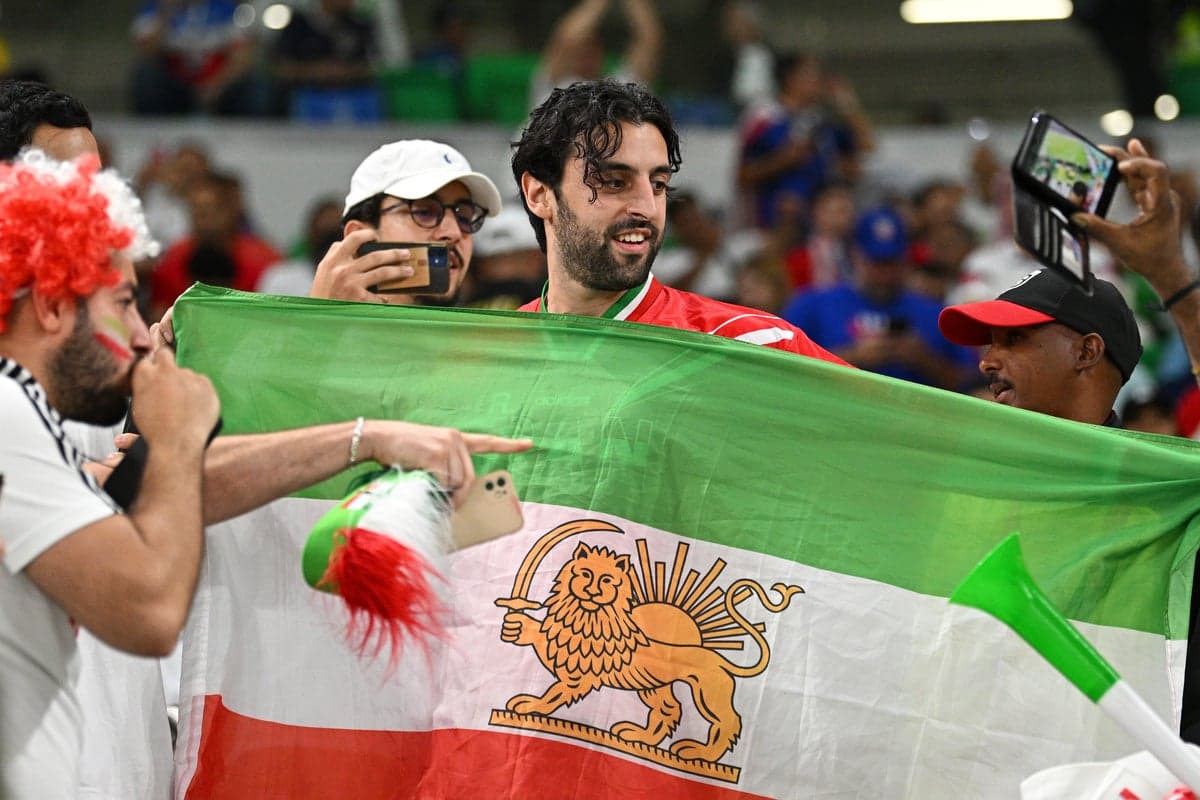
Source: static.independent.co.uk
FIFA will enforce a ban on the pre-revolutionary Iranian flag (Lion and Sun) at the 2026 World Cup in the US, Canada, and Mexico, repeating the same policy from the 2022 tournament.
As the 2026 FIFA World Cup draws near, a familiar political flashpoint is re-emerging from the stands of Qatar and landing squarely in stadiums across the United States, Canada, and Mexico. FIFA is moving decisively to ban the display of Iran’s pre-revolutionary flag—the Lion and Sun motif—during the tournament. This prohibition, grounded in the governing body’s stadium code of conduct against political and offensive paraphernalia, sets the stage for a tense confrontation between global football regulations, diaspora identity, and the Islamic Republic’s official representation. According to The Independent, the decision mirrors the same ban enforced at the 2022 World Cup, highlighting FIFA’s consistent strategy to insulate its tournaments from Iran’s deep internal political schisms.
The Symbolism and History of the Lion and Sun
A Flag Split by Revolution
The pre-revolutionary flag, featuring its distinctive red, white, and green bands with a lion holding a sword before a rising sun, is far more than a vintage design. It represents the legacy of Iran’s monarchy and a centuries-old national identity that was replaced after the 1979 Islamic Revolution. Today, as detailed by Kayhan Life, the flag has been widely adopted by protesters and the Iranian diaspora as a symbol of resistance against the current regime. Its presence at a global event like the World Cup is thus inherently charged, turning a piece of fabric into a statement of opposition that directly challenges the legitimacy of the team representing the Islamic Republic on the pitch.
The Lion and Sun in the Modern Protest
During the 2022 World Cup in Qatar, the flag became a visible flashpoint when Iranian fans, including supporters of the then-ongoing “Woman, Life, Freedom” protests, brought it into stadiums. The Independent notes that the flag was used “as a symbol of protest and standing against the current regime,” creating an awkward dynamic where the official Iranian team and its minders were confronted by displays of solidarity with a different Iran. This historical context is crucial for 2026, as the protest movement, while suppressed domestically, remains a potent force online and within the large Iranian-American community in the host nation, the United States.
FIFA’s Regulatory Logic and Precedent
Grounding in the Stadium Code of Conduct
FIFA’s justification for the ban is procedural and unwavering. Kayhan Life reports that the decision is specifically grounded in the organization’s stadium code of conduct, which prohibits “banners, flags, apparel, and other paraphernalia that are of a political, offensive, and/or discriminatory nature.” This catch-all regulation gives FIFA broad authority to suppress displays that could disrupt matches or draw the tournament into geopolitical disputes. The Reddit discussion on r/sports further highlighted the link to a report in The Athletic, confirming that FIFA views the Lion and Sun flag squarely within this banned category, regardless of its historical or emotional significance to those displaying it.
The Qatar 2022 Precedent
The Independent emphasizes that the ruling is not a new development but a continuation from the “last World Cup in Qatar.” This creates a powerful precedent. In Qatar, the ban was inconsistently enforced, with flares of the prohibited flag appearing in crowds and on social media despite official restrictions. For 2026, this history suggests that while FIFA can mandate the ban, the practicality of preventing a small, easily concealed flag from entering a 60,000-seat stadium in a country with robust free speech protections, like the United States, is a completely different operational challenge. The enforcement in a North American context, governed by different legal norms on expression outside the venue itself, will test the limits of FIFA’s authority.
The Unique Pressures of a United-States-Based Tournament
Geopolitics and the Host Nation’s Iranian Diaspora
The choice of the United States as the primary host catapults this issue from a simmering dispute into a central political drama. The largest community of Iranians outside of Iran resides in Southern California, with significant populations in the host cities of Los Angeles. The New York Times, via the Reddit-submitted The Athletic report, indicates the decision is already stirring debate, as the vast and politically active Iranian diaspora sees the World Cup as its most significant nearby stage in a generation. For these fans, the official Islamic Republic flag represents the regime they oppose, making the banned Lion and Sun their authentic banner. Stadium security will now be tasked with policing a symbol of identity for potentially tens of thousands of ticket-holders near venues like SoFi Stadium.
Freedom of Speech vs. FIFA’s Private Event Rules
Unlike Qatar, the United States operates under the First Amendment, creating a legally complex environment outside stadium gates. While FIFA can enforce its private event rules inside venues, as the r/sports community discussed, the adjacent Fan Fests, public streets, and surrounding areas become zones of potential legal conflict. This sets up a scenario where the prohibited flag could be flown everywhere except inside the stadium, amplifying its visibility and the symbolic crackdown at checkpoints. The Independent’s coverage implicitly raises this tension: a ban designed to depoliticize the event may end up drawing unprecedented attention to the suppressed flag through the very act of prohibiting it in one of the world’s most symbolically charged locations.
AI Perspective / Future Outlook
The prohibition is almost certain to hold officially, but will fail comprehensively in practice, creating a messy and highly publicized cat-and-mouse game. Based on the sources and the Qatar precedent, expect Iranian-American fans in Los Angeles to attempt to smuggle the Lion and Sun flag into Iran’s group stage matches, likely those played at SoFi Stadium. The enforcement will be less draconian than in Qatar; U.S. stadium staff are not political police, and ejecting a grandmother waving a historical flag would be a public relations disaster. Kayhan Life’s report on the apparel ban hints at the next frontier: fans will pivot from flags to clothing with the emblem, which is harder to confiscate en masse. For Team Melli, Iran’s national squad led by stars like Mehdi Taremi, the ban is a double-edged sword. It relieves them of immediate in-stadium confrontation with the symbol of the regime’s overthrow, but it also paints them as playing under the protection of a political edict, alienating a vast diaspora whose support at a U.S. World Cup could have been a rare unifying force. Ultimately, the Lion and Sun will be the most famous flag never officially displayed, achieving a level of global awareness that its presence in a crowd could never buy.
Sources & Further Reading
- https://www.facebook.com/KayhanLife/posts/may-20-fifa-has-moved-to-prohibit-the-display-of-irans-pre-revolutionary-lion-an/1344132547773773/
- https://www.reddit.com/r/sports/comments/1thu1mi/fifa_will_again_prohibit_the_prerevolutionary/
- https://www.nytimes.com/athletic/7288376/2026/05/19/world-cup-fifa-iran-flag/
- https://www.independent.co.uk/sport/football/iran-flag-world-cup-united-states-2026-b2981078.html