World Cup 2026: Bart Verbruggen on Why Netherlands Will Win It All
Source: static.independent.co.uk
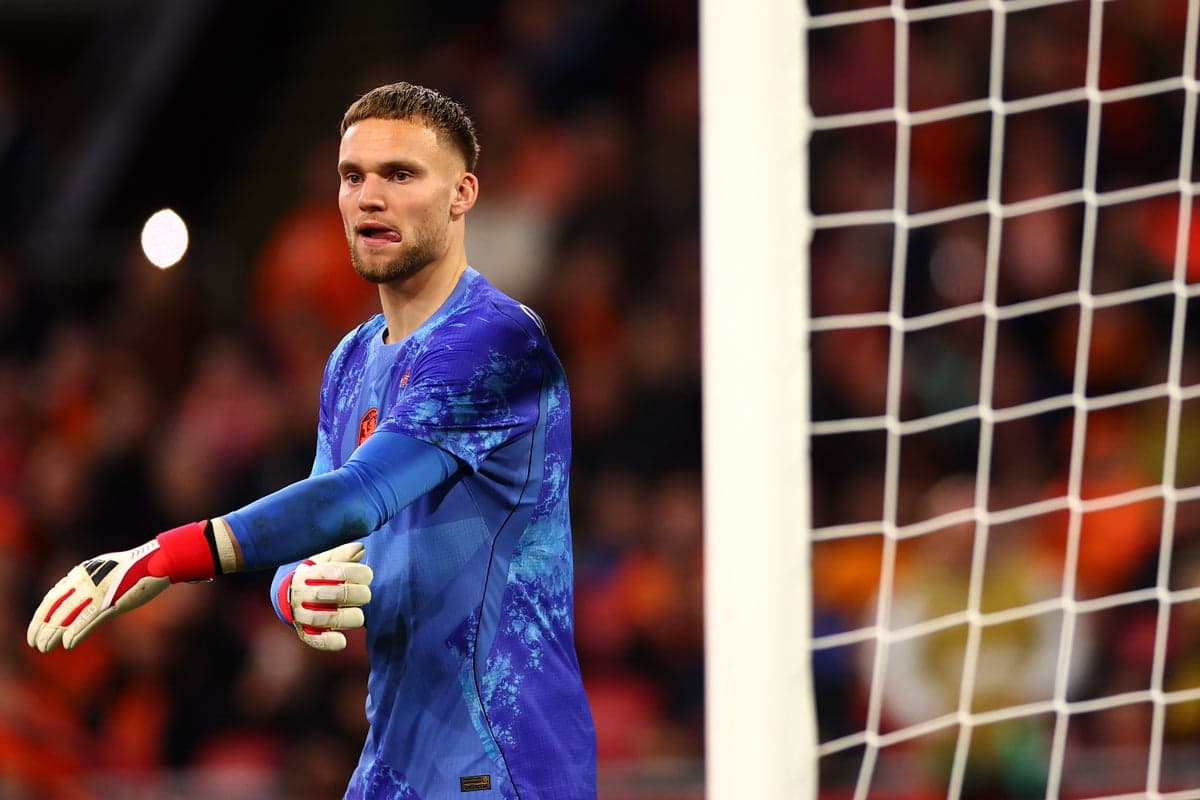
Netherlands goalkeeper Bart Verbruggen says the team's defence is among the best in the world as they target the 2026 World Cup, with a mathematical model predicting victory over Portugal in the final.
The Netherlands embark on their 2026 World Cup campaign carrying the heavy burden of history—three runners-up finishes and a legacy of beautiful football that has never quite delivered the ultimate prize. But for their 23-year-old goalkeeper Bart Verbruggen, the narrative is shifting from glorious failure to genuine title contention. "Our defence is one of the best in the world," the Brighton No. 1 declared in an exclusive interview with The Independent, setting a confident tone for a squad that blends a world-class backline with the swagger of a new generation. It is a belief echoed not just within the camp, but by the cold, hard logic of statistical models. German mathematician Joachim Klement, whose algorithm has correctly predicted the last three World Cup winners, has tipped the Netherlands to finally break their duck in North America, forecasting a triumph over Portugal in the final.
The Verbruggen Vanguard: A New Dutch Identity
Verbruggen’s emergence as a self-assured leader between the posts marks a subtle but crucial evolution for the Oranje. At just 23, he represents a clean break from the nerve-shredding penalty shootout roulette of the Louis van Gaal era, where giant keeper Tim Krul was famously—and successfully—substituted on specifically for spot-kicks. Verbruggen namechecks both Johan Cruyff and Tim Krul as influences, according to The Independent, an intriguing duality that captures the modern Dutch footballing psyche: the philosophical purity of Total Football fused with a pragmatic, almost meticulous preparation for every eventuality. “The other side [of the game] is really detailed, and I think that’s what Krul brought,” Verbruggen is quoted as saying, signaling that while the Dutch may still dream in Cruyffian ideals, they intend to win by any means necessary.
A Fortress to Build Dreams On
Central to the Netherlands’ belief is a defensive structure that ranks among the most formidable in international football. Verbruggen’s assessment, reported by The Independent, is not mere bravado; it forms the mathematical backbone of Klement’s champion algorithm, which factors in variables like world ranking and societal football status. The ESPN report details how the statistical model projects the Dutch eliminating Spain in a semifinal—a poetic exorcism of their 2010 final heartbreak, a moment recently immortalized as a top-ten World Cup memory by FOX Sports for Andrés Iniesta’s extra-time winner. To ultimately win, the Dutch will first need their defense to navigate a Group F that Sky Sports outlines as containing Japan, Graham Potter’s tactically disciplined Sweden, and a potentially tricky Tunisia. The path from Arlington to the final is fraught with tests that will immediately validate Verbruggen’s claims.
Star Players in Doubt?
While the defensive unit inspires confidence, the physical condition of key contributors in a grueling pre-tournament schedule remains the perennial anxiety for any contender. Sources have not flagged specific immediate injury crises for the Netherlands comparable to the pressure on Brazil’s Vinícius Júnior highlighted in FOX Sports’ pre-tournament coverage, yet the Dutch must manage their squad carefully across their group stage venues in Houston and Kansas City. The depth behind their first-choice defenders will be critical, as a single setback could destabilize the impregnable image Verbruggen projects.
The Algorithmic Prophecy and Its Real-World Hurdles
The ESPN story on Klement’s prediction casts a fascinating, almost mystical, sheen over the Dutch campaign. By correctly predicting Germany in 2014, France in 2018, and Argentina in 2022, the model has earned its credibility, even as Klement himself warns against taking it too seriously. The model pins the Netherlands to beat Portugal in the title match, with England falling to Portugal in the other semifinal. However, the mathematics collide with the messy reality of tournament football in a 48-team format. Sky Sports notes the complexity: with the top two from each of the 12 groups plus the eight best third-placed teams advancing, a slow start against Japan in their opener is not fatal, but it would crack the aura of inevitability that Verbruggen is trying to construct. The knockouts then become a relentless series of high-stakes contests where a single moment—like Iniesta’s in 2010—can erase four years of planning.
AI Perspective / Future Outlook
Looking ahead, the Netherlands’ genuine title challenge hinges less on the overarching Cruyffian philosophy and more on the granular details Verbruggen associates with Krul. The actual tournament implications suggested by the Sky Sports group guide point to a probable Round of 32 clash where depth will be instantly tested. If the Dutch defense is as impermeable as advertised, they could realistically reach the quarterfinals without needing to unlock a top gear. The semifinal forecast against Spain, according to Klement’s model reported by ESPN, would be the tournament’s true benchmark. For replacements and tactical flexibility, coach Ronald Koeman will need Brighton’s Verbruggen to maintain his composure in possession, turning defense into attack. The model’s final against Portugal—a rematch of the 2006 ’Battle of Nuremberg’—would be the ultimate stage for this generation to step out of the shadow of 1974, 1978, and 2010. The algorithm has spoken; the process is now in the hands of Verbruggen and his world-class defense.
Sources & Further Reading
- https://www.skysports.com/football/news/12098/13543097/world-cup-2026-group-f-guide-fixtures-schedule-standings-and-odds-for-netherlands-japan-sweden-and-tunisia
- https://www.espn.com/soccer/story/_/id/48964113/fifa-world-cup-predictions
- https://www.foxsports.com/watch-vertical/fmc-zu4x6dj2x31znrqk
- https://www.independent.co.uk/sport/football/bart-verbruggen-netherlands-world-cup-2026-goalkeeper-b2988900.html