World Cup 2026: $80bn Spectacle and Portugal's Dark Horse Bid
Source: i.guim.co.uk
The 2026 FIFA World Cup, spanning 39 days across 16 cities and 48 teams, is projected to generate $80 billion. The expanded format paves the way for dark horses like Portugal, led by a 41-year-old Cristiano Ronaldo, to challenge the established order.
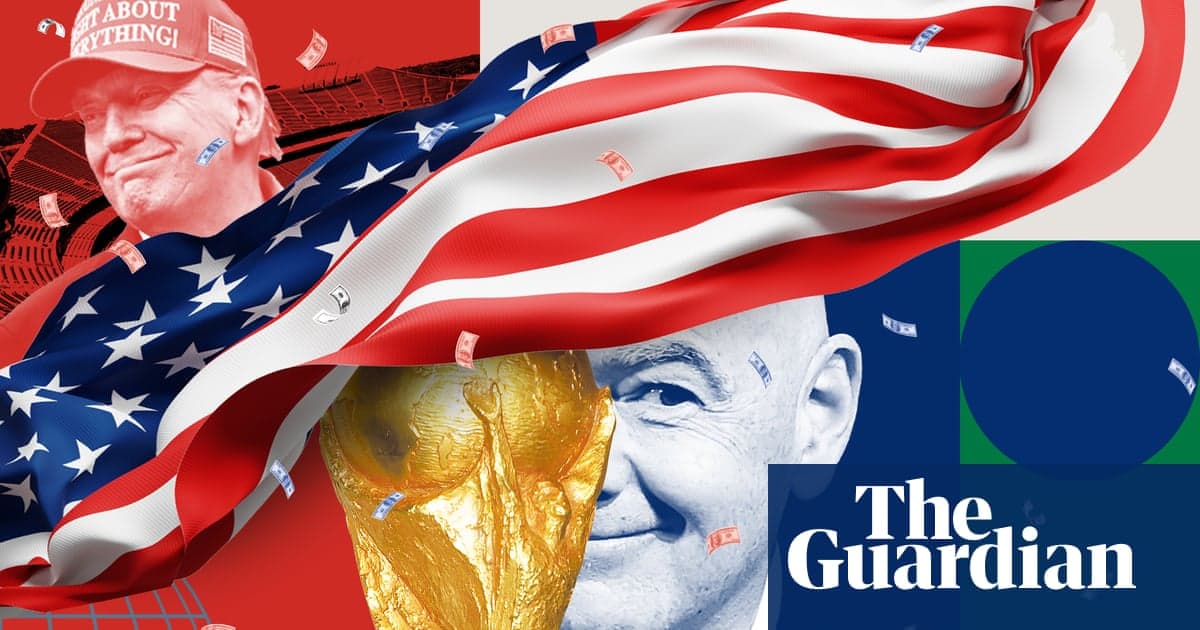
The 2026 FIFA World Cup is not merely a football tournament; it is a cultural and economic supernova set to detonate across North America. According to The Guardian, the event will unspool over 39 days, 16 host cities, and 104 matches, spanning a 6,000-mile arc from Mexico City to Vancouver to Boston. With an estimated global economic output of $80 billion—roughly the GDP of Belarus—this is, as the publication notes, “the largest event, period.” Yet beneath the staggering scale and the political theatre of a tournament staged in Donald Trump’s America and overseen by FIFA president Gianni Infantino, a compelling sporting narrative is taking shape: the rise of dark horses ready to disrupt the established order. As Telecom Asia reports, the expansion to 48 teams and a new knockout format have created fertile ground for outsiders, with Portugal emerging as the most dangerous of them all.
The Grandest Stage Ever Conceived
The sheer magnitude of the 2026 World Cup defies easy comparison. The Guardian describes it as “the end product of a century of powerplay and hyper-grift,” a six-week sprint through a politically charged United States. The tournament kicks off on 11 June at Mexico City’s iconic Azteca Stadium, a venue steeped in World Cup lore, before fanning out across three nations. The logistics are mind-boggling: 48 teams, up from 32, will compete in a format that includes a round of 32 for the first time, meaning more matches and more opportunities for chaos. The economic projections are equally dizzying. That $80 billion figure encompasses everything from infrastructure spending to tourism and broadcasting rights, cementing the World Cup’s status as a geopolitical and commercial juggernaut. The Guardian’s analysis frames the event as a mirror to our times—a spectacle where sport, money, and power collide, with Infantino cast as a “warrior-poet Swiss lawyer” operating beyond conventional governance. This is not just a tournament; it is a statement of global ambition.
Dark Horses Poised to Disrupt the Narrative
While traditional powerhouses like Spain, France, England, Brazil, and Argentina dominate the pre-tournament conversation, the new format inherently favors the unexpected. Telecom Asia’s pre-tournament betting analysis identifies five hidden favourites, but none are as compelling as Portugal. The “European Brazilians” arrive with perhaps their most balanced squad in a generation. At 41, Cristiano Ronaldo is preparing for his sixth and final World Cup, a narrative arc that alone commands attention. But he is far from a lone talisman. The supporting cast is formidable: Bruno Fernandes pulls the creative strings, while João Félix, Rafael Leão, and Gonçalo Ramos provide pace and cutting edge in attack. In midfield, Vitinha and Joao Neves—fresh from Champions League triumphs—offer control and dynamism. Defensively, Rúben Dias and Gonçalo Inácio form a rock-solid partnership. Drawn in Group K alongside Colombia, DR Congo, and Uzbekistan, Portugal are expected to top the group and then leverage their experience in the knockout rounds. Telecom Asia lists their outright odds at 12.00, a reflection of both their potential and the depth of the field. The message is clear: ignore Portugal at your peril.
The Ronaldo Factor and Squad Depth
Ronaldo’s presence transcends mere statistics. His longevity and relentless drive could galvanize a squad that no longer relies solely on his goals. The real strength lies in the collective: Fernandes’ vision, Leão’s explosiveness, and the tactical flexibility offered by Ramos as a central striker. Should Ronaldo’s minutes need managing, Ramos has already proven on the biggest stages that he can deliver. This depth, combined with a defense anchored by Dias, gives Portugal a resilience that previous iterations lacked. The 2016 European champions know how to navigate knockout football, and the expanded World Cup format—with its potential for third-place group finishers to advance—reduces the margin for early elimination, further aiding a team that can grow into the tournament.
The American Political Theatre
No discussion of this World Cup is complete without acknowledging its political backdrop. The Guardian paints a vivid picture of a tournament unfolding in “Trump’s America,” a nation where the sport has long been a cultural import rather than a domestic religion. The involvement of Infantino, a figure who has courted controversy and consolidated power, adds a layer of intrigue. The tournament’s opening ceremony and the presence of world leaders will inevitably intertwine sport with diplomacy and protest. The $80 billion economic output is not just a number; it represents a massive transfer of wealth and influence, with host cities from Kansas City to Atlanta vying for global attention. This is football as soft power, a six-week showcase that will test America’s ability to host a truly global event amid domestic political divisions. The spectacle, as The Guardian suggests, is impossible to ignore—but it is also impossible to separate from the forces that shaped it.
AI Perspective: The Convergence of Spectacle and Surprise
Looking ahead, the 2026 World Cup is poised to deliver a unique blend of overwhelming scale and genuine sporting unpredictability. The data from Telecom Asia suggests that Portugal, with their 12.00 odds, represent the most credible threat to the established hierarchy. Their path to the latter stages is plausible: winning Group K would likely set up a round-of-32 clash against a third-placed team, followed by a potential meeting with a heavyweight in the quarter-finals. If Ronaldo can summon one last vintage campaign and the midfield duo of Vitinha and Neves control games, Portugal could realistically reach the semi-finals or beyond. The key player replacement scenario is already clear: Gonçalo Ramos is the heir apparent to lead the line, while Bruno Fernandes will shoulder the creative burden. Defensively, Rúben Dias’ leadership will be critical in high-pressure moments. The tournament’s expanded format means that a dark horse like Portugal need not be perfect in the group stage; they simply need to peak at the right time. The Guardian’s portrayal of a $80 billion spectacle may dominate headlines, but the true legacy of 2026 could be the crowning of an unexpected champion, proving that even in an era of super-sized commercialism, the game’s capacity for romance endures.
Sources & Further Reading
- https://www.theguardian.com/football/ng-interactive/2026/jun/06/power-and-glory-world-cup-promises-a-spectacle-impossible-to-ignore
- https://www.npr.org/2026/06/04/nx-s1-5845050/the-world-cup-was-supposed-to-bring-world-peace
- https://www.telecomasia.net/blog/world-cup-2026-dark-horses-betting-tips/