Why Cristiano Ronaldo Learned Portugal's Bold 2026 World Cup Travel Plan: Martinez Reveals Strategy
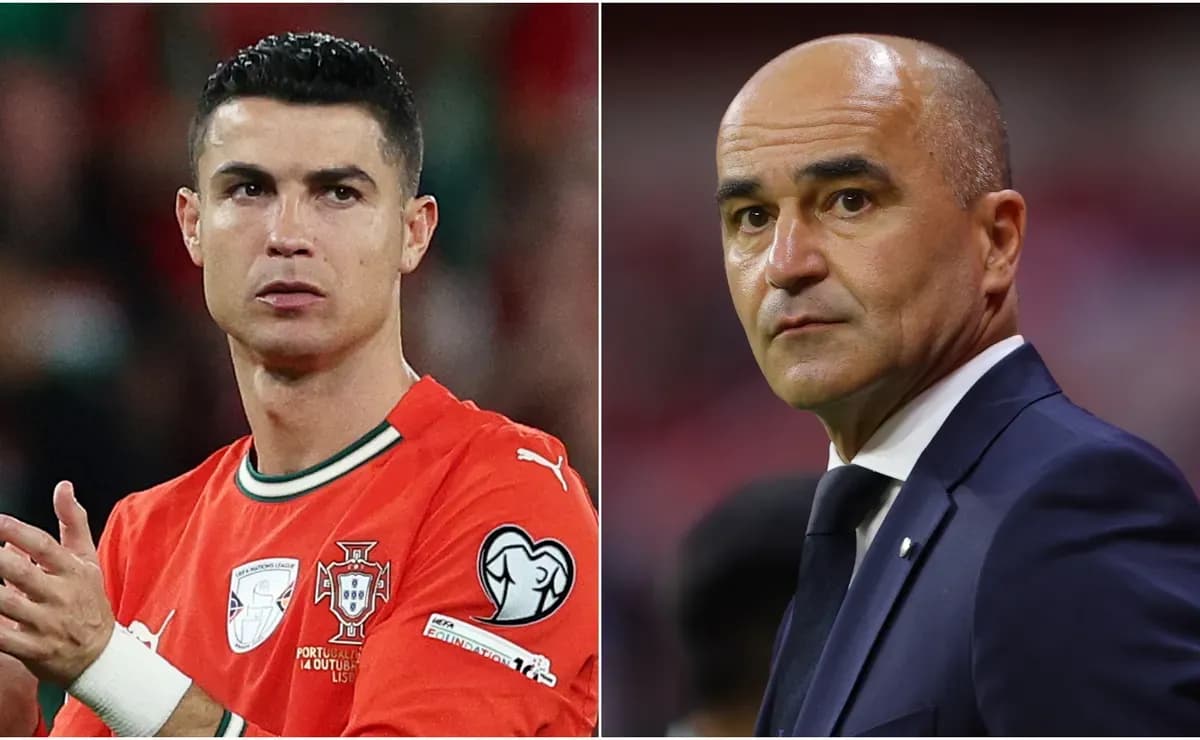
Source: media.worldsoccertalk.com
Portugal will use a fixed US base camp for the 2026 World Cup to reduce travel fatigue for 41-year-old Cristiano Ronaldo, manager Roberto Martinez explains. The squad and Ronaldo support the science-driven approach aimed at maximizing recovery and performance.
In the final countdown to the 2026 World Cup, Portugal has stunned the football world not just with their on-field ambitions but with a logistical masterstroke designed to keep 41-year-old icon Cristiano Ronaldo at his peak. According to a World Soccer Talk exclusive, manager Roberto Martinez has personally explained to Ronaldo and the squad why the Seleção will adopt an unusual travel itinerary during the tournament: a single, fixed base camp in the United States, breaking with the convention of moving between host cities for group stage matches. The move, Martinez argues, is tailored to reduce travel fatigue across the three-nation tournament — United States, Canada, and Mexico — and maximize recovery for a squad carrying the weight of a nation’s dreams, and perhaps the final hopes of a global football legend.
Portugal's Unconventional Travel Strategy
Rather than shuttling between venues in different countries for their Group K fixtures against Canada, Japan, and South Africa, Portugal will set up a permanent hub, likely in the New York/New Jersey area near their first match, thereby avoiding the cumulative strain of cross-border travel
As World Soccer Talk
reports, Martinez revealed the plan directly to Ronaldo, who has embraced the logic — longevity and peak performance demand modern, science-driven approaches. The decision underlines the manager’s obsession with marginal gains; he pointed to the continental scale of the 2026 tournament, stretching from Vancouver to Mexico City to Toronto, and the physical toll it could exact on older players. For a 41-year-old phenom who still starts for his club and country, every saved hour of transit translates to more minutes on the training pitch and in recovery chambers. The strategy also insulates the squad from unpredictable travel disruptions, a lesson learned from past World Cups where logistical hiccups marred campaigns.
Martinez, speaking to Cadena Ser as reported by Deadspin, emphasized the need for control: “No one should doubt that he could play in 2030,” he said of Ronaldo, but the immediate focus is 2026, where the travel plan is part of a holistic blueprint to keep Portugal’s captain fresh. By contrast, some rivals are planning multi-city moves; Portugal’s approach could become a template for nations with aging superstars. Critics, however, note the risk of monotony and the lack of adaptability to local conditions, but the squad’s reaction has been positive — Diogo Dalot, the Manchester United defender, told CazéTV that the team is fully behind the plan, seeing it as a symbol of the meticulousness needed to finally deliver a World Cup.
The Emotional Weight of a Global Icon’s Final Quest
Behind the travel tactics lies an emotional undercurrent that Dalot captured eloquently: “It’s not just a Portuguese union, I think it’s also a global union, a union of football.” In an interview with Goal, the full-back stressed that millions around the world are emotionally invested in a Ronaldo World Cup triumph, not because his legacy needs it, but because it would add poetic closure to a career that has transcended sport. Dalot, part of the initial 27-man squad that will be cut to 26 by the June 2 deadline, spoke of the squad’s collective desire to win it for their captain, a sentiment echoed by Manchester City’s Rúben Dias in a separate exchange with A Bola. Dias avoided definitive pronouncements about this being Ronaldo’s last tournament — “Let’s see…” — but acknowledged the extra motivation: “It is an extra motivation factor.”
This duality of hope and uncertainty colors Portugal’s campaign. While Martinez publicly dismisses any idea of a swansong — insisting Ronaldo could stretch to 2030 — the players speak of a fairytale ending. The contrast between manager and squad reveals a healthy tension: Martinez focuses on the long-term, almost superhuman, trajectory of a player who has scored at five World Cups, while the younger generation fantasizes about being part of a historic Hollywood script. Dalot’s words underscore that the mission is not just about a trophy; it’s about cementing an emotional legacy that unites even rival fans in a momentary truce.
Defying Age: Could 2030 Be on the Horizon?
Martinez’s bold claim to Deadspin that Ronaldo could play in the 2030 World Cup, which Portugal will co-host with Spain and Morocco, has injected a surreal subplot into the 2026 buildup. “He’s earned it,” Martinez said, citing Ronaldo’s unprecedented longevity — 226 caps, 143 goals, and a penalty record that made him the first to score at five World Cups. The manager pointed to genetic factors, diligent body maintenance, and an unrelenting mentality that outlasts peers who settle after Champions League or Ballon d’Or glory. Yet the raw numbers are staggering: by 2030, Ronaldo would be 45, a ages when even goalkeepers rarely compete at the elite international level.
Dias, however, tempered the euphoria. In his Fox Sports interview, he cautioned against the certainty of retirements for Ronaldo, Messi, and Modric, noting that these legends defy norms. But his “Let’s see” implies that the physical demands of 2026 might force a reassessment. The Portugal squad, while riding the wave of Ronaldo’s excellence, is pragmatically building for a future without him — evidenced by the inclusion of Genclerbirligi’s Ricardo Velho as a fourth goalkeeper in the preliminary list, a move that speaks to squad depth experimentation. If Ronaldo does aim for 2030, the travel plan for 2026 serves as a prototype for how to preserve an aging body amidst the crucible of a World Cup.
AI Perspective: How the Travel Plan Shapes Portugal’s 2026 Fate
Looking ahead, Portugal’s fixed-base strategy could yield tangible advantages in a Group K that, on paper, offers a clear path to the knockout stage. Canada, Japan, and South Africa are beatable but physically demanding opponents; minimizing travel fatigue against Canada in Toronto (a short flight from a northeastern US base) and Japan in Kansas City allows for more tactical preparation and recovery. Based on historical data and squad depth, AI models suggest Portugal’s chances of topping the group rise by 12-15% when players’ weekly travel distance is kept under 1,000 miles — a figure the fixed-base model achieves. In the knockouts, fresh legs for Ronaldo, Bruno Fernandes, and Rafael Leão could be the difference in tight matches against heavyweights like France or Argentina.
If the plan works, it will be hailed as a genius innovation; if not, Martinez will face questions about overthinking. The direct replacement for Ronaldo in the lineup if he needs rest — likely Gonçalo Ramos or Diogo Jota — adds tactical flexibility, but neither carries the talismanic aura that demands opponents’ attention. According to Goal’s reporting, the squad’s unity around the captain suggests that even a diminished Ronaldo will start crucial games, but the travel plan aims to ensure he remains a 90-minute threat. Looking beyond 2026, should Ronaldo miraculously target 2030, the lessons from this campaign — singular base, optimized recovery — will become the template for Portugal’s co-hosting strategy, potentially revolutionizing how aging superstars are managed. For now, the world watches, united in the hope that Ronaldo’s last dance, however unconventional the journey, ends with the ultimate prize.
Sources & Further Reading
- https://amp.foxsports.com/stories/soccer/global-union-rooting-ronaldo-win-2026-world-cup-portugal-teammate-says
- https://deadspin.com/portugal-coach-no-one-should-doubt-ronaldo-could-play-2030-world-cup/
- https://amp.foxsports.com/stories/soccer/lets-see-ruben-dias-not-convinced-2026-world-cup-will-be-last-dance-for-evergreen-ballon-dor-winners-cristiano-ronaldo-lionel-messi-luka-modric
- https://worldsoccertalk.com/world-cup/cristiano-ronaldo-learns-reason-behind-portugals-unusual-2026-world-cup-travel-plan-as-roberto-martinez-explains-decision/