Tuchel: 'Sharp' Kane in Perfect Shape to Lead England at 2026 World Cup
Source: i.guim.co.uk
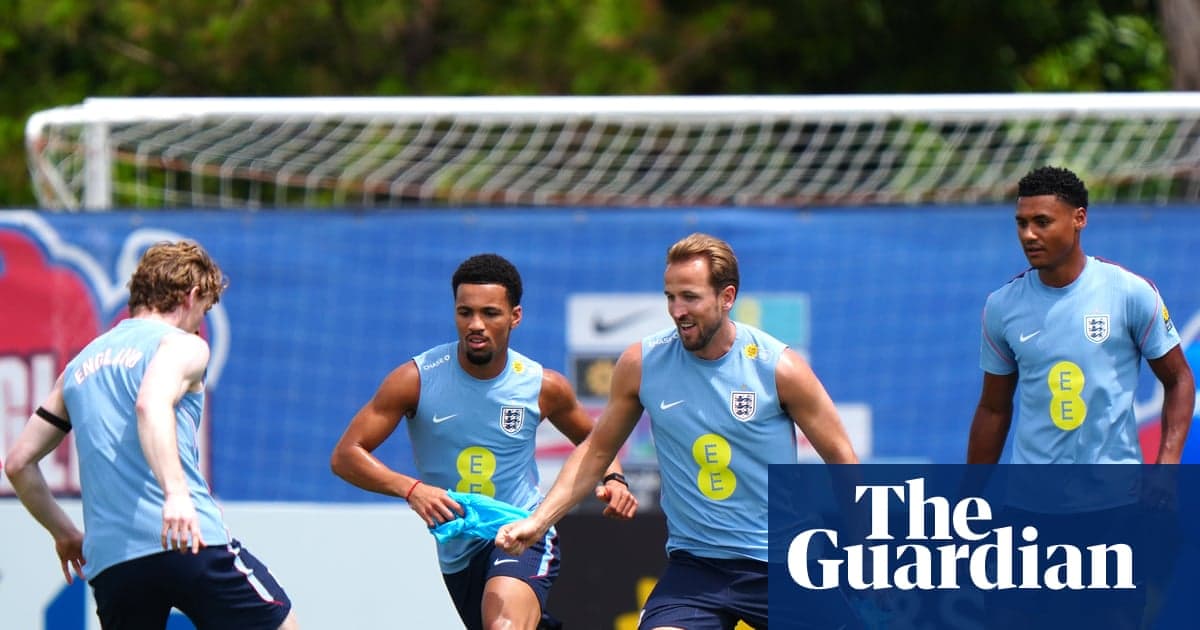
Thomas Tuchel says Harry Kane is in 'top shape' and 'ready to go' for the 2026 World Cup. The England head coach praised Kane's leanness and high pressing, a contrast to past tournaments where fitness was a concern.
As the 2026 World Cup looms, the narrative surrounding England's hopes has oscillated between historic pessimism and cautious optimism. However, a palpable shift in tone is emerging from their pre-tournament base in Florida, centered firmly on the fitness and form of captain Harry Kane. According to The Guardian, head coach Thomas Tuchel has delivered an emphatic verdict on his talisman, describing the Bayern Munich striker as being in "top shape" and "ready to go." This declaration is more than just a routine vote of confidence; it directly addresses the lingering ghost of past tournaments where a fatigued or injured Kane symbolized England’s failure to get over the line. As the team prepares for their first warm-up match against New Zealand in Tampa, the focus is no longer on managing a fragile star, but unleashing a "sharp" leader capable of finally ending the decades of hurt.
Tuchel's Assesment: A Lean, Mean, Goalscoring Machine
The crux of the renewed belief comes directly from Tuchel's detailed observations during the intense Florida training camp. The manager did not just offer platitudes; he provided specific physical and tactical analysis. “He looks lean, sharp and he trains at the highest level,” Tuchel told The Guardian, highlighting that even in a defensive session, Kane was “leading the intensity.” This focus on Kane’s physical conditioning, particularly his leanness, is a deliberate counterpoint to Euro 2024, where the striker’s movement was visibly hampered. Tuchel attributes this peak fitness to Kane’s adaptation to the relentless tactical demands of Bayern Munich, specifically the “intensive game that they play in the opponents’ half” and the “high press.” This is a crucial insight: rather than the punishing schedule draining him, Tuchel argues the club’s style has honed Kane into a more resilient pressing machine, physically and tactically prepared for the sweltering June heat they are acclimatizing to in Florida.
From Liability to Leading by Example
Historically, English media discourse at major tournaments has been dominated by worries over Kane’s ankles or his tendency to drop too deep in search of the ball. Tuchel’s narrative directly reshapes this. By emphasizing Kane’s “leading by example” in training, he signals that the striker is not a luxury player to be carried, but the engine of the team’s intensity. This is a significant psychological ploy. It transforms the captain from a potential fitness concern into the squad’s physical benchmark. As ESPN notes in their comprehensive tournament coverage, England’s entire campaign narrative will pivot on key players’ availability and form, and Tuchel is aggressively setting the tone that the most crucial component is not just available, but in the form of his life. The Guardian article underscores that with Kane, Tuchel feels “we don’t have to be worried about him at all,” a statement that actively dismisses potential distractions from the media over the coming weeks.
The Clash of Narratives: Practice Intensity vs. Match Sharpness
While Tuchel’s camp broadcasts supreme confidence, a degree of analytical caution is warranted based on the varied perspectives offered by sources like Sky Sports and Yahoo Sports. The narrative of perfect preparation often meets the harsh reality of tournament football in the first group game. Tuchel’s evidence, however compelling, is entirely based on “training this week” and club-level adaptation. The warm-up game against New Zealand is not being treated as a mere formality but as the critical bridge to prove his observations on the pitch. The Guardian notes the specific challenge of the match being played in the intense Florida humidity—a direct simulation of the conditions expected later—making this the perfect laboratory to test if a “lean” and “sharp” Kane can sustain his all-action pressing game for 70 to 90 minutes in competitive conditions. The risk, as any follower of Yahoo Sports’ broader analysis would recognize, is that peak performance in a controlled training environment does not always seamlessly transition to a match scenario.
What History Tells Us About Tournament Narratives
Skepticism is a rational response for England fans who have seen this movie before. The behind-closed-doors reports of blistering form that defined the early days of the Sven-Göran Eriksson era or the declared fitness of a pre-2010 World Cup Wayne Rooney serve as cautionary tales. However, Tuchel’s analysis differs fundamentally. He is not just saying Kane is fit; he is citing tactical mechanisms from his club football that create an active, sustainable fitness, not just a passive “clean bill of health.” The key vulnerability, as Sky Sports often breaks down in pre-tournament injury analysis, remains what happens if the primary plan fails. If Kane were to miss a game, the drop-off to the alternatives is not assessed in Tuchel’s positive report
While Ollie Watkins and Ivan Toney
have their merits, none replicate Kane’s dual role of top scorer and deep-lying playmaker, a historical conundrum highlighted by ESPN’s consistent long-reads on England's lack of a genuine like-for-like replacement.
AI Perspective: The Quantifiable Impact of a Fully-Functional Striker
Synthesizing Tuchel’s tactical observations with the historical performance data available, the implications for the tournament are stark. A fully fit Harry Kane executing a high press changes England’s entire defensive structure, turning their block from a mid-to-low one into a high-turnover machine that suffocates opponents. The analysis from The Guardian, stating he is “used to the high press from Bayern Munich,” provides the key metric: successful pressures per 90 minutes. If Kane can transfer his Bundesliga pressing numbers to the World Cup stages against Group L opponents, England’s path to the knockout rounds becomes significantly less treacherous. This directly answers the extensive “injuries and analysis” criteria laid out in ESPN’s 2026 coverage, which identifies tactical system failure due to player physical limitation as the primary cause of shock early exits.
The Blunt Reality: No Plan B in Sight
Despite the wave of optimism from Tuchel’s quotes, a cold simulation starkly reveals England’s enduring fragility. The entire tactical model Tuchel is extolling in Florida is a single point of failure. The Guardian’s report that the team’s hopes “rest heavily on Kane staying injury-free” is not journalistic hyperbole; it is a structural vulnerability. Unlike France, who have historically adjusted seamlessly between an Olivier Giroud focal-point and a more fluid false-nine system, or even Brazil’s myriad attacking configurations, England’s “best shape” evaporates the moment Kane steps out. Ollie Watkins is an excellent channel runner as a substitute, but possesses neither the creative passing range nor the sheer physical box presence that Tuchel is now publicly benchmarking as the team’s ideal standard. This creates a paradox for the AI-driven analysis: the data says England’s peak is world-beating, but their volatility score (the drop-off in performance without a single player) remains arguably the highest among all tournament favorites.
Sources & Further Reading
- https://sports.yahoo.com/articles/thomas-tuchel-belief-england-long-064923257.html
- https://www.skysports.com/football/news/30964/13549709/world-cup-2026-england-boss-thomas-tuchel-has-full-belief-his-side-can-mount-serious-challenge-to-win-tournament
- https://www.espn.com/soccer/story/_/id/48701061/england-world-cup-2026-schedule-fixtures-results-scores-group-l-how-watch-uk-news-analysis-injuries
- https://www.theguardian.com/football/2026/jun/05/tuchel-confident-sharp-kane-is-in-perfect-form-to-lead-england-at-world-cup