Tartan Army’s Boston Invasion: Scotland’s World Cup Return Marred by Visa Woes
Source: i.guim.co.uk
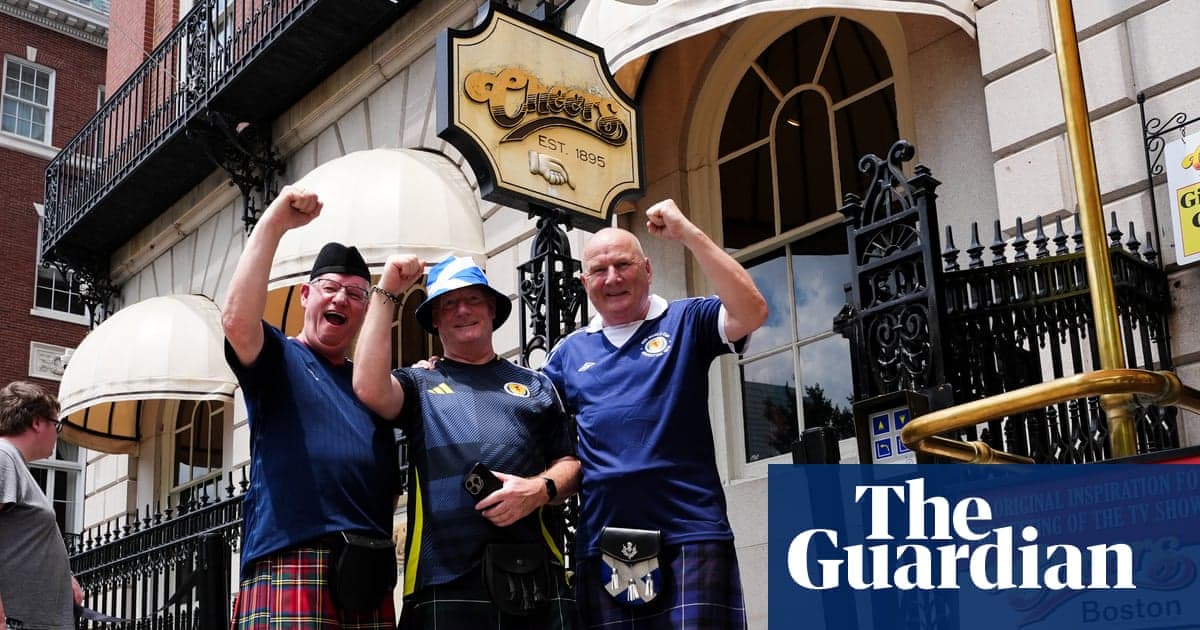
Thousands of Scottish fans have descended on Boston for their first World Cup since 1998, turning the city into a sea of kilts and saltires. The celebration is bittersweet, as some fans were denied entry by U.S. immigration, creating a divide between those who made it and those left behind.
The Tartan Army has invaded Boston, and they are not just here for the soccer. They are here for a pilgrimage. As Scotland prepares to play in their first World Cup since 1998, thousands of fans have descended on the American city, transforming it into a sea of kilts, saltires, and Tennent’s Lager. According to The Guardian, the choice of Boston as a base is no accident; it is a city “renowned for chasing the English out of town,” a historical echo that resonates deeply with supporters who have been bonding with tour guides dressed as Paul Revere while wearing “Boston T Party” T-shirts. For a generation of fans, this tournament is not just a competition; it is a release of three decades of longing, a sentiment perfectly embodied by 93-year-old Moira Brown, who told NPR she is the “luckiest person in this world” to be attending her fourth World Cup after a 28-year wait. Yet, the journey to this moment has been fraught with modern obstacles, as some fans have found their path to the tournament blocked by U.S. immigration systems, creating a stark contrast between the warm welcome in the pubs and the cold reality of border bureaucracy.
The Tartan Army’s Boston Takeover
The scale of the Scottish presence in Boston is staggering. The Guardian reports that the Scottish Football Association has rebranded a local pub as “Scotland House,” sponsored by M&S Food, a 2,000-person venue expected to be at capacity for the opening match against Haiti. The atmosphere is one of defiant celebration, with flags bearing the legend “Remember Bannockburn 1315” hanging from balconies and fans giving interviews to local TV. This is not a quiet infiltration; it is a full-scale cultural occupation. The choice of Boston, with its own revolutionary history against the English, provides a perfect thematic backdrop for a fanbase that has waited since the 1998 tournament in France to see their team on this stage. The Guardian’s reporting paints a picture of a city where flights from Scotland have been crammed for a week, and the streets are filled with punters who are as much a part of the story as the players on the pitch.
A 93-Year-Old’s Transatlantic Dream
While the party rages in Boston, the most poignant story of the Tartan Army’s return belongs to Moira Brown. In a deeply personal profile by NPR, the 93-year-old from Glasgow embodies the generational weight of this World Cup appearance. Brown, who still manages the stairs to her third-floor apartment plastered with soccer memorabilia, told NPR she only needs a carry-on for transatlantic travel. “I waited almost 30 years to see another World Cup. Now I’m the luckiest person in this world,” she said. Her story is a living bridge between Scotland’s past World Cup appearances and its present, a reminder that for many fans, this tournament is a once-in-a-lifetime event not just for the novelty, but because the decades of waiting have been so long. Her presence in the U.S. is a testament to the enduring pull of national team football, a pilgrimage that defies age and physical limitation.
The Visa Wall: A Modern Hurdle for the Tartan Army
However, not all of the Tartan Army’s stories from the 2026 World Cup are celebratory. A report from Newsweek reveals a darker side to the fan experience, highlighting the plight of supporters who have been barred from entering the United States. Kenny Smith, a musician from Inverness, told Newsweek he was “devastated” after his ESTA authorization was revoked without explanation days before his flight. He described the “heartache” of missing a “once-in-a-lifetime opportunity” and being forced into a costly and urgent visa application process. Smith is not alone; Newsweek notes he is one of a number of Scots to have suffered a similar fate. The irony is not lost on Smith, who pointed to President Donald Trump’s business interests in Scotland and his Scottish maternal heritage, suggesting the U.S. should “return the hospitality.” This bureaucratic barrier creates a sharp divide in the Tartan Army’s narrative, separating those who made it to Boston from those whose dreams were grounded by paperwork.
The Bigger Picture
The 2026 World Cup for Scotland is a tale of two journeys. For fans like Moira Brown and the thousands partying in Boston’s Scotland House, it is a triumphant return to a global stage after a 28-year absence, a cathartic release celebrated in a city that mirrors their own historical defiance. For others, like Kenny Smith, it is a story of exclusion, where the dream of watching their team in a World Cup for the first time since 1998 was snatched away by an opaque and unforgiving travel authorization system. The juxtaposition is stark: a 93-year-old who can cross the Atlantic with ease, and a younger fan who cannot. The tournament’s legacy for Scotland will be defined not just by the results on the pitch against teams like Haiti, but by the contrasting experiences of a fanbase that has waited a generation for this moment, only to find that for some, the wait continues. The Tartan Army’s invasion of Boston is a roaring success, but its ranks are missing soldiers who were turned back at the border, a modern complication to an otherwise historic homecoming.
Sources & Further Reading
- https://sports.yahoo.com/articles/scotlands-tartan-army-bring-party-014313817.html
- https://www.wxxinews.org/npr-news/2026-06-12/she-waited-decades-for-scotland-to-make-the-world-cup-at-93-shell-be-cheering-in-person
- https://www.newsweek.com/scotland-fan-missing-world-cup-opener-says-trump-should-return-the-hospitality-12059715
- https://www.theguardian.com/football/2026/jun/12/tartan-army-toast-scotland-world-cup-return-boston