Shakira to Open 2026 World Cup Alongside Bublé, Perry in Tri-Nation Ceremony
Source: ichef.bbci.co.uk
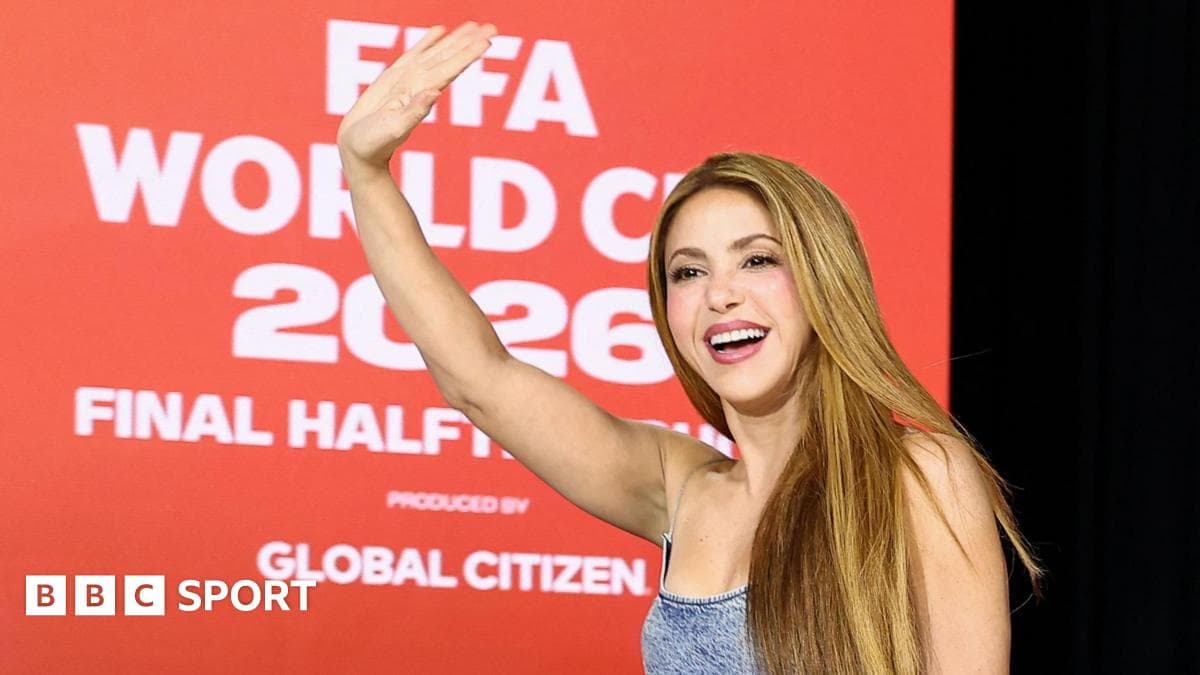
Shakira will perform at the 2026 World Cup opening ceremony in Mexico City with Burna Boy, as FIFA plans three distinct opening ceremonies across host nations. She also co-headlines a halftime show at the final with Madonna and BTS, joined by Uganda's Ghetto Kids.
As the 2026 FIFA World Cup draws near, the spectacle is already shaping up to be as significant off the pitch as on it, with organizers deploying an unprecedented musical arsenal across the tournament’s three host nations. At the center of this orchestrated fanfare is Shakira, whose confirmed performance at the opening ceremony in Mexico City serves as a nostalgic bridge to the tournament's past while anchoring a new, decentralized model of celebration. The strategy, revealed in an official announcement, reveals a deliberate shift from a singular iconic moment to a continent-spanning series of marquee events, headlined by some of the biggest names in global music and designed to reflect the unique cultural footprint of each co-host.
A Tri-National Opening Celebration
For the first time in World Cup history, FIFA will stage three distinct opening ceremonies, each tailored to its host city before the first match kicks off in that nation. According to a BBC Sport report detailing the official lineup, Shakira will perform her official 2026 World Cup song, "Dai Dai," alongside Burna Boy on Thursday, 11 June, at Mexico City's iconic Estadio Azteca immediately before the tournament’s opening match between Mexico and South Africa. The choice of pairing is a pointed cultural statement, uniting a Colombian superstar with a Nigerian afro-fusion giant for a song whose title translates from Italian to "let's go" or "come on," reflecting the globalized nature of the modern game. Colombian reggaeton star J Balvin and South African singer-songwriter Tyla are also set to feature, ensuring the ceremony pays homage to both the immediate and continental hosts.
Headliners Across Two Nations
The musical baton then passes north. BBC Sport further reports that the second and third ceremonies will take place the following day, Friday, 12 June, with a distinct sonic signature for each. In Canada, BMO Field in Toronto will host a ceremony headlined by national treasures Michael Bublé and Alanis Morissette before Canada’s historic clash against Bosnia and Herzegovina. The lineup is a masterclass in local pride, deploying two globally recognized artists whose musical styles are far removed from the typical World Cup pop anthem, yet are deeply emblematic of Canadian culture. The United States ceremony, set for SoFi Stadium in Los Angeles before the USMNT faces Paraguay, leans into a more contemporary pop and hip-hop aesthetic, featuring Katy Perry and rapper Future. This multi-nodal approach ensures that unlike a single opening gala, the tournament will embed itself into the local entertainment landscape from the very first matchday in each country.
The Halftime Super Bowl and an Inspirational Partnership
The ambitions for the tournament’s concluding spectacle are even loftier. A separate BBC Sport article reveals that Shakira’s role extends far beyond the opening game, as she is scheduled to co-headline a "Super Bowl-style half-time show" at the World Cup final on 19 July alongside Madonna and K-pop titans BTS. This format represents a seismic shift for FIFA, which has historically eschewed an American football-style mid-match concert for its showpiece event. Securing a trinity of artists from three distinct generations and cultural spheres—an 80s pop icon, a K-pop phenomenon, and a Latin crossover queen—signals a clear intent to transform the final into a global entertainment property that rivals the sport itself.
Uganda’s Ghetto Kids Join the Spotlight
Adding a deeply human-interest layer to the final’s halftime show is an NBC News report confirming that Shakira will be joined by Uganda’s Ghetto Kids, a dance troupe whose viral journey began when they were filmed dancing barefoot on a dusty street in 2014. This will be a landmark moment, as the troupe will participate in a collaboration between Shakira and BTS on the live "Dai Dai" performance, blending urban African dance with Latin pop and Korean precision choreography. This partnership underscores how the 2026 tournament’s musical programming is not just about marquee names but also about curating viral, cross-platform moments of genuine cultural exchange, bringing an inspirational, grassroots story directly onto the sport's biggest stage.
AI Perspective: The Strategic Performance Ecosystem
From an analytical perspective, the musical strategy deployed for the 2026 World Cup is a sophisticated risk-mitigation and audience-engagement machine. By dispersing high-impact performances across three opening ceremonies and a standalone halftime show, FIFA is targeting fragmented global audiences with surgical precision. The specific impact on the tournament itself is tangible, particularly for the host nations like Canada and the USA, which do not have the same deep-rooted football culture as Mexico. The booking of Bublé and Morissette for the Canadian opening ceremony is not merely entertainment; it’s a strategic move to guarantee colossal domestic viewership and stadium atmosphere for a match—Canada versus an emerging Bosnia and Herzegovina—that might otherwise struggle for global attention. Similarly, Future and Katy Perry’s presence at the US match is designed to anchor the event within American pop culture consciousness, directly competing for attention with the nation's dominant sports leagues.
Furthermore, Shakira’s omnipresence—from the official song "Dai Dai" to the opening and final ceremonies—functions as the tournament’s cohesive musical thread, directly recalling the unmatched success of her 2010 hit "Waka Waka." The BBC explicitly notes this connection in its framing of the story, and FIFA is clearly betting on nostalgia as a key engagement driver. The inclusion of BTS at the final, as reported, guarantees an immense, digitally-organized Asian and global youth audience that FIFA cannot afford to lose to other entertainment platforms. The real tournament implication is that these ceremonies are not a sideshow; they are a calculated infrastructure designed to elevate matches like USA-Paraguay and Canada-Bosnia from purely sporting events into unmissable cultural tentpoles, guaranteeing the tournament’s financial and viewership success long before the first goal is scored.
Sources & Further Reading
- https://www.nbcnews.com/world/africa/uganda-ghetto-kids-dance-shakira-world-cup-final-halftime-show-rcna346471
- https://www.chicagotribune.com/2026/05/28/vintage-chicago-tribune-1994-fifa-world-cup-soldier-field/
- https://deadspin.com/betting/2026-fifa-world-cup-group-g-preview-odds-predictions/
- https://www.bbc.com/sport/football/articles/c8939ykg3qgo