Scotland's Billy Gilmour Ruled Out of 2026 World Cup; Man Utd’s Fletcher Emerges as Replacement
Source: ichef.bbci.co.uk
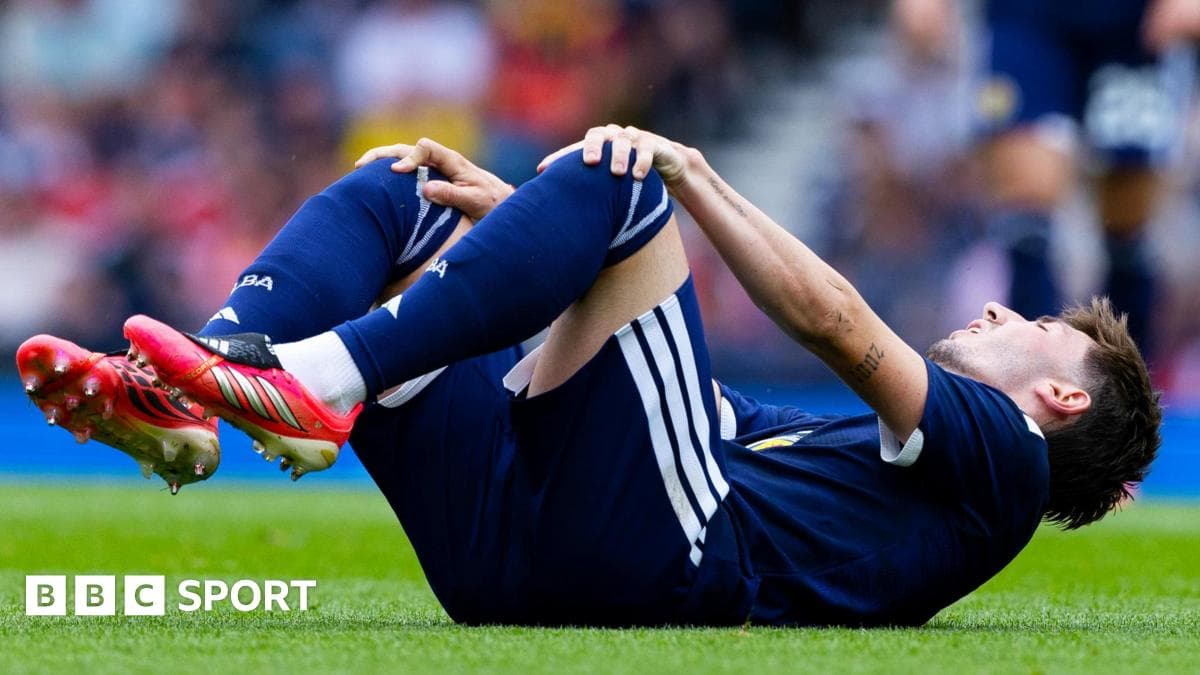
Billy Gilmour is ruled out of the 2026 World Cup after a knee injury in Scotland's friendly win over Curacao. Tyler Fletcher made his senior debut as a half-time substitute, potentially replacing the Napoli midfielder.
A National Crisis on the Eve of Departure
Just hours before Scotland were due to board their flight to the United States, the national team’s World Cup plans have been thrown into disarray. The sight of Billy Gilmour crumpling to the Hampden Park turf, shortly before he was due to attend a family wedding, represented far more than a simple substitution. According to the BBC, the Scottish FA has confirmed the 24-year-old Napoli midfielder is out of the tournament after sustaining a knee injury during the 4-1 friendly win over Curacao. For a team that relies on Gilmour’s metronomic passing to control the tempo of matches, his absence forces a complete recalibration of Steve Clarke’s midfield engine as the 2026 finals loom immediately on the horizon.
The Injury Crisis Deepens
The mood in the Scotland camp shifted from celebration to concern in an instant. Lawrence Shankland’s double and a late Ryan Christie penalty had made it a comfortable night, but the only request from the coaching staff was to avoid casualties. Clarke’s post-match demeanor told the full story. “One request was obviously no injuries,” Clarke stated immediately following the match, as reported by the BBC. “He hurt himself in the tackle and then he made the decision he had to come off, so that tells you that he himself knew it wasn’t right.” The fact that Gilmour, a player accustomed to the physicality of Serie A, immediately signaled his inability to continue indicates a severity that Scotland cannot afford. Losing a player of his caliber twenty-four hours before a transatlantic flight is a logistical and tactical nightmare for the coaching staff.
The Viability of a Youthful Successor
In a twist of fate typical of football’s cruel theatre, the night of Gilmour’s despair provided the immediate audition for his potential replacement. Tyler Fletcher, the 19-year-old Manchester United prospect, was handed his senior international debut as a half-time substitute for the injured star. With only two first-team appearances for his club this season, Fletcher represents the raw, untested future rather than a proven alternative, yet Clarke has confirmed the teenager is under serious consideration to fill the void. The head coach’s willingness to mention Fletcher directly as a possible replacement signals that the Scotland boss has seen enough in training and the brief cameo to trust the teenager in a high-stakes environment. The narrative mirrors past gambles in Scottish football, where necessity has often accelerated the rise of young talent.
Assessing the Alternatives in the Midfield
Beyond the immediate fairy-tale narrative of Fletcher, Clarke faces a tricky selection puzzle that could alter Scotland’s World Cup identity. Without Gilmour’s ability to receive the ball under pressure and break the lines through crisp passing, the team lacks its primary connector between defense and attack. The Scottish FA’s somber social media dispatch—“We’re all with you, Billy”—underscores the emotional blow, but the tactical hole is what will worry the management team during the journey to North America. If Clarke opts for experience over experimentation, he may need to restructure the midfield trio to include a double pivot or rely more heavily on the physical attributes of other squad members rather than looking for a like-for-like passer. The late inclusion of Findlay Curtis in the starting lineup for the Curacao match, where he scored the equalizer, highlights that there is depth in the squad, but none quite replicate the specific technical security that Gilmour brings.
AI Perspective: A Tactical Rebuild and Concrete Implications
From an analytical perspective, the data points surrounding Scotland’s midfield pivot suggest a stark drop-off without the Napoli man. In a Group stage that requires tactical discipline, Steve Clarke must now make a definitive choice that will define Scotland’s next month. The concrete options are twofold. First, Tyler Fletcher appears the likeliest direct beneficiary; his promotion from a debutant against Curacao to a World Cup squad member would be a seismic shift in his career trajectory. Second, the alternative strategy might involve retaining the structure but changing the profile, potentially handing a more disciplined, defensive role to existing squad center-midfielders to provide cover for the backline, allowing the full-backs to advance higher up the pitch to compensate for the missing creativity.
The tournament implications are severe. For Scotland, this isn’t merely a squad-depth issue; it is a loss of identity. According to the BBC’s pre-tournament analysis, Gilmour was central to how Scotland intended to progress the ball against superior opposition. England, by contrast, are facing their own selection earthquakes, as highlighted by recent updates showing Phil Foden, Cole Palmer, and Harry Maguire being axed in a ruthless cull. While Scotland deals with an injury, England’s overhaul is purely a performance-based decision, but the destabilizing effect on the squad morale can be comparable. The contrasting fortunes of the Home Nations—with Scotland losing a lynchpin and England willingly discarding proven talent like Palmer and Foden—demonstrate the vastly different internal pressures at play. For Scotland’s Group rivals, the news is an unequivocal green light to press higher up the pitch, knowing the elite resistance to their press has just been removed. Clarke’s next forty-eight hours, deciding between youth and a tactical pivot, will be the most consequential of his tenure.
Sources & Further Reading
- https://www.foxsports.com/watch/fmc-lo1qjgwt5mvvmf8y
- https://www.espn.com/soccer/match/_/gameId/401871530/andorra-iraq
- https://amp.foxsports.com/stories/soccer/harry-maguire-england-2026-fifa-world-cup-roster
- https://www.bbc.com/sport/football/articles/cn9pwg12z0lo