Phil Foden's Positional Confusion Costs Him England World Cup Spot
Source: static.independent.co.uk
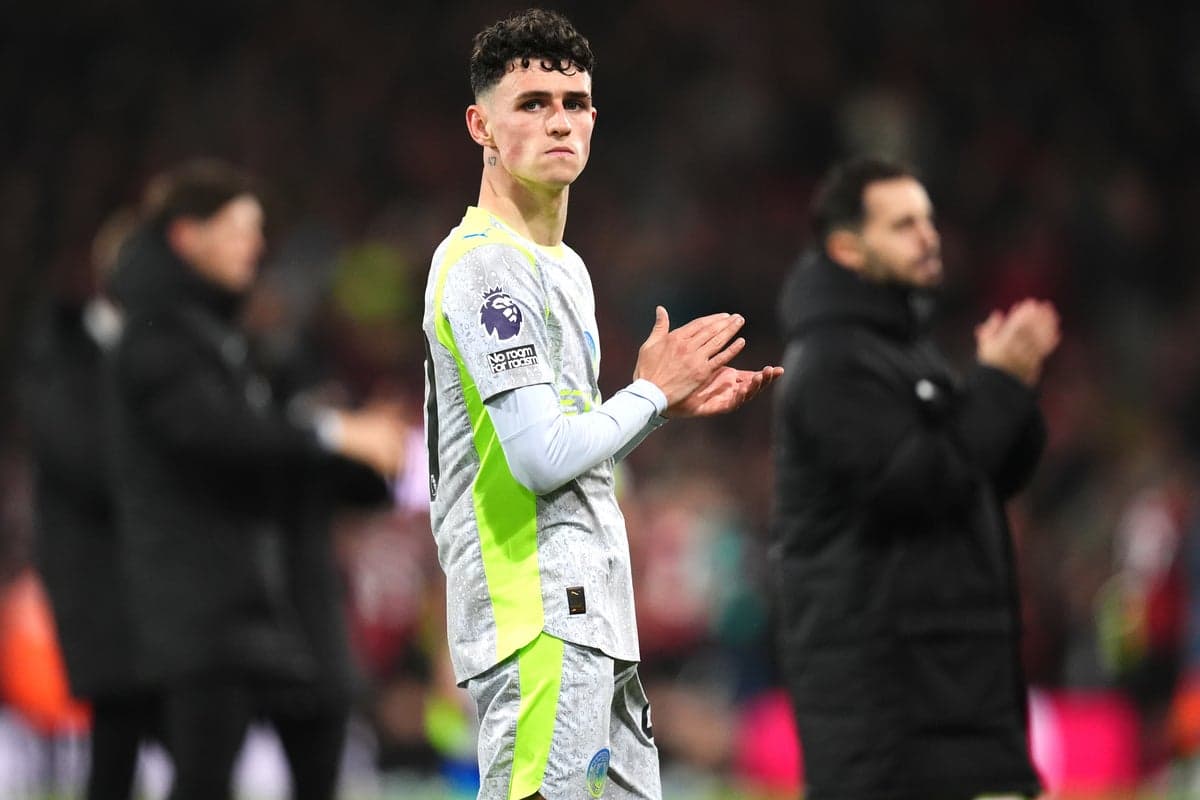
Phil Foden, PFA Player of the Year two seasons ago, and Cole Palmer were omitted from England's 2026 World Cup squad by Thomas Tuchel, mainly due to Foden's positional uncertainty.
The announcement of England’s 26-man squad for the 2026 World Cup sent shockwaves through the football world, not for who was included, but for who was left out. Phil Foden, the PFA Player of the Year just two seasons ago, and Cole Palmer, the hero of England’s Euro 2024 final run, were both omitted by manager Thomas Tuchel. While Palmer’s exclusion raised eyebrows, it was Foden’s absence that truly encapsulated a deeper, more perplexing issue: a player of immense talent who had become a tactical enigma, leaving his international manager unsure of where he even fits on the pitch.
The Positional Puzzle: Foden's Undoing
Thomas Tuchel’s own words, as reported by The Independent, cut to the heart of the matter. The German admitted he “wasn’t even sure what his position was” when assessing Foden’s role in the squad. This is a damning indictment for a player once hailed as the most naturally gifted English talent of his generation. Foden’s versatility, long considered an asset, has morphed into a curse. At Manchester City, he has been deployed as a left winger, a right winger, an attacking midfielder, and even a false nine. Yet, in a season where City’s collective form unravelled, Foden failed to make any of those positions his own. The Sporting News noted that this positional confusion was a primary factor in his omission, as Tuchel sought players with clearly defined roles who could execute a specific tactical plan. Without a settled position, Foden became a luxury item that a pragmatist like Tuchel could not accommodate.
The Guardiola Parallel
Ironically, the very coach who nurtured Foden’s talent, Pep Guardiola, may have inadvertently contributed to this identity crisis. Guardiola’s system demands fluidity, and Foden was often the ultimate utility man, filling gaps rather than dominating a single zone. This worked when City were purring, but as The Independent highlighted, Foden’s season “only briefly showed a few sparks.” When the team struggled, his lack of a defined role meant he was often the first to be sacrificed or shifted, preventing him from building any rhythm. For England, where tactical cohesion is paramount in a short tournament setting, Tuchel could not afford such ambiguity.
A Season of Struggle at Manchester City
Foden’s club form simply did not warrant a guaranteed place on the plane. The Associated Press report reminded readers that Foden was the double player of the year in England just two years ago, a testament to his prodigious ability. However, the 2025-26 campaign was a stark contrast. City’s uncharacteristic dip saw the entire squad underperform, but Foden’s decline was particularly pronounced. The Independent described his season as one where he “fell out of favour” and struggled to recapture his best. In a World Cup year, form is everything, and Foden’s was nowhere near the level required to dislodge rivals who had enjoyed more consistent, if less spectacular, seasons.
Tuchel's Ruthless Philosophy: Team Over Talent
Tuchel’s squad selection was a statement of intent. “Teams win championships. It’s as simple as that,” he declared, as per the Associated Press. “We are trying to select and build the best possible team, which is not necessarily to select and collect the 26 most talented players.” This philosophy explains not only Foden’s absence but also the omissions of Palmer, Trent Alexander-Arnold, Harry Maguire, and Luke Shaw. In their place, The Athletic confirmed the inclusions of Ivan Toney and Kobbie Mainoo — players who offer specific, well-defined skill sets. Toney provides a physical, out-and-out striking option, while Mainoo brings composure and tactical discipline in midfield. Tuchel is betting that a cohesive unit of role-players will outperform a collection of disjointed stars, and Foden’s positional uncertainty made him the antithesis of what the manager is building.
Implications for England's World Cup Campaign
The decision is a huge gamble. Without Foden and Palmer, England lose two of their most unpredictable, game-changing attackers. However, the squad now has a clearer identity. The Athletic’s report on the inclusions of Toney and Mainoo suggests a shift towards a more robust, structured system, likely a 4-3-3 or 3-4-3, where the front three and midfield three have distinct responsibilities. The creativity burden will fall heavily on Jude Bellingham and Bukayo Saka, but the team may be harder to break down. For Foden, the immediate future is bleak, but the long-term message is clear: find a settled position at club level and dominate it, or risk becoming a permanent outsider.
Future Outlook: Foden's Road to Redemption
Phil Foden’s World Cup dream is over for 2026, but his international career is far from finished. At 25, he has time to force his way back into Tuchel’s plans, but only if he resolves the positional conundrum that led to his exclusion. The England manager’s decision should serve as a wake-up call. Foden must return to Manchester City and, whether under Guardiola or a new coach, nail down a single role — most likely as a left-sided attacker or a central playmaker — and make it impossible for anyone to question where he plays. For England, the tournament will be the ultimate test of Tuchel’s team-first ethos. If the likes of Toney and Mainoo help deliver a first World Cup since 1966, the omission of a talent like Foden will be vindicated. If not, the questions about what might have been will haunt this squad for years.
Sources & Further Reading
- https://www.nytimes.com/athletic/7297826/2026/05/21/england-world-cup-squad-kobbie-mainoo-man-united/
- https://www.sportingnews.com/in/football/manchester-city/news/why-phil-foden-didnt-make-englands-world-cup-squad/f9ceb2e796cbbf84f4a2fb4f
- https://amp.foxsports.com/stories/soccer/england-2026-fifa-world-cup-roster
- https://www.independent.co.uk/sport/football/phil-foden-england-world-cup-squad-thomas-tuchel-b2981981.html