Mexico World Cup 2026 in Turmoil After Losing CAS Appeal Over Homophobic Chant Fines
Source: i.guim.co.uk
The Court of Arbitration for Sport rejected Mexico's appeal against FIFA fines for homophobic chants. The ruling comes as Mexico prepares to host the 2026 World Cup opener, with potential in-stadium punishments looming.
As the countdown to the 2026 World Cup enters its final weeks, Mexico finds itself in the glaring spotlight of a decade-long battle it has consistently lost—not on the pitch, but in the stands
The Court of Arbitration for Sport
(CAS) has definitively rejected the Mexican Football Federation’s latest appeal against FIFA sanctions, upholding fines for the homophobic chant that has plagued El Tri’s matches for years. The ruling, reported by The Guardian, arrives with brutal timing. On June 11, Mexico will host the opening match of the tournament against South Africa at the iconic Azteca Stadium, a venue where the offensive one-word slur is notoriously common. The federation, now stripped of its legal defenses, is scrambling to change fan behavior with a last-ditch advertising campaign, but the shadow of potential in-stadium punishments looms large over a nation eager to celebrate its historic third time hosting the World Cup.
The Legal Endgame: CAS Upholds FIFA’s Financial Hammer
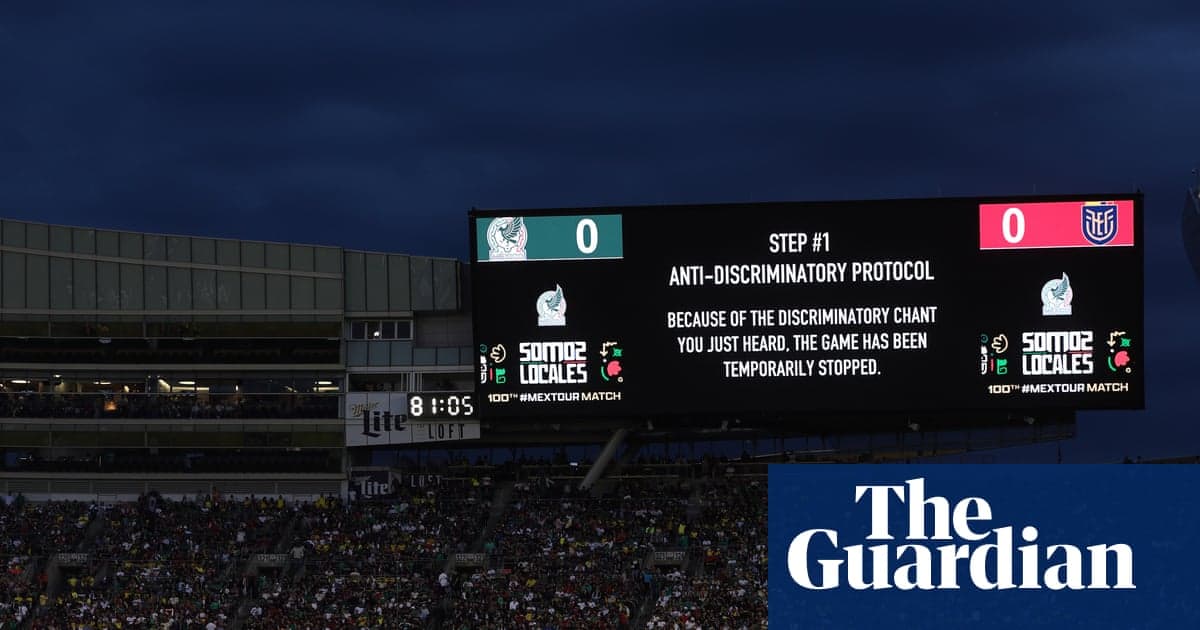
According to reporting from The Guardian, the latest CAS judgment is merely the most recent chapter in a saga stretching over ten years. The specific case involved prosecutions by FIFA for incidents during 2024 matches against Bolivia, Uruguay, Brazil, and the United States. The global governing body’s anti-discrimination monitors, a system that will be heavily deployed across all 104 World Cup games in Mexico, the US, and Canada, confirmed the chant was used. CAS judges upheld the fines totaling 140,000 Swiss francs (approximately $178,000 USD). This legal defeat is not just about the money; it strips the Mexican federation of the argument that the punishment is unfair or that the chant is harmless cultural expression. The verdict reinforces that FIFA’s three-step protocol for discriminatory incidents—which can lead to a match being temporarily stopped, suspended, or even abandoned—is legally sound and likely to be used aggressively during the high-stakes tournament.
The Federation’s Counter-Move: “The Wave Yes, The Chant No”
In a frantic attempt to avert disaster inside its packed stadiums, the Mexican federation launched a campaign titled “The Wave Yes, The Chant No,” as reported by the Associated Press. The campaign cleverly appropriates national pride by connecting it to the “Mexican Wave,” a stadium phenomenon popularized globally during the 1986 World Cup in Mexico. The messaging aims to draw a stark line between passionate, positive support and the discriminatory outburst that follows an opponent’s goal kick. The campaign’s urgency was underscored during a warm-up match against Ghana in Puebla, where a banner bearing the campaign’s message was visible in the stands. However, the AP also reported that the chant has seen a resurgence in recent weeks, notably during Liga MX playoff matches, signalling that the educational programs previously attempted by the federation have largely failed to undo two decades of ingrained behavior.
Parallel Narratives: On-Field Triumph vs. Off-Field Tension
The Ghana friendly on May 22 presented a microcosm of Mexico’s current reality. On the field, the team delivered a stellar performance, with Brian Gutiérrez and Guillermo Martinez securing a 2-0 victory to extend their unbeaten streak to six matches. The American-born Gutiérrez, pushing for his first World Cup roster spot, scored in the second minute, creating a wave of positive momentum. Yet, off the field, the Houston Chronicle notes that the Cuauhtemoc stadium wasn’t completely sold out precisely because of the FIFA sanctions related to the chant from previous friendlies against Ecuador and Paraguay. This juxtaposition is the core conflict: Mexico has a talented squad capable of a deep run, but the actions of a minority of fans actively threaten the team’s standing. A partial stadium closure for a group-stage match, or even a points deduction in a worst-case scenario, would be a catastrophic blow to a team relying heavily on home-field advantage.
AI Perspective & Future Outlook
The critical question is whether a marketing campaign can succeed where years of legal and educational efforts have failed. From a data-driven perspective, behavioral patterns ingrained over 20 years, since the chant first went viral at the 2014 World Cup, are extremely resistant to late-stage interventions. The intense emotional environment of the Azteca Stadium on June 11 against South Africa will be the ultimate stress test. Based on the Guardian’s confirmation that anti-discrimination monitors will be active for every match, the probability of the chant being detected and triggering FIFA’s protocol is extremely high.
The immediate impact likely falls on Mexico’s World Cup campaign itself. The squad, led by coach Javier Aguirre, must prepare for games that could be stopped at any moment, disrupting their rhythm. Specific players, such as goalkeeper Guillermo Ochoa, who is often the direct target of the chant when taking goal kicks as an opponent, could face a uniquely hostile and pressurized situation if the abuse continues internally. Furthermore, FIFA may be forced to choose between its zero-tolerance mandate and the logistical nightmare of sanctioning a host nation on the opening matchday. The most concrete short-term outcome is the potential implementation of stadium bans or partial closures if incidents are detected during the remaining warm-up fixtures. If the “The Wave Yes, The Chant No” campaign fails at the opener, FIFA will face immense pressure to escalate beyond fines to tangible sporting sanctions, casting a pall over the entire North American tournament.
Sources & Further Reading
- https://www.greenwichtime.com/sports/article/mexico-launches-a-last-minute-world-cup-campaign-22271313.php
- https://www.sfchronicle.com/sports/article/gutierrez-and-martinez-lead-mexico-to-victory-22273326.php
- https://www.houstonchronicle.com/sports/article/gutierrez-and-martinez-lead-mexico-to-victory-22273326.php
- https://www.theguardian.com/football/2026/jun/02/mexico-homophobic-chant-appeal-fifa