Mbappé’s Far-Right Swipe Drags French Politics to World Cup 2026
Source: i.guim.co.uk
Kylian Mbappé’s attack on Le Pen’s party before the 2026 World Cup has turned France’s camp into a political debate. Deschamps defends free speech, but Platini accuses the star of sabotaging the campaign, creating a rift that could define their tournament.
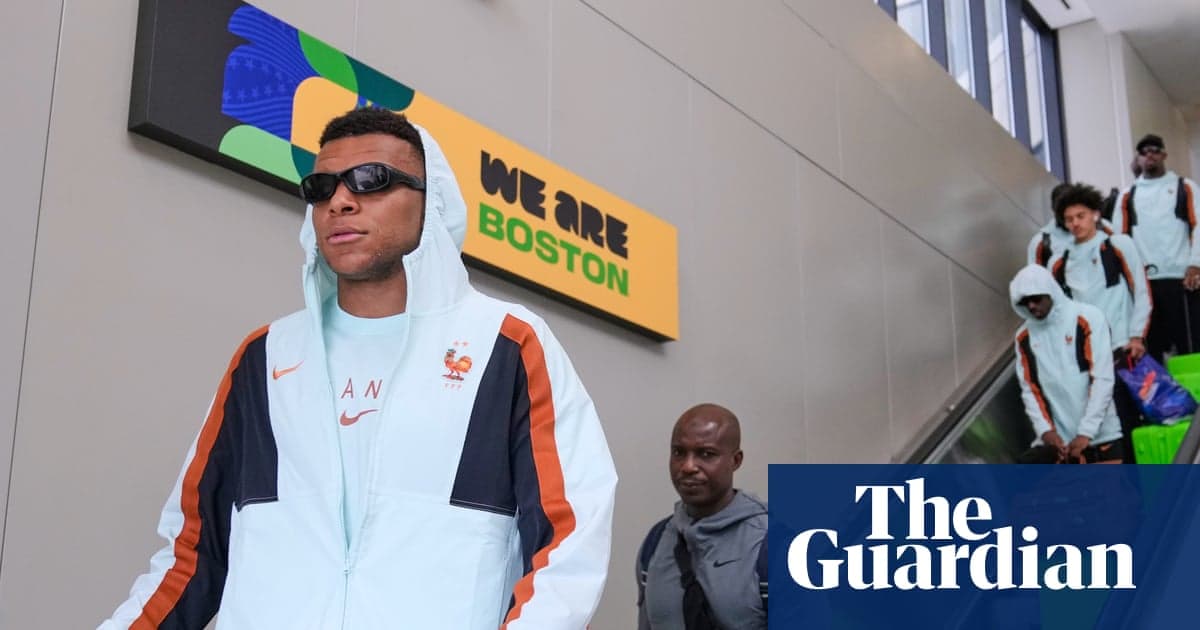
France arrived in the United States for the 2026 World Cup burdened not just by the weight of expectation as two-time champions, but by a political firestorm ignited by their captain. Kylian Mbappé’s explicit criticism of Marine Le Pen’s far-right National Rally party in a Vanity Fair interview last month has followed Les Bleus across the Atlantic, turning their pre-tournament camp into a referendum on freedom of expression and national identity. While Didier Deschamps attempts to shield his squad, the debate has grown so loud that former icons like Michel Platini are publicly accusing the team’s star of sabotaging their campaign before a ball has been kicked. As 32 nations prepare for the global spectacle, no other contender is wrestling with such a potent mix of sport and domestic politics.
The Political Storm Following Les Bleus
Kylian Mbappé’s comments, in which he stated he knew the consequences for his country “when people like them come to power,” were not his first foray into politics, but their timing – on the eve of a World Cup and ahead of France’s 2027 presidential election – has magnified their impact. According to The Guardian, which broke down the escalating tension, Deschamps found himself batting away questions about off-pitch matters during his final squad announcement before stepping down after the tournament. “If there’s one wish I have, it’s for you to ask my players about the opponents, about football,” the coach pleaded with journalists. Yet he conceded that such issues are not taboo within the camp, acknowledging that players discuss “everything” among themselves.
Deschamps staunchly defended his captain’s right to speak, emphasizing freedom of expression for both himself and his players. However, not all French football royalty agrees. Michel Platini, a former national team captain and European champion, joined a chorus of critics who see Mbappé’s activism as an unnecessary distraction during the sport’s most important tournament. The Guardian noted that Platini’s intervention highlights a generational and philosophical rift: the belief that athletes should remain apolitical versus Mbappé’s modern conviction that his platform carries a civic duty. This tension now hangs over a squad that must find unity if it hopes to reclaim the title it won in 2018 and lost in the final in 2022.
Distraction or Motivation? The Dressing Room Divide
While France grapples with a political identity crisis, other contenders are dealing with more conventional challenges. FOX Sports reported on a late roster change in the Austrian camp, where coach Ralf Rangnick called up Dejan Ljubicic to replace the injured key midfielder Christoph Baumgartner. Baumgartner, a Leipzig star with 17 goals last season, required surgery after a warm-up injury, disrupting Austria’s tactical plans. The contrast is stark: Austria’s focus remains squarely on tactical adjustments and squad cohesion, whereas France must manage a media circus fueled by their most famous player’s outspokenness.
The question inside France’s dressing room is whether Mbappé’s stance will galvanize or fragment the group. The Guardian’s report from the squad announcement suggests Deschamps is walking a tightrope, trying to insulate his players from relentless political interrogation while trusting them to handle the pressure. The risk is that teammates who disagree with Mbappé’s intervention or simply wish to concentrate on football may grow resentful. Platini’s public rebuke could amplify those internal divisions. Conversely, Mbappé’s message might resonate with many in a multicultural squad representing modern France, potentially strengthening their bond against a common ideological foe. In a tournament where margins are thin, the psychological state of the squad could be decisive.
Mbappé’s Burden of Leadership
Mbappé’s role as captain – his first World Cup wearing the armband – adds another layer of complexity. By speaking out, he has embraced a leadership that extends beyond the pitch, but it also means any on-field misstep will be weaponized by his political opponents back home. The Guardian highlighted that the Real Madrid forward is fully aware of the consequences, having reiterated his position knowing the scrutiny it would invite. That awareness may steel him to perform, or it could become a weight that affects his explosiveness in the final third. Deschamps’ decision to publicly back him was not just about free speech; it was a managerial attempt to lift that burden and project normalcy.
The Bigger Picture
France’s political drama is not merely a sideshow; it could tangibly shape their tournament trajectory. Deschamps’ final assignment as head coach was already historic – aiming to become the second manager to win two World Cups – but the off-field chaos now threatens to define his legacy as much as his tactical acumen. If the team stumbles in the group stage or exits prematurely, fingers will inevitably point at Mbappé’s pre-tournament activism and Platini’s critique that such distractions undermined focus. The Guardian’s reporting reveals that even Deschamps, a master of crisis management after steering France through the post-2010 mutiny era, appears unusually strained by the “complex geopolitical situation” enveloping his camp.
The real-world implications extend to the players directly: Mbappé could find his every gesture scrutinized for political meaning, while a squad that includes stars like Antoine Griezmann and Aurélien Tchouaméni must navigate an atmosphere where a simple interview can become a protest. While Austria calmly integrates a new midfielder to compensate for injury, France’s challenge is to ensure that their captain’s conscience does not become their collective undoing. The 2026 World Cup will test whether Les Bleus can channel political turmoil into competitive fury, or whether, as Platini fears, they have already handed an advantage to opponents less consumed by the battle for the soul of their nation.
Sources & Further Reading
- https://www.telecomasia.net/blog/france-at-fifa-world-cup-2026/
- https://www.foxsports.com/stories/soccer/chris-the-bear-fallicas-day-1-world-cup-best-bets-picks-predictions
- https://www.foxsports.com/stories/soccer/2026-fifa-world-cup-austria
- https://www.theguardian.com/football/2026/jun/12/france-followed-to-world-cup-by-home-politics-after-mbappes-swipe-at-far-right