Manuel Neuer Declared Germany’s No.1 in Dramatic World Cup U-Turn
Source: i.guim.co.uk
Julian Nagelsmann reverses plan, picks 40-year-old Neuer over Baumann for 2026 World Cup, sparking debate on age and legacy.
The announcement that Manuel Neuer will be Germany's starting goalkeeper at the 2026 World Cup, confirmed with the squad's unveiling on Thursday, marks a seismic shift in the narrative surrounding a team desperate to reclaim its place at the summit of international football. Head coach Julian Nagelsmann, appearing to have performed a complete U-turn on a long-held succession plan, has placed his faith in the 40-year-old icon, ripping up months of planning to reinstate a legend whose last act in a Germany shirt was a quarter-final exit at Euro 2024. It is a high-stakes gamble that transforms Germany's goalkeeping situation from a quiet transition into the tournament's most compelling subplot, with the central question resonating far beyond the penalty area: can a 40-year-old saviour be the catalyst for a fifth World Cup title?
The Technically-Engineered U-Turn
Nagelsmann’s confirmation that Neuer will be his number one is a dramatic departure from a previously stated strategy. For months, the coach had publicly anointed Hoffenheim’s Oliver Baumann as his first-choice keeper for the tournament, a decision so firm that Baumann himself confirmed as recently as last week that his "current understanding" was he would be the starter, according to the report from FOX Sports. The subsequent recall of Neuer is therefore not a simple selection tweak but a complete abandonment of a long-term plan. The damage control has been immediate and revealing. Nagelsmann told FOX Sports that informing Baumann of the decision to meet with Neuer in March was "a blow" for the 35-year-old, whose hopes of starting on the world’s biggest stage were dashed by an icon’s return.
Managing the Fallout in the Goalkeeping Union
The communication breakdown has already shown cracks in the camp's harmony. Nagelsmann’s candid, almost rueful, admission to FOX Sports that "from Oli's point of view there's definitely some room for improvement" in his handling of the situation provides a raw glimpse into a difficult conversation. The coach’s parallel request for "understanding that I can't go into every detail from conversations" hints at significant, private disappointment. This internal shake-up has collateral damage: Barcelona’s Marc-André ter Stegen, long seen as Neuer’s natural successor, saw his own pathway completely closed, with Sports Illustrated noting he has been "beset by injuries" and has made just two club appearances. The selection has therefore drawn a definitive line under an entire generation of goalkeeping pretenders, consolidating all hopes on a single, aging figure.
The Aura of a Legend and the Logic of Experience
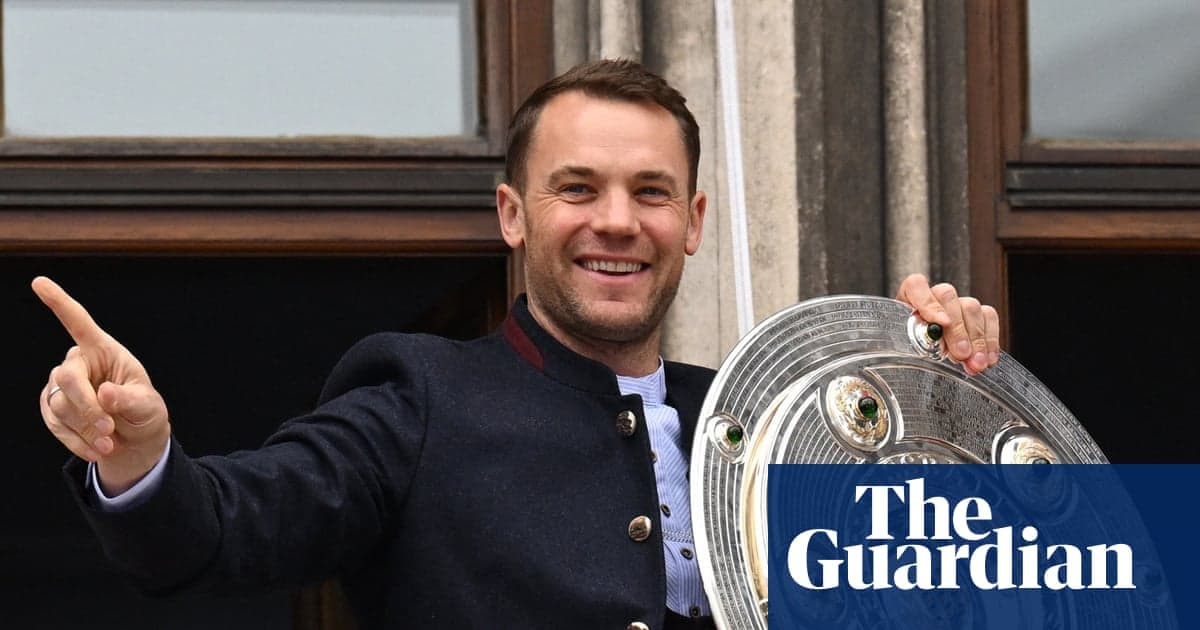
The rationale for the recall is rooted equally in Neuer’s intangible aura and his tangible on-field excellence. As reported by BBC Sport, Nagelsmann didn’t mince words: "Everyone knows the aura and quality Manu has, what he brings to a team." This 'aura' is not a myth; it is forged from 124 caps and a World Cup winner's medal from 2014, a pedigree that no other keeper in the squad can remotely match. Crucially, this is not a sentimental selection for a player who has faded from the elite level. The Guardian highlights the hard evidence: Neuer has just celebrated winning another Bundesliga title with Bayern Munich, and BBC Sport confirms he has been instrumental in driving his club to the Champions League semi-finals this season. In a tournament format where a single, high-pressure moment can define a legacy, Nagelsmann is betting that Neuer’s big-game temperament and proven performance level, demonstrated at the highest club tier, outweigh the risk of picking a veteran who had already closed this international chapter.
A Broader Tournament Tapestry of Veteran Heroes
Germany’s decision to look to the past is not an isolated phenomenon. The 2026 World Cup is increasingly resembling a stage for the game's ageless titans, creating a unique, nostalgic subtext to the entire tournament. As the BBC Sport report specifically details, Neuer joins a remarkable list of 40-somethings selected for their nations. Portugal’s 41-year-old Cristiano Ronaldo, Croatia’s 40-year-old midfield maestro Luka Modric, and Scotland’s 43-year-old goalkeeper Craig Gordon have all been named in final squads. This context transforms Neuer's selection from a purely German story into a piece of a broader global trend, a narrative where the ultimate pressure cooker of sport is not being entrusted to the next generation but to the last.
The Revamped Squad Around the Icon
While the goalkeeper story dominates, the squad Nagelsmann has built to win the tournament features a potent mix of established stars and emerging talent that will defend Neuer's net. A significant Premier League contingent has been trusted to provide the foundation for a deep run. BBC Sport notes that this includes Arsenal’s Kai Havertz, Brighton’s Pascal Gross, and Liverpool’s Florian Wirtz, alongside Newcastle United’s defensive duo of Malick Thiaw and Nick Woltemade. The injection of youthful dynamism is further evidenced by the inclusion of 18-year-old Bayern Munich prospect Lennart Karl, while the experience of winger Leroy Sane and the recalled Neuer provides a crucial spine of knowledge. Germany faces a navigable but tricky Group F with matches against Curacao, the Ivory Coast, and Ecuador, a path that must lead to the knockout stages for this grand, veteran-centered project to be considered validated.
AI Perspective and Tournament Outlook
The computational models parsing this squad announcement will immediately flag volatility in Germany's projected performance. The data points for Neuer himself are contradictory for an AI prediction engine: elite-level save percentages and Champions League clean sheets from this very season clash violently with the demographic reality of a 40-year-old body and a complete break from international football continuity. The model will see a huge risk spike. If the gamble fails—if a moment of age-related misjudgment or a breakdown of the fledgling communication between a returning legend and a starting center-back pair like Thiaw and a partner proves costly against, say, a dynamic Ivory Coast counter-attack—the narrative will be terminally damaging for Nagelsmann, a coach whose data-driven reputation would be shattered by a decision based on aura. For the tournament's broader data story, Germany becomes a fascinating outlier, a high-variance team whose ceiling is raised to champion-level by Neuer’s genius but whose floor has been lowered by the self-inflicted chaos of the Baumann demotion. The AI's final prediction would rate a deep run as highly probable, but not a final victory; the surrounding outfield talent is undeniable, but the unique psychological and physical fragility at the very last line of defence introduces an unquantifiable variable that models hate, and that World Cups are made of.
Sources & Further Reading
- https://www.bbc.com/sport/football/articles/c775kgzdmzgo
- https://www.si.com/soccer/germany-2026-world-cup-roster-confirmed-full-list-players
- https://www.foxsports.com/stories/soccer/germany-goalkeeper-manuel-neuer-retirement-2026-fifa-world-cup
- https://www.theguardian.com/football/2026/may/21/manuel-neuer-germany-no-1-world-cup