Iraq’s 40-Year World Cup Wait Ends: Can They Survive the 2026 Group of Death?
Source: ichef.bbci.co.uk
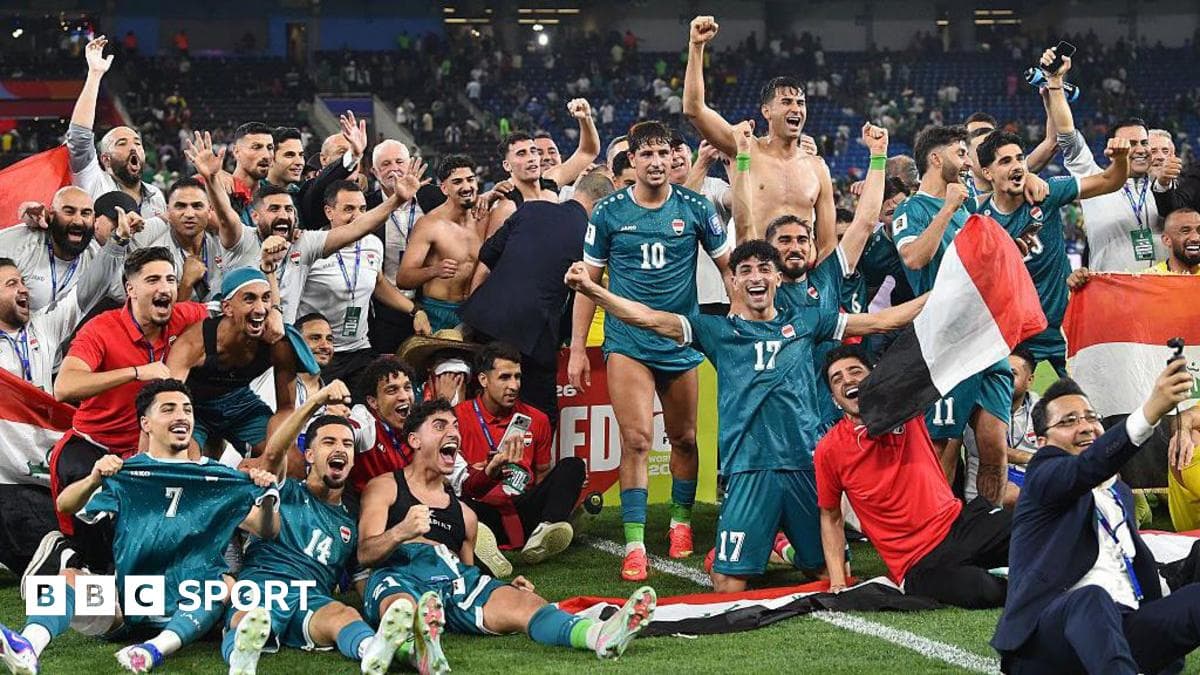
Iraq qualified for the 2026 FIFA World Cup after a 40-year absence, defeating Bolivia 2–1 in a play-off in Mexico. The nation, which has endured war, sanctions, and FIFA bans, will face France, Norway, and Senegal in Group G.
In a moment that felt both historic and symbolic, Iraq’s national football team sealed its return to the FIFA World Cup on the same Mexican soil where it first appeared four decades ago. The 2026 qualification play-off victory over Bolivia not only ended a 40-year absence but also reignited the dreams of a football-crazed nation of 46 million that has endured war, international sanctions, and FIFA punishments
As the Lions of Mesopotamia
prepare for a daunting Group G alongside France, Norway, and Senegal, the shadows of 1986 – when Iraq lost all three matches – loom large. Yet this time, according to BBC Sport, the squad is laced with European experience and guided by a coach who knows how to navigate World Cup waters.
The Road to Redemption
Iraq’s path to 2026 was anything but straightforward. Under Graham Arnold, the Australian who led the Socceroos to the round of 16 in 2022, the team traversed 21 matches across multiple qualifying rounds. A tight play-off victory against the United Arab Emirates preceded the decisive 2-1 win over Bolivia in the neutral setting of Mexico. The final whistle unleashed scenes of raw emotion from players and fans alike, a catharsis for years of heartbreak. BBC Sport captured the sentiment, noting how fitting it was that qualification came at the same location as their 1986 debut.
The Architect and His Weapons
Arnold’s appointment in 2025 proved transformative. He inherited a side ranked 57th in the world but quickly instilled discipline and belief. Central to his plans are several players plying their trade in Europe. According to Telecom Asia’s official squad announcement on 1 June 2026, the 26-man roster features Ipswich Town forward Ali Al-Hamadi, Utrecht midfielder Zidane Iqbal (formerly of Manchester United), and Kevin Yakob, who recently helped AGF Aarhus win the Danish league. Other key names include goalkeeper Jalal Hassan, veteran defender Ali Adnan, and midfield orchestrator Safaa Hadi. This blend of youth and experience offers a sharp contrast to the isolated and inexperienced side of 1986.
A 40-Year Odyssey of Conflict and Sanctions
Iraq’s World Cup drought is inextricably tied to the nation’s turbulent modern history. After 1986, the Iran-Iraq War, the Gulf War, and subsequent UN sanctions crippled the country’s infrastructure, including sport. FIFA suspensions due to government interference further sidelined the team, and the 2003 invasion plunged Iraq into chaos. During these decades, football was often a distant dream. Karim Allawi, a defender in 1986 who spoke to BBC Sport, now watches as a fan, acutely aware of what was lost. “This is truly a group of death and tougher than 1986,” he said, underscoring the scale of the challenge. Yet the mere presence of Iraq at the 2026 tournament is a triumph over adversity, a testament to the resilience of its people and players who often had to train abroad without basic resources.
Group of Death: A Daunting Challenge
Drawn in Group G, Iraq faces a terrifying trio: reigning world champions France, a Norway side spearheaded by Erling Haaland, and Senegal, the current African champions. Allawi’s description of a “group of death” is no hyperbole. France blitzed through their qualifying campaign and remain stacked with generational talents. However, a late injury blow reported by Telecom Asia could alter the equation: defender William Saliba sustained an injury in the Champions League final and may miss the tournament. His absence would force France to reshuffle their backline, potentially opening defensive vulnerabilities that Iraq’s pacey attackers could exploit.
Norwegian Storm and Senegalese Steel
Norway, with Haaland in prolific form, represent one of Europe’s most dynamic attacking units. Meanwhile, Senegal’s mix of physicality and technical flair makes them a formidable opponent. For Iraq, every match is a mountain. Yet Arnold’s pragmatic system, built on quick transitions and set-piece prowess, could frustrate opponents in the unique atmosphere of North American stadiums. TIME magazine’s comprehensive World Cup guide notes the expanded 48-team format and 104 games, meaning even third-place finishers in a group of four can advance. This structural change offers Iraq a glimmer of hope: a single draw or a shock win could be enough to reach the knockout stages.
Future Outlook: Can Iraq Spring a Surprise?
Iraq’s realistic goal is to improve on 1986, where they failed to score a goal. Allawi told BBC Sport he hopes “they deliver strong performances and achieve better results.” With Saliba’s status uncertain, France may not be at their imperious best, and Arnold’s men will fancy their chances of troubling Les Bleus on the counter. The expanded World Cup also reduces the do-or-die pressure of the old 32-team format, allowing a more liberated style of play.
Names to Watch and a Nation’s Hope
Beyond Al-Hamadi and Iqbal, the squad’s depth includes Hussein Ali and Amjed Attwan, who provide creativity from midfield. In goal, Fahad Talib could be called upon to produce heroics. Iraq’s passionate fanbase, expected to travel in large numbers, will turn every group game into a home atmosphere. If the team can secure a result against Norway or Senegal and exploit any French frailties, a historic round-of-32 berth is not out of the question. The 40-year wait has been long, but for Iraq, 2026 is not just about participation – it is about redemption.
Sources & Further Reading
- https://www.telecomasia.net/blog/world-cup-2026-iraq-name-official-26-man-squad-for-historic-return-after-40-years/
- https://www.telecomasia.net/blog/william-saliba-could-miss-world-cup-after-injury-blow-in-champions-league-final/
- https://time.com/article/2026/05/27/fifa-world-cup-2026-complete-guide/
- https://www.bbc.com/sport/football/articles/cyv2l60q188o