Iran Players: 'Duty to Fight for Our People' at US-Hosted World Cup 2026
Source: static.independent.co.uk
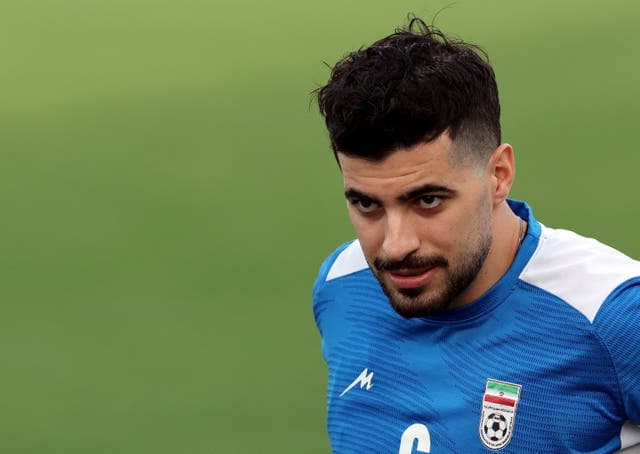
Iran’s national team opens up about preparing for the 2026 World Cup in the US while at war with the host country, with midfielder Saeid Ezatolahi admitting the constant news from home makes it 'not easy' to focus on football.
As the 2026 World Cup approaches, Iran’s national football team finds itself in an unprecedented situation: preparing for a tournament hosted primarily by the United States, a country with which it is currently at war. This unique geopolitical backdrop has cast a long shadow over Team Melli’s preparations, as revealed in exclusive interviews with The Associated Press during a training camp in Antalya, Turkey. The blend of athletic ambition and national duty has created a pressure cooker that no other squad in Qatar 2022 or any previous World Cup has faced.
The Mental Battle: ‘It’s Not Easy’
Speaking to the AP, 29-year-old midfielder Saeid Ezatolahi, a veteran of the 2018 and 2022 tournaments, did not mince words about the psychological strain. “Well, to be honest, it’s not easy,” he said, acknowledging that while his experience might help him manage the situation, the constant stream of news from home weighs heavily. “We are following the news in our country and the political things, of course, can affect the mind of the players and the people.” His candid admission highlights the unique challenge of compartmentalizing national crisis while pursuing sporting glory. Unlike other teams that can immerse themselves entirely in football, Iran’s players must navigate the emotional fallout of a war that is not just a distant headline—it is personal, involving families and friends back home.
For younger squad members, the weight may be even heavier. Ezatolahi noted that his third World Cup gives him some resilience, but “for other players, it might be more difficult.” The camp in Turkey, lasting over two weeks, was designed to provide a neutral ground for focus, yet the necessity of traveling to the U.S. embassy in Ankara for visa applications served as a stark reminder of the political reality. These moments blur the line between athlete and citizen, forcing the team to confront the conflict head-on even as they practice set pieces and fitness drills.
A Camp in Turkey: Visa Hurdles and Closed Doors
The Iranian Football Federation chose Turkey for its pre-tournament camp, a pragmatic decision that allowed the team to escape direct turmoil but also underscored its isolation. In Antalya, the squad trained under head coach Amir Ghalenoei, with friendly matches against Nigeria and Gambia providing competitive tune-ups. However, media access was tightly controlled, and players rarely spoke to international press, making Ezatolahi’s interview a rare window into the camp’s atmosphere.
The visa process itself became an ordeal. Some players and staff traveled to Ankara to submit applications at the U.S. embassy, a journey that must have felt surreal given the host nation’s adversarial stance. While other teams breeze through administrative formalities, Iran’s players faced not only the usual anxiety of paperwork but also the symbolic weight of requesting entry into a country that their government is in conflict with. This logistical hurdle adds a layer of uncertainty: delays or denials could disrupt roster finalization and team harmony.
Friendly Fixtures as a Distraction
Friendly matches against Nigeria and Gambia, held in Antalya, offered brief escapes. In these games, the focus was temporarily on tactics and fitness, with players like Mohammad Ghorbani seeing action against Nigeria. Yet even these moments are tinged with broader significance—performances are evaluated not just by coaches but by a population yearning for a morale boost. The camp’s controlled environment reflects a dual strategy: insulate the team from external noise while honing the discipline needed to compete at the highest level.
A Sense of Duty: ‘Fight for Our People’
Perhaps the most poignant revelation from the camp is the players’ deeply felt responsibility to their nation. As one team member told the AP, “Our duty is to fight for our people.” This statement transforms the World Cup from a sporting event into a mission of national pride and solidarity. For millions back home, the matches will be a rare source of joy and unity amid hardship. The players are acutely aware that their performance can uplift a country battered by conflict, economic strain, and international tensions.
This sense of duty also imposes an immense burden. Every pass, every tackle, every goal is freighted with symbolic meaning. The fear of letting their compatriots down adds a psychological dimension that coaches and sports psychologists must manage. Ghalenoei, who took over the team last year, has the delicate task of channeling this emotional energy into motivation rather than anxiety. The team’s veteran core—including Ezatolahi and others with World Cup experience—must mentor teammates who have never faced such dual pressures. The “fight” on the pitch will be both a literal athletic contest and a metaphorical stand-in for a nation’s resilience.
AI Perspective: The Road Ahead for Team Melli
The implications for Iran’s World Cup campaign are profound. While the tournament draw is yet to be made (the group stage slots will be known closer to the event), any opponent would be remiss to underestimate the emotional volcano this team carries. However, the mental toll could also be a double-edged sword. Against well-prepared, focused sides—potentially from Europe or South America—Iran’s ability to maintain concentration for 90 minutes could falter if off-field concerns erupt. Distractions during a match, such as flags, anthems, or crowd reactions given the host context, may trigger reactions that disrupt team cohesion.
Logistically, the United States’ potential security restrictions or additional scrutiny for Iranian nationals could create further obstacles. While FIFA typically ensures smooth entry for all qualified teams, the political reality might mean extra delays, protests, or uncomfortable situations at airports and hotels. These micro-stresses accumulate and can erode the bubble of focus essential for tournament success. In contrast, squads from politically neutral or allied nations will enjoy seamless integration.
On a human level, Team Melli’s campaign is already historic—a testament to how sport and global affairs collide. The players, by sharing their truth, have added a powerful narrative to World Cup 2026. Whether they can channel “the fight for our people” into on-field results remains to be seen, but one thing is certain: no team will evoke as much emotion, both on the terraces and in the living rooms of those watching back home. The opening match, whoever it may be against, will not just be a game; it will be a statement.
Sources & Further Reading
- https://www.thesunchronicle.com/news/nation_world/ap-exclusive-iran-players-describe-how-the-war-affects-their-world-cup-preparations/article_9bdc5854-7111-54d0-bc25-bd486ffdb681.html
- https://www.houstonchronicle.com/sports/article/ap-exclusive-iran-players-describe-how-the-war-22290767.php
- https://www.greenwichtime.com/sports/article/ap-exclusive-iran-players-describe-how-the-war-22290767.php
- https://www.independent.co.uk/sport/football/world-cup/iran-war-us-world-cup-2026-ezatolahi-b2989708.html