Germany World Cup Squad: Neuer Sensationally Returns, Gnabry Axed
Source: assets.bundesliga.com
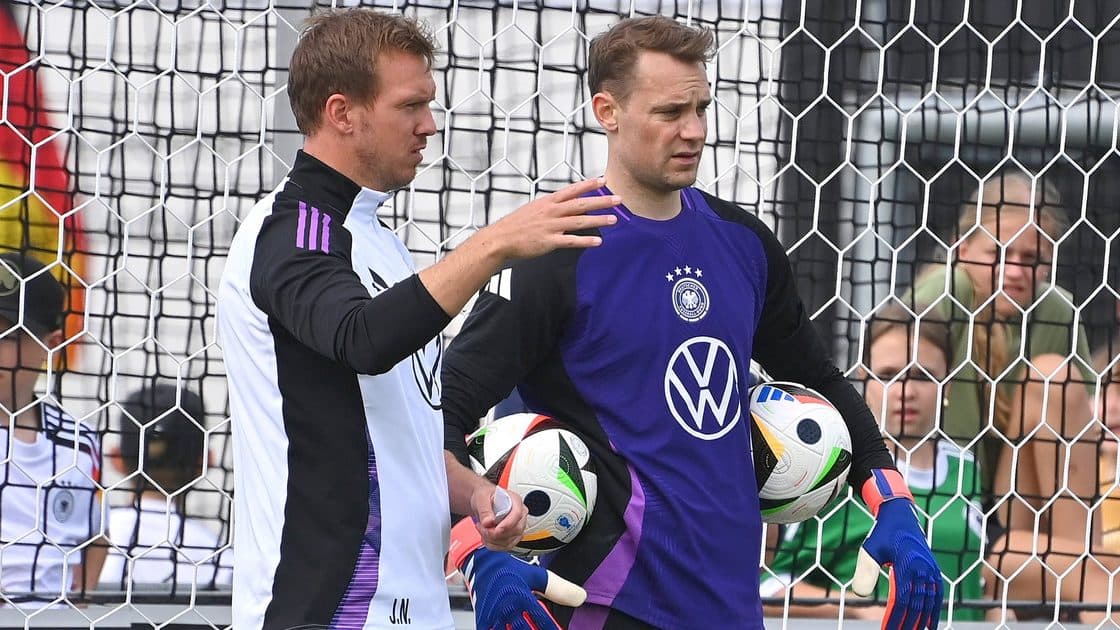
Julian Nagelsmann recalls legendary goalkeeper Manuel Neuer for 2026 World Cup despite 2024 retirement. The 40-year-old Bayern icon returns to lead Germany's title challenge.
The 2026 FIFA World Cup is set to witness a dramatic and unexpected comeback. Julian Nagelsmann has named his 26-man Germany squad, and the headline dominating global football discourse is the sensational return of legendary goalkeeper Manuel Neuer. Despite retiring from international duty in 2024 and reaffirming as recently as last month that he would not be coming back, the 40-year-old Bayern Munich icon has been recalled for the tournament in Canada, Mexico, and the USA. This bold decision sets the stage for a gripping narrative as Germany seeks to exorcise the demons of back-to-back group stage eliminations in 2018 and 2022 and mount a serious title challenge.
The Neuer Shockwave: Experience Over Experiment
Julian Nagelsmann’s decision to reintegrate Manuel Neuer is perhaps the most contentious squad selection of the pre-tournament period. According to The Athletic, Neuer retired from the national team in 2024 and had recently pledged his international career was definitively over. The fact that Nagelsmann has convinced him to reverse this decision underscores a critical, perhaps desperate, desire for proven, world-class stability between the posts. As detailed by Bundesliga.com, Neuer’s presence immediately alters the defensive dynamic and leadership structure of the team. It signals that, despite the World Cup being held on North American soil, Nagelsmann is unwilling to gamble on inexperience in the most crucial position on the pitch. This selection raises immediate questions about internal hierarchy, pushing Marc-André ter Stegen’s anticipated era as the undisputed No. 1 further into the future and directly challenging the younger generation of German keepers to operate under a long, formidable shadow.
The Risk vs. Reward Calculus
The move is not without significant risk. Neuer, now 40, has endured serious injury setbacks in recent years, including a broken leg sustained in a skiing accident after the 2022 World Cup. While his reflexes and distribution remain elite, fielding a goalkeeper of his age in a tournament that demands intense physical exertion, often in searing North American summer heat, is a gamble. However, Nagelsmann is banking on Neuer’s distribution and sweeping ability to form the backbone of a proactive, possession-oriented system. The FIFA portal notes the official squad announcement did not shy away from this being the squad's defining talking point, implicitly placing the accountability for Germany’s defensive solidity squarely on Neuer’s shoulders.
Attacking Firepower: Havertz In, Gnabry Out
While Neuer’s return provides a nostalgic and reassuring presence at the back, the forward line selections reveal a ruthless meritocracy. The Athletic confirms that Serge Gnabry, a long-time Nagelsmann favorite from their shared time at Bayern Munich, has been omitted. This is a major rejection for a player once considered a guaranteed starter. His exclusion comes despite his historical connection with the coach, and points to an underwhelming domestic season that failed to convince. His absence clears the path for new blood and players in sharper form.
Woltemade’s Meteoric Rise
In Gnabry’s place, Nagelsmann has turned to a player who defines the future. Bundesliga.com highlights the inclusion of Nick Woltemade, whose call-up represents a meteoric rise. The Stuttgart striker, known for his physicality and deceptive technical skill, offers a point-of-difference alternative to the primary forward options. Similarly, The Athletic confirms that Kai Havertz retains his place, joining the likes of Florian Wirtz and Leroy Sane in the attacking unit. Sane’s inclusion is particularly noteworthy; as The Athletic points out, he has historically struggled with “indifferent form” for the national team. Nagelsmann is clearly backing his ability to unlock Sane’s mercurial talent on the biggest stage, hoping that the winger’s terrifying one-on-one ability can finally translate consistently to international football in a squad that now lacks Gnabry's direct competition.
Midfield Composition and Defensive Framework
The engine room sees a blend of Premier League experience and domestic reliability. The Athletic lists Pascal Gross as one of the England-based players making the squad. His adaptability and football intelligence will be vital in controlling the tempo of games, particularly against underdog opponents like Curacao who may cede possession. The notable omission, according to the detailed report from The Athletic, is Leeds United’s Anton Stach. Stach was part of the setup during the March internationals but failed to survive the final cut. This indicates that Nagelsmann values Gross’s experience and specific tactical profile over Stach’s physicality, opting for a player capable of executing intricate passing sequences under pressure. Defensively, Malick Thiaw, also from the Premier League, has made the trip, providing a robust option in central defense as the team prepares to face the physical threat of Ivory Coast and the tactical discipline of Ecuador.
AI Perspective: Navigating a Group of Hidden Dangers
Based on the final squad analysis, Germany’s path through Group E—featuring Curacao, Ivory Coast, and Ecuador—is fraught with specific tactical tests that this selection directly addresses. The most concrete takeaway is the decision to recall Neuer specifically to counteract the transitional threat of Ivory Coast. Ivory Coast possess world-class speed on the counter-attack, and Neuer’s historic role as a ‘sweeper-keeper’ is a data-driven solution to allow Germany’s defensive line to push high
If Ter Stegen or
another goalkeeper had been selected, the defensive line would likely need to drop 5-10 meters deeper to mitigate the risk of balls over the top, disconnecting the press. Nagelsmann is forcing the system to remain aggressive at the cost of long-term succession. Secondly, the omission of Gnabry in favor of Woltemade offers a direct, physical solution for the Ecuador match. Ecuador have historically defended deep and narrow, and Woltemade’s frame and hold-up play provide an alternative to simply trying to pass through a congested penalty area, an approach that failed Germany spectacularly in 2022. The biggest question remaining is the mental state of a squad with a leader who was, until weeks ago, emphatically retired. If Neuer performs, his return is a masterstroke; if the chemistry is fractured or his body fails, it is a legacy-defining miscalculation. This squad, as confirmed by FIFA’s official release, is not built for the long-term future—it is built to win immediately during these specific summer months.
Sources & Further Reading
- https://www.fifa.com/en/tournaments/mens/worldcup/canadamexicousa2026/articles/germany-squad-neuer-nagelsmann-named
- https://www.bundesliga.com/en/bundesliga/news/germany-squad-world-cup-2026-manuel-neuer-nagelsmann-37487
- https://www.nytimes.com/athletic/7297292/2026/05/21/germany-world-cup-squad-2026/