FIFA 2026 World Cup Tech: End of the Delayed Offside Flag
Source: ichef.bbci.co.uk
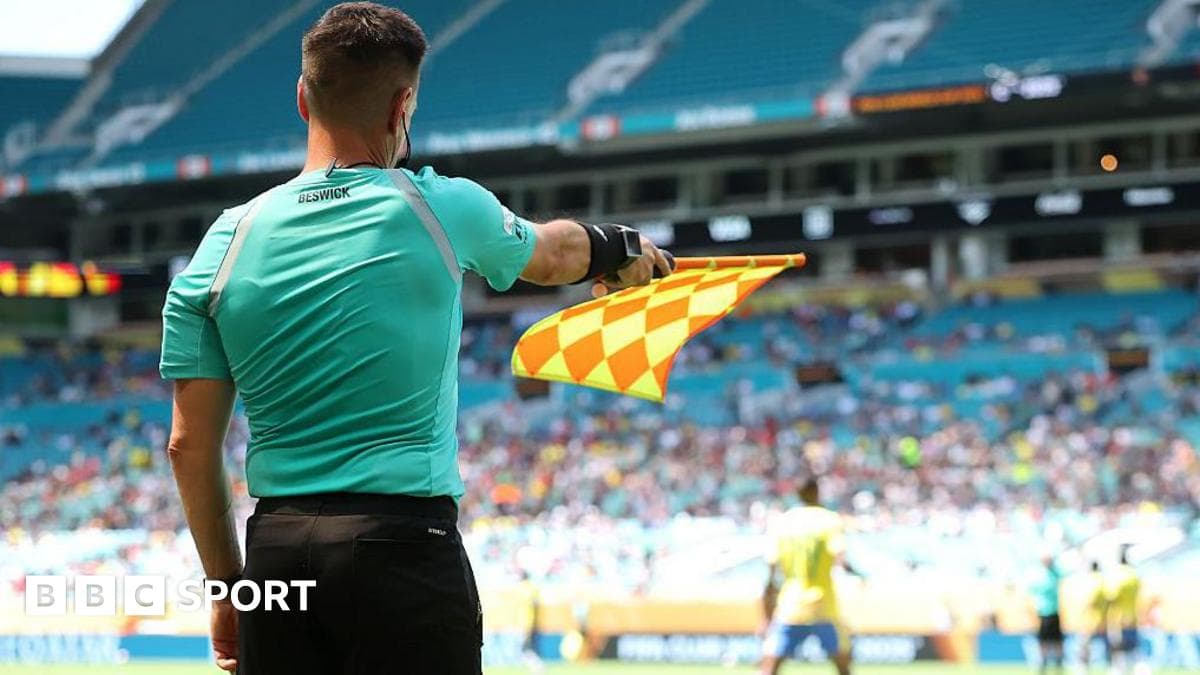
FIFA confirms new semi-automated offside tech for the 2026 World Cup. The system sends a real-time alert if a player is over 10cm offside, aiming to end delayed flags and enhance player safety.
The End of the Delayed Flag: FIFA’s Technological Revolution for 2026
The 2026 FIFA World Cup, set to be the largest in history across the United States, Mexico, and Canada, is poised to fundamentally alter one of football’s most frustrating rituals: the delayed offside flag. FIFA has confirmed the rollout of advanced semi-automated offside technology that promises near-instantaneous decisions, directly challenging a convention that has long tested the patience of players and supporters. According to BBC Sport, the new system will send a real-time audio alert to the assistant referee if a player is more than 10 centimeters offside, a dramatic improvement over the 50-centimeter threshold tested in earlier Club World Cup and Intercontinental Cup trials. This advancement directly addresses the safety-critical flaw exposed by a harrowing incident in May 2025, when Nottingham Forest striker Taiwo Awoniyi was placed in an induced coma after colliding with a post during a needless passage of play while a flag was held down.
A Technological Leap in Decision-Making
The core objective is to remove the tension and danger of watching an attack develop, a goal scored, and celebrations erupt, only for everything to be nullified by a late, technically correct VAR review. FIFA’s approach introduces granularity into the communication process. While previous semi-automated iterations offered a blunt instrument, the shift to a 10-centimeter margin for a direct audio signal to the on-field assistant is a strategic calibration. BBC Sport reports that despite this automation, the on-field official retains ultimate authority to raise the flag and stop play, a failsafe to account for malfunctions. However, the system is not a panacea for all offside controversy. The report clarifies that the technology is strictly limited to positional offside; it remains incapable of adjudicating the subjective “interfering with play” laws or situations where players are on the ground or positioned too closely together for the skeletal tracking to separate them.
Reducing Risk on the Pitch
The safety implication remains a primary catalyst for this accelerated implementation. The Awoniyi case serves as a stark validation of FIFA’s urgency, demonstrating that the legal doctrine of allowing play to continue until a neutral phase is complete carries genuine, high-speed physical risk. Beyond injury prevention, the governing body is targeting the theatrical frustration that leads to toxic atmospheres. As further elaborated in the broader rule amendments reported by Sports Illustrated and Reuters via HuffPost, FIFA is waging a war on dissent and time-wasting that complements the technical offside upgrade. Players and fans are expected to experience a more fluid match tempo, free from the false peaks of disallowed goals that often incite crowd disorder.
A Sweeping Overhaul of Player Conduct
FIFA’s 2026 World Cup will not only feel different because of the speed of offside calls but also because of a stringent new disciplinary code designed to sanitize confrontations. Drawing from multiple sources, a cluster of rule changes passed by the International Football Association Board (IFAB) will debut at the tournament. According to HuffPost, citing remarks from FIFA refereeing chief Pierluigi Collina, the changes are specifically designed to “tackle discrimination, cut time-wasting, and enhance match tempo.” The most visually impactful of these is the mandatory red card for any player who covers their mouth with a hand, arm, or shirt during a confrontational situation, a direct response to incidents such as one involving Benfica’s Gianluca Prestianni, as noted by SI.
The Crackdown on Mass Confrontation
This hardline stance on physical gestures is synchronized with a systemic clampdown on the chaotic scenes where players swarm officials. The new protocols will strictly limit which players can engage with the referee, aiming to neutralize the intimidating pressure tactics that have plagued recent Premier League and European seasons. Crucial to the enforcement of these standards are the newly announced “body cameras for referees,” which will provide an unprecedented perspective for VAR and disciplinary review panels, ensuring that the off-the-ball micro-aggressions and verbal abuse that previously went unpunished in the noise of a stadium will be captured. These laws are not merely advisory; Collina’s imperative is that the 2026 World Cup serves as the global stage for their permanent integration into the sport.
AI and Ethics: Policing the New Playing Field
Underpinning this dual-pronged aggression on time-wasting and abuse is a reliance on semi-automated surveillance that extends beyond line-calling. The introduction of body cameras for match officials, reported across the board, creates a “black box” for on-pitch behaviour that will hold players accountable for every word spoken during a 90-minute match. This is a calculated move by IFAB to neutralize the defence of ambiguity in disciplinary hearings. When cross-referenced with the audio from the new offside alert system, the officiating ecosystem becomes a closed loop of objective data. From an AI perspective, the next evolutionary step for 2027 and beyond will be the linguistic analysis of this audio feed, using natural language processing not just to identify offside positions, but to flag abusive language in real-time, automating the suspicion of discrimination that local officials may miss due to language barriers or implicit bias.
Tournament Implications for 2026
The immediate impact on the tournament’s favourites is stark. For a high-pressing team like Spain, which relies on a surgically aligned defensive line to spring traps, the 10-centimeter alert will suddenly legalize a level of precision that visual human judgement could never sustain; conversely, forwards like France’s Kylian Mbappé, who live on the shoulder of the last defender, lose the psychological edge of the “benefit of the doubt” delay. The hardline law on covering mouths directly targets the cloak-and-dagger dissent seen in heated South American qualifiers, placing a specific target on the backs of Argentina’s combative defenders who frequently engage in close-quarters intimidation. With the IFAB explicitly citing a Benfica player’s gesture as the catalyst, this World Cup will serve as a zero-tolerance exhibition. Any player from a traditionally physical side—be it Uruguay’s defenders or the midfield enforcers of a nation like Morocco—risks immediate expulsion for a gesture that was previously only a yellow-card offence at most. This fundamental resetting of thresholds ensures that the 2026 champion will not only be the most talented unit, but also the most disciplined, transforming the mental composure of every squad into primary tactical currency.
Sources & Further Reading
- https://www.skysports.com/football/news/12098/13549645/world-cup-ifab-confirm-new-var-powers-10-second-substitutions-and-tactical-timeout-ban-in-major-rule-changes
- https://www.si.com/soccer/2026-world-cup-introduce-drastic-rule-changes
- https://www.huffpost.com/entry/2026-world-cup-new-laws_n_6a1d5c7ee4b0ba317300c19a
- https://www.bbc.com/sport/football/articles/c232d34kkyzo