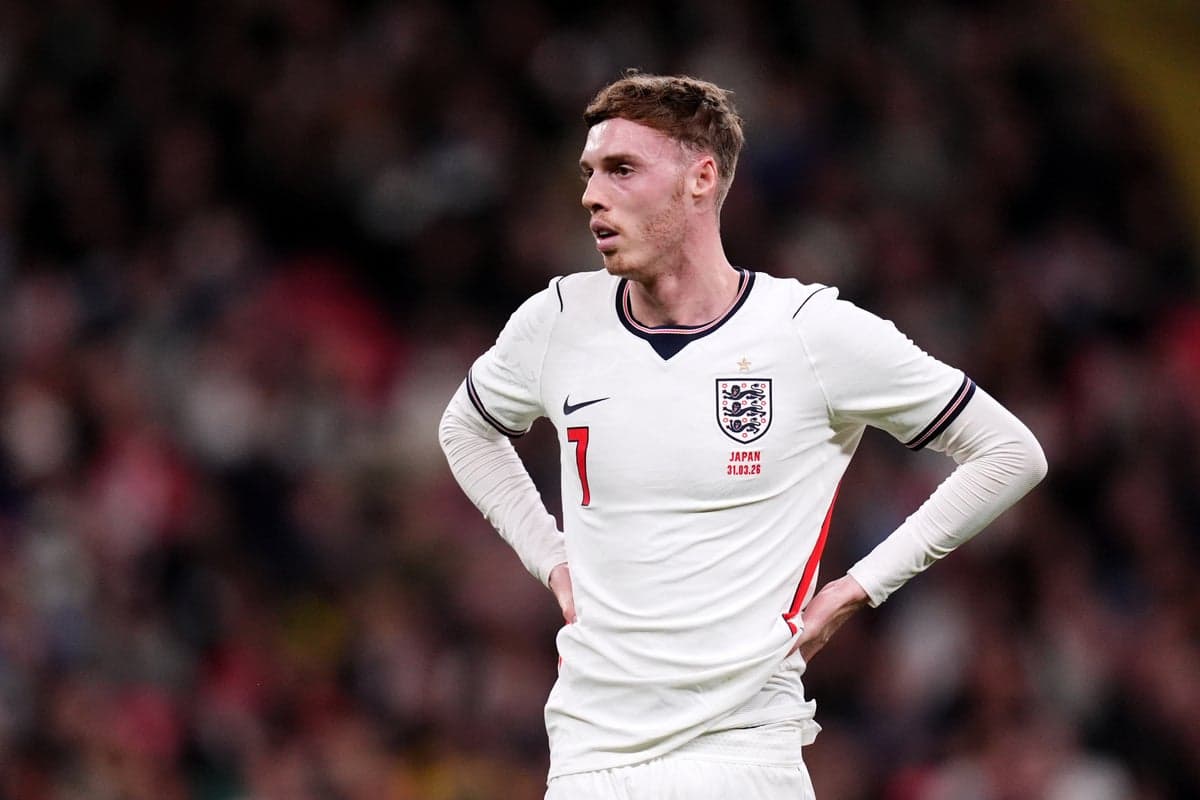
Cole Palmer Axed for World Cup 2026 After Failing Thomas Tuchel Audition
Source: static.independent.co.uk
Thomas Tuchel omits Cole Palmer from England's World Cup squad, citing a dramatic decline in form and positional indiscipline.
Thomas Tuchel’s final 26-man England squad for the 2026 World Cup has sent shockwaves through English football, defined not by who is going to the tournament, but by the household names left behind. In a calculated act of selection brutality, Tuchel omitted four of the nation’s most recognisable talents: Cole Palmer, Phil Foden, Trent Alexander-Arnold, and Harry Maguire. The decision is a ruthless declaration of a new era, where reputation has been sacrificed at the altar of tactical fit and cutting-edge form. While the exclusion of Foden was described by Tuchel with a sense of profound regret, “like letting go of a cherished treasure,” the omission of Palmer is a cold, hard verdict on a player who has spectacularly failed to recapture the magic that once made him seem the answer to all of England’s creative problems.
The Long Fall of a Creative Prodigy
Cole Palmer’s journey from essential heir to discarded luxury is a story of a system change and a staggering loss of individual form. Last summer, on a sweltering North American night, Palmer delivered a masterclass to dominate the Club World Cup final, a performance that felt like a formal coronation as England’s future World Cup No 10. In that moment, he was the complete attacking midfielder, drifting into pockets of space and unlocking a world-class defence with visionary passing. The player who has worn a Chelsea shirt this season, however, has been a pale imitation of that maestro.
According to The Independent, Palmer’s dramatic decline is the core reason he failed in this very specific bid to impress Thomas Tuchel. The sharp, incisive movement that once defined his game has evaporated, replaced by a frustrating tendency to drop far too deep in search of the ball. Rather than receiving possession in the lethal half-spaces between the lines, Palmer now often collects it in areas where he poses no direct threat, effectively taking himself out of the game. This positional indiscipline would be a cardinal sin in Tuchel’s meticulously structured system, which demands that attacking players occupy and stretch the opposition in specific, high-value zones. Palmer has stopped doing the very thing that made him indispensable.
The Statistical Cliff Edge
A deeper dive into the underlying numbers paints a brutal picture of this regression. Sky Sports has analysed the data and reports a catastrophic collapse in Palmer’s creative output. During his breakout 2023/24 campaign, Palmer was registering 0.4 Expected Assists (xA) per 90 minutes, a mark of an elite chance creator. In the season just finished, that number has cratered to 0.1 xA per 90. Even more damning is his progressive carries metric, which has been slashed in half from 5.2 to just 2.4 per 90 minutes. This is not a player having an unlucky spell in front of goal; it is a player who has fundamentally lost the dynamism to progress the ball and open up defences, the very job description of an international number 10. Faced with this evidence, Tuchel has not made a judgment based on a hunch, but on a clinical, data-proofed conclusion that Palmer’s current level is not close to World Cup standard.
The Cool Logic of Tuchel’s Ruthless Selection
If the decision to overlook Foden was emotionally difficult, the Palmer call was pragmatically simple. Tuchel’s “I love the tough decisions” mantra, as reported by Sky Sports, is not mere bluster but a window into a selection philosophy that demands specific tactical obedience. Palmer was given a direct chance to adapt during recent international camps and, by all accounts, failed the audition. The Independent notes that his inability to enact on-pitch instructions contrasted sharply with alternative options who fit the Tuchel template.
The Beneficiaries: Mainoo, Madueke, and Toney’s Revival
Tuchel’s squad construction reveals exactly what he prizes. The list of notable inclusions is a direct rebuttal to Palmer’s skill set. Kobbie Mainoo has been selected for his press-resistant ability to receive the ball on the half-turn under pressure and drive forward—precisely the progressive carrying that Palmer has stopped providing. Noni Madueke offers raw, direct wing play and a willingness to stay high and wide, stretching the pitch in a way that creates space for others. And in Ivan Toney, Tuchel has not just chosen a backup striker; he has chosen a physically dominant focal point, a player who fundamentally alters the team’s tactical profile. Toney’s shock recall allows England to play a completely different, more direct style, and provides a proven penalty specialist for a tournament where shootouts are a virtual certainty. These selections suggest Tuchel envisions an England team built on athleticism, tactical discipline, and varied attacking routes, leaving no room for a creator who needs the system to orbit around him.
AI Perspective and Tournament Implications
From an analytical perspective, Tuchel’s decision to excise Palmer is a high-stakes gamble on structural cohesion over individual genius. By selecting a 26-man squad that includes the likes of Eberechi Eze, Kobbie Mainoo, and Noni Madueke in the advanced midfield and wide areas, Tuchel is building England’s attacking model not around a single magical 10, but around a collective of dynamic ball carriers and direct runners. The inclusion of Ivan Toney provides a plan B of physical, direct football with a target man who can hold the ball up for onrushing midfielders—a tactical option Palmer’s presence would not facilitate.
The tournament implications are stark. England’s creative burden will now fall squarely on Jude Bellingham’s shoulders as the primary source of late-arriving goal threat and final-third ingenuity, supported by the directness of Madueke and the tight-space manipulation of Eze and Mainoo. The team will be less intricate but potentially more explosive. For Palmer, the future is uncertain; his role at Chelsea is under fierce scrutiny, and this public, data-driven rejection by his national coach will be deeply damaging. For Tuchel, however, there is no ambiguity. He has placed a multi-million-pound bet that a team of willing tactical executors will go further in a North American World Cup than a side built around a fading star who can no longer perform the fundamental actions his position demands.
Sources & Further Reading
- https://www.skysports.com/football/video/34023/13547050/world-cup-2026-callum-mcfarlane-calls-for-cole-palmer-to-bounce-back-from-england-snub-turn-it-into-a-positive
- https://www.skysports.com/football/video/33727/13546925/world-cup-2026-why-phil-foden-and-cole-palmer-missed-out-on-thomas-tuchels-england-squad
- https://www.skysports.com/football/news/12016/13543455/england-world-cup-squad-announcement-ruthless-thomas-tuchel-leaves-big-names-out-of-26-man-squad
- https://www.independent.co.uk/sport/football/thomas-tuchel-cole-palmer-england-world-cup-squad-b2982220.html