World Cup 2026 in Crisis: Platini Files Criminal Complaint Against Infantino
Source: static.independent.co.uk
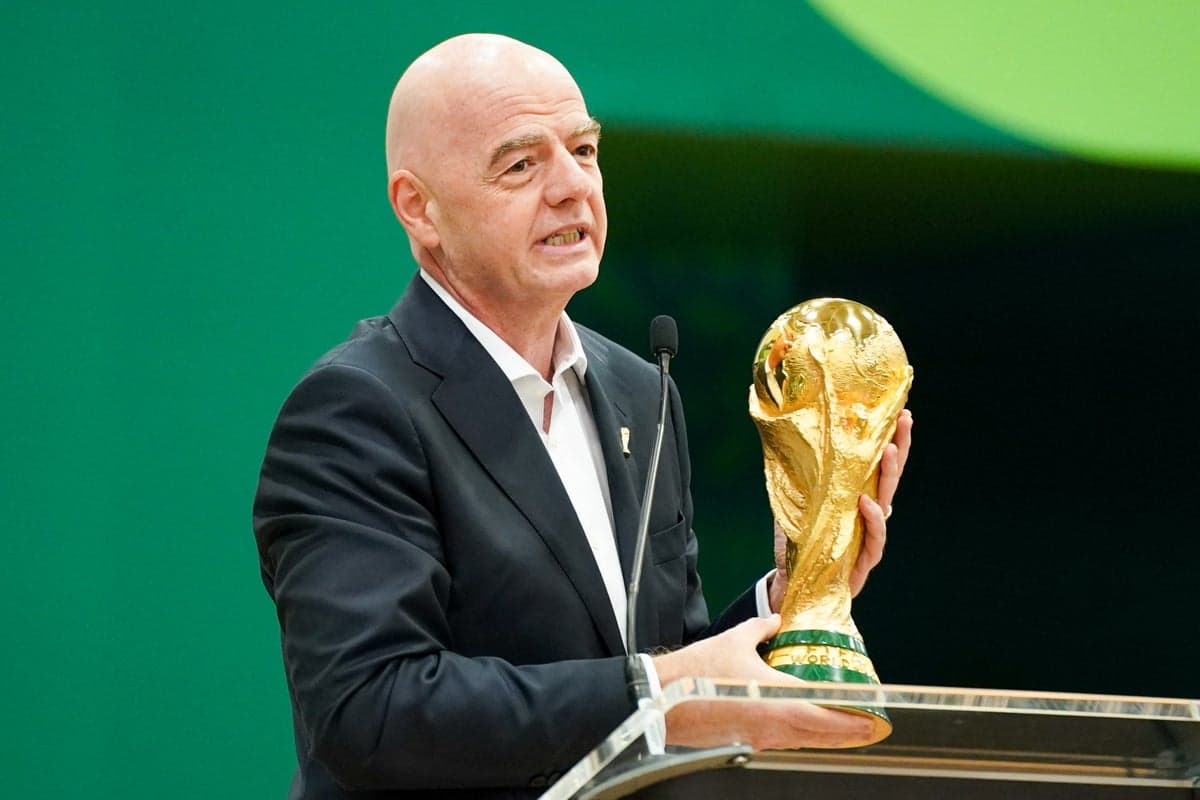
FIFA President Gianni Infantino faces a criminal complaint from former UEFA boss Michel Platini just before the 2026 World Cup, reigniting a years-long feud and casting a shadow over a tournament already plagued by political and logistical issues.
The Complaint Unveiled
Just days before the 2026 FIFA World Cup is scheduled to kick off, the tournament has been rocked not by a late injury or a tactical surprise, but by a criminal complaint against the sport’s most powerful figure. According to a report from The Independent, FIFA President Gianni Infantino is the subject of a legal action launched by his former boss and one-time ally at UEFA, Michel Platini. The timing of the complaint, revealed as the global football community descends on North America, casts a dark shadow over a tournament already besieged by political tension and logistical criticism. The image of Infantino presenting a “FIFA Peace Prize” to a controversial US president now clashes violently with the reality of courtroom battles, setting the stage for the most politically fraught World Cup in modern history.
A Long-Simmering Rivalry Boils Over
The criminal complaint brought by Michel Platini is not an isolated incident but the latest chapter in a years-long feud that has reshaped the governance of world football. Platini, who was once Infantino’s boss when the Italian-Swiss administrator served as UEFA’s General Secretary, has seen his own career dismantled by ethics violations. The DW report notes how Platini, a legendary figure from the 1970s and 1980s, was the original favourite to succeed Sepp Blatter before a corruption scandal derailed his ambitions. His fall cleared a path for Infantino’s ascension, and the relationship between the two men has been defined by bitterness ever since. The Independent highlights that Platini’s legal move directly targets Infantino, suggesting that deep-seated grievances are now being pursued through criminal courts rather than internal committees, adding a layer of personal vengeance to the opening days of the tournament.
A Question of Justice or Retribution?
While specific details of the criminal complaint within the Independent report are limited, the context provided by other sources frames it as part of a broader critique of Infantino’s leadership style. The article alludes to the tangled history of FIFA politics, where Platini was ultimately banned from football for a controversial payment approved by Blatter. This new legal salvo raises the question of whether Platini is seeking justice or leveraging the world’s attention on the World Cup to settle old scores. Regardless of the motive, the spectacle of a former UEFA president filing a criminal complaint against the sitting FIFA president the week the sport’s flagship event begins undermines FIFA’s already fragile claims to transparent and stable governance. It demonstrates that the political wars of FIFA’s past are not buried; they are being actively litigated in the present.
The Political Spectacle: Mixing Flags and Football
The complaint lands at a moment when FIFA’s neutrality is being openly mocked. According to a comprehensive analysis by DW, Gianni Infantino has become “unusually cozy” with US President Donald Trump, creating the perception that FIFA is deliberately aligning itself with American state interests. The report details how Infantino appeared on stage wearing a red USA baseball cap and created a new “FIFA Peace Prize” specifically to present to Trump during the World Cup draw. This overt political theatre directly violates FIFA’s statutory requirement for political neutrality. The criminal complaint from Platini will inevitably feed this narrative of an organization adrift from its sporting principles, diverting focus from teams like hosts the United States, reigning champions Argentina, or contenders like Spain and France, and forcing everyone to talk about court filings and power plays.
A Tournament Multifaceted Problems
The governance crisis is just one element of the discontent swirling around the 2026 edition. The DW report catalogs a series of other criticisms, including fan fury over exorbitant ticket prices, which are also the subject of the investigation highlighted by NPR. While DW frames high pricing as a barrier for ordinary supporters, transforming stadiums into venues for corporate elites, the NPR report focuses specifically on a probe into FIFA’s ticket practices. Furthermore, DW points to the environmental impact of an expanded 48-team tournament spread across three host nations, questioning the sustainability of such a vast event. When news emerged that the tournament would expand, critics warned it would dilute competitive quality and increase the carbon footprint. Now, with a criminal case dogging the president, these financial and environmental concerns form a chorus of discontent that could define the legacy of World Cup 2026 before a ball is even kicked.
The Iran Shadow and Global Diplomacy
Compounding the troubles, the DW report emphasizes the unprecedented circumstance of the host nation being at war with a participating country, Iran. The presence of Team Melli amid active US-Iran hostilities creates a diplomatic and security minefield far beyond anything a tournament organizer usually faces. The AP wire also underscores the severity of this geopolitical backdrop, with its headlines dominated by missile strikes and fragile ceasefires between Israel and Iran. For Infantino, navigating this diplomatic reality required deft statesmanship. Instead, his public embrace of President Trump and the subsequent criminal complaint from Platini suggests a leadership more focused on personal pageantry and legacy protection than on the delicate, behind-the-scenes diplomacy needed to ensure the tournament passes safely. For teams like Iran, whose participation is already politically charged, the FIFA leadership crisis could further politicize their matches and safety.
Editor's Take: Tournament Impact
The Platini complaint threatens to become a persistent distraction for the entire duration of the World Cup, fundamentally impacting specific teams and FIFA operations. For the host United States, the spectacle of their president being gifted a “Peace Prize” while a criminal lawsuit unfolds against the man who gifted it turns their co-hosting moment into a geopolitical circus. For the US Men’s National Team, every press conference risks being dominated not by Christian Pulisic’s form, but by questions about the integrity of their own federation’s president. The turmoil directly undercuts the credibility of FIFA’s officiating and disciplinary bodies, who will now operate under a shadow of legal warfare at the executive level. If Platini’s complaint gains legal traction, FIFA’s decision-making in Zurich could be paralyzed, distracting from critical tournament logistics and contingency planning for sensitive matches like those involving Iran, highlighted by DW. Rather than a celebration of the expanded 48-team vision, this World Cup risks being remembered as the moment the simmering civil wars of football’s governing class finally erupted onto the global stage, burying the sport itself beneath legal briefs and political favors.
Sources & Further Reading
- https://www.npr.org/2026/05/28/nx-s1-5836514/2026-world-cup-fifa-ticket-prices
- https://www.dw.com/en/what-is-wrong-with-the-2026-world-cup/a-77402635
- https://apnews.com/article/fifa-world-cup-infantino-trump-d189c71b80951d84c565014e376fc75d
- https://www.independent.co.uk/sport/football/gianni-infantino-michel-platini-fifa-world-cup-b2992339.html