World Cup 2026: How the 48-Team Expansion Will Alter Tactics and Favor Underdogs
Source: static01.nyt.com
The 2026 FIFA World Cup expands to 48 teams with 104 matches. New format includes 12 groups, a Round of 32, and eight best third-place teams advancing, altering tactics and schedule.
The 2026 FIFA World Cup in North America will be unlike anything the sport has witnessed in nearly a century. As documented across multiple news outlets, the tournament’s transformation from a 32-team event to a colossal 48-nation spectacle is more than just a numerical increase—it is a structural earthquake that will alter competitive balance, defensive tactics, and the very schedule of the world’s most prestigious competition, pushing the finalists to play eight matches across 104 total fixtures.
The New Format: More Teams, More Matches, More Complexity
The competitive architecture of the 2026 tournament departs radically from the 32-team format that had been a staple since 1998. According to an analysis by The Athletic, the expansion increases the total number of matches from 64 to 104, with the finalists now required to play eight games rather than the traditional seven. For the first time, a Round of 32 will be introduced, fundamentally altering the knockout stage calculus.
Bleacher Report provided further critical details on the schedule and qualification mechanics, citing ESPN’s Leonardo Bertozzi regarding the official group-stage uniform combinations. The source confirms that the 48 teams will be divided into 12 groups. Unlike previous tournaments where a simple top-two finish was sufficient in many groups, the 2026 format states that the top two finishers from each group, along with the eight best third-place teams, will advance to the knockout stages. This creates a scenario where a team could potentially lose two group-stage matches and still progress, lowering the immediate jeopardy of the opening games but setting up a highly complex matrix of tie-breakers.
The Road from 13 to 48
The historical context of this growth is staggering. Yahoo Sports placed this evolution into perspective by tracing the tournament back to its 1930 origins in Uruguay. The first edition featured just 13 teams, and participation was contingent on the logistical whims of the era—Japan and Siam (now Thailand) declined to travel, and Egypt missed the boat across the Atlantic. Nearly a century later, the tournament has nearly quadrupled in size. This historical trajectory underscores that the 2026 expansion is the most significant single leap in the history of the World Cup, far exceeding the jump from 24 to 32 teams in 1998.
Tactical Repercussions: The Rise of Defensive Organization
A fascinating on-pitch prediction emerges from The Athletic’s Michael Cox regarding the quality of play, particularly when traditional powerhouses meet debutant nations. Drawing a parallel to the 2023 Women’s World Cup, which expanded to 32 teams, Cox argues that the widely expected deluge of double-digit scorelines did not materialize. For instance, the US Women’s National Team managed only a 3-0 victory over debutants Vietnam. The rationale is that modern coaching, globalized tactics, and physical preparation allow so-called "minnows" to organize themselves defensively into compact, difficult-to-break-down blocks, even if their attacking threat remains blunt.
This trend is expected to apply heavily to the men’s tournament. Matches against debutants from various confederations will likely be defined by low-block defenses rather than blowouts. The expansion, therefore, might not lead to the inflated goal tallies that purists fear, but rather to a series of attritional, chess-like matches where elite teams must rely on moments of individual brilliance to break the deadlock. This could place a massive physical demand on star players who must navigate expanded group stages with fewer true recovery games before the knockout rounds begin.
Stars Primed for the Expanded Stage
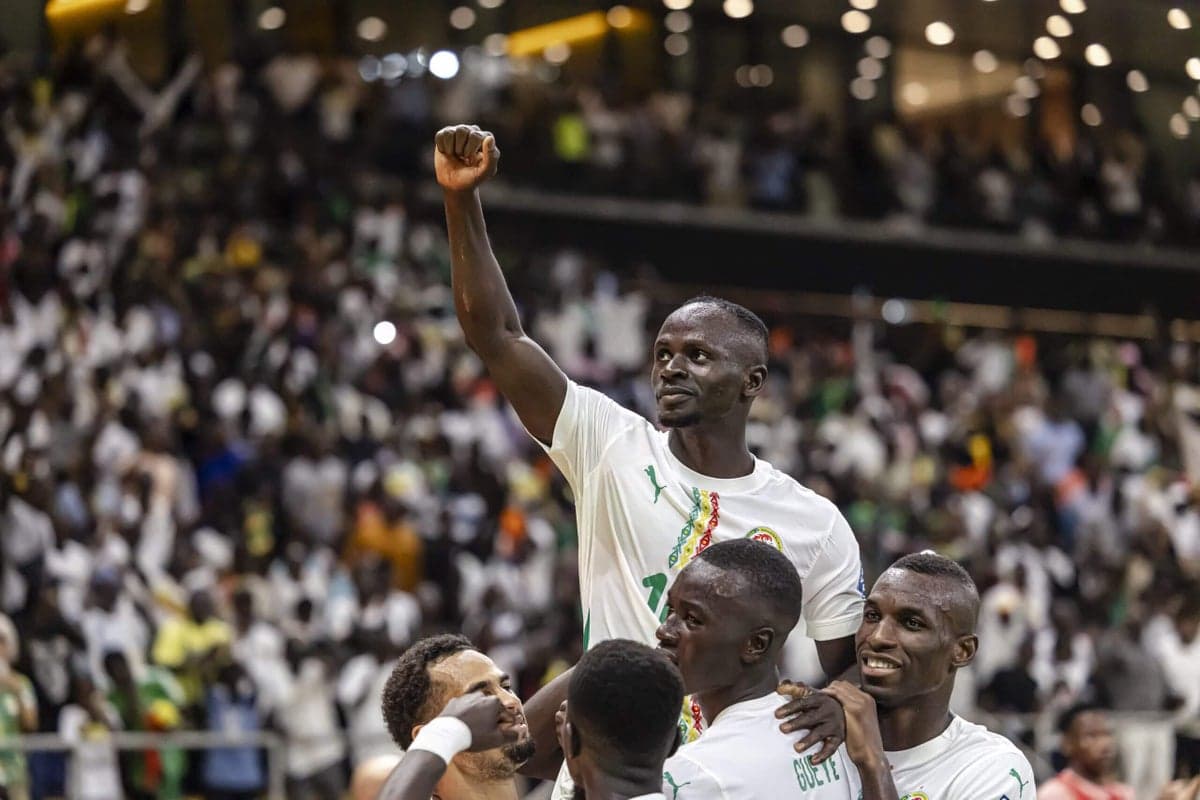
While team structures might become more conservative, the expanded platform offers a global stage for individual brilliance. The Athletic highlighted the likes of Sadio Mané, whose celebration with Senegal during qualifying underscores the expanded opportunity for African nations. Senegal, a side that previously reached the quarterfinals in 2002, enters the tournament no longer as a peripheral contender but as a genuine threat capable of navigating the new Round of 32. The expanded format specifically benefits continental powerhouses from Africa and Asia who have historically struggled to escape groups of death but now have a statistical edge to reach the knockout phase via third-place finishes.
The AI Perspective: Concrete Implications for the 2026 Tournament
The convergence of these sources paints a clear picture of a tournament where endurance and squad depth will replace the urgency of must-win group-stage matches for the elite. The specific setup detailed by Bleacher Report—12 groups with 8 best third-placed teams advancing—significantly de-risks the group phase for top-tier nations but introduces chaotic unpredictability for the middle class of international football. A team like Japan, who once declined to travel to the 1930 tournament as noted by Yahoo Sports, will now see this format as their greatest opportunity to mimic their 2022 victories over Germany and Spain and advance deep into a summer tournament held outside of Asia.
For African sides, the impact is historically significant. The Athletic explicitly points to Senegal as a prime beneficiary. With Sadio Mané leading a physical, tactically shrewd side, the new third-place safety net means a slow start is no longer fatal. We can expect an African record in terms of teams advancing to the Round of 32. Conversely, this safety net could devalue the prestige of group stages, leading to heavily rotated lineups in the final matchday as bigger teams conserve energy for the demanding eight-game marathon. The real World Cup might not begin until the knockouts, but with 104 games, the journey to get there will be the longest and most commercially driven in history.
Sources & Further Reading
- https://ca.sports.yahoo.com/news/20-days-to-the-world-cup-how-the-tournament-grew-from-13-teams-in-1930-to-48-in-2026-120000789.html
- https://bleacherreport.com/articles/25433664-world-cup-2026-uniform-combinations-group-stage-schedule-revealed-photos
- https://sports.yahoo.com/soccer/article/20-days-to-the-world-cup-how-the-tournament-grew-from-13-teams-in-1930-to-48-in-2026-120000789.html
- https://www.nytimes.com/athletic/7324882/2026/06/05/world-cup-32-48-expansion-africa-underdogs-golden-boot/