World Cup 2026 Groups: Complete 48-Team List and In-Depth Analysis
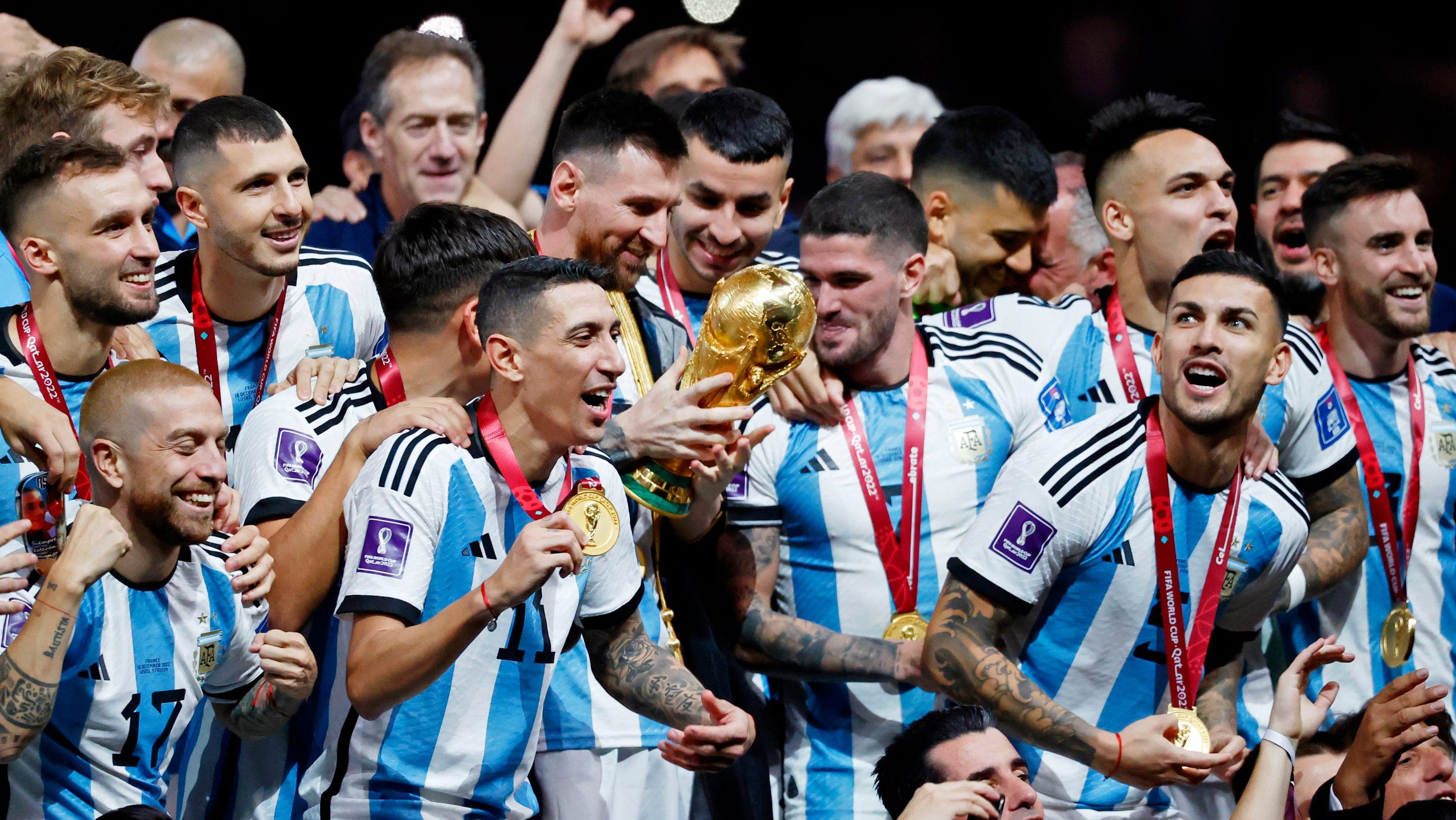
Source: palmbeachpost.com
The 2026 FIFA World Cup, co-hosted by the US, Mexico, and Canada, will feature 48 teams in 12 groups. Top two and eight best third-placed teams advance to a new round of 32.
The 2026 FIFA World Cup marks a historic milestone as the first tournament to feature 48 teams, co-hosted by the United States, Mexico, and Canada from June 11 to July 19. With the expansion, the global football landscape is reshuffled, offering more nations a shot at glory while testing the mettle of traditional powers in a freshly drawn group stage. The 12 groups of four teams each promise intrigue, as the top two finishers and eight best third-placed sides advance to a new round of 32 knockout phase.
The 48-Team Expansion: A New Era for the World Cup
According to USA Today, the jump from 32 to 48 teams is a fitting evolution for a tournament hosted across three nations, ensuring a record 104 matches. Telecom Asia confirms the structural overhaul: instead of eight groups, the field now splits into 12 groups labeled A through L, with each team playing three group-stage matches. The knockout bracket expands correspondingly, beginning with a round of 32 rather than the round of 16. This format dramatically alters the calculus for progression—traditional giants can no longer afford sluggish starts, while minnows gain a lifeline through the best third-placed berths. The group winners and runners-up automatically qualify, but the door remains ajar for teams that accrue enough points and goal difference from a single victory or a pair of draws.
Group-by-Group Breakdown
Telecom Asia’s full listing reveals a tapestry of footballing cultures. Group A features host Mexico alongside South Korea, Czechia, and South Africa—a quartet examined in detail below. Group B sees Canada paired with Bosnia and Herzegovina, Qatar, and Switzerland, giving the co-host a plausible path to the knockouts if it can navigate the sturdy Swiss. Group C pits five-time champions Brazil against a resilient Morocco, Caribbean debutants Haiti, and a Scottish side seeking to end a long drought. The United States, meanwhile, lands in Group D with Paraguay, Australia, and Turkey—a group where aggressive pressing and tactical discipline will be at a premium.
Elsewhere, Group E presents an intriguing blend: four-time winners Germany face Caribbean minnows Curaçao, Ivory Coast’s golden generation, and Ecuador’s altitude-adjusted tenacity. Group F assembles a European-South American-Asian-African quartet with the Netherlands, Sweden, Japan, and Tunisia all harboring realistic ambitions. Group G may hinge on Egypt’s Mohamed Salah inspiring his side past Belgium, Iran, and New Zealand. Group H looks like a baptism of fire for Spain and Uruguay, while Cape Verde and Saudi Arabia will hope to cause an upset. Group I is headlined by defending champions France, with Senegal, Iraq, and a Norway team powered by Erling Haaland aiming to upset the order. Group J places Lionel Messi’s Argentina against Algeria, Austria, and Jordan. Group K mixes Portugal with DR Congo, Uzbekistan, and Colombia—the latter a dark horse if fitness holds. Finally, Group L pairs England and Croatia, World Cup semifinalist and finalist from 2018, with Ghana and Panama adding unpredictability.
Spotlight on Group A: Hosts, Legends, and Dark Horses
As detailed by Telecom Asia’s focused analysis, Group A carries extra weight: it features the curtain-raiser and two direct contenders for a knockout spot behind presumed favorites Mexico. The host nation, ranked 15th under Javier Aguirre, will lean on a fervent Estadio Azteca crowd when it kicks off the tournament against South Africa on June 11. South Korea, ranked 25th, counters with the ageless Son Heung-min, defensive anchor Kim Min-jae, and midfield creator Lee Kang-in—a trio that coach Hong Myung-bo will rely on to seize second place. Czechia, ranked 41st, brings the physicality of West Ham’s Tomas Soucek and the finishing of Patrick Schick, making them a direct threat on set pieces and in transition. South Africa, the group’s lowest-ranked side at 60, is not without hope: goalkeeper Ronwen Williams is a master of penalty situations, and coach Hugo Broos’s organization could frustrate more fancied opponents.
The schedule intensifies on June 12 with South Korea vs. Czechia in a likely decider for second place, followed by Mexico’s second fixture against South Korea on June 19. The final matchday on June 25 sees Mexico face Czechia while South Korea battles South Africa—scenarios that could see the table flip dramatically. Telecom Asia notes that “Czechia and the Republic of Korea look like direct competitors for second place, and South Africa could influence the balance.” The opening match against South Africa is a trap game; a Mexican slip could open the door to a chaotic group.
AI Perspective: What the Groups Tell Us About the Tournament
The group compositions reveal that the expanded format benefits more than just numbers. By increasing the knockout bracket to 32 teams, FIFA has effectively guaranteed that at least 16 teams—half the participants—will experience a win-or-go-home match. This creates a tangible incentive for lower-ranked sides like Cape Verde, Haiti, and Curaçao, who might otherwise see their campaigns end after three games. Conversely, traditional powers such as Brazil, France, and Argentina face less jeopardy in the group stage but must now negotiate an extra knockout round, which could lead to fatigue-related upsets later in the tournament.
Host nations stand to gain significantly. Mexico, as the highest-ranked in Group A, should top the group, but a second-place finish for South Korea or Czechia would not be a shock. The USA’s Group D is tricky but navigable; Canada’s path in Group B hinges on getting a result against Switzerland. All three co-hosts could plausibly reach the round of 32, a boost for attendances and television ratings in North America. Telecom Asia’s preliminary standings show zero points across the board, but the underlying data—FIFA rankings, squad profiles, and historical context—suggests that groups C (Brazil), I (France), and J (Argentina) will provide the clearest favorites, while groups H (Spain-Uruguay) and L (England-Croatia) offer the most compelling early collisions. The stage is set for a World Cup where depth and squad rotation may prove just as vital as star power.
Sources & Further Reading
- https://www.telecomasia.net/blog/2026-fifa-world-cup-groups-tables-teams-analysis/
- https://www.telecomasia.net/blog/fifa-world-cup-2026-group-a-teams-schedule-predictions/
- https://www.telecomasia.net/blog/world-cup-2026-standings-table/
- https://www.palmbeachpost.com/story/sports/soccer/worldcup/2026/05/28/world-cup-groups-2026-teams-full-list/90287726007/