World Cup 2026 Group F Preview: Dutch Favorites Amid Injury Crisis, Sweden-Japan Battle Looms
Source: e0.365dm.com
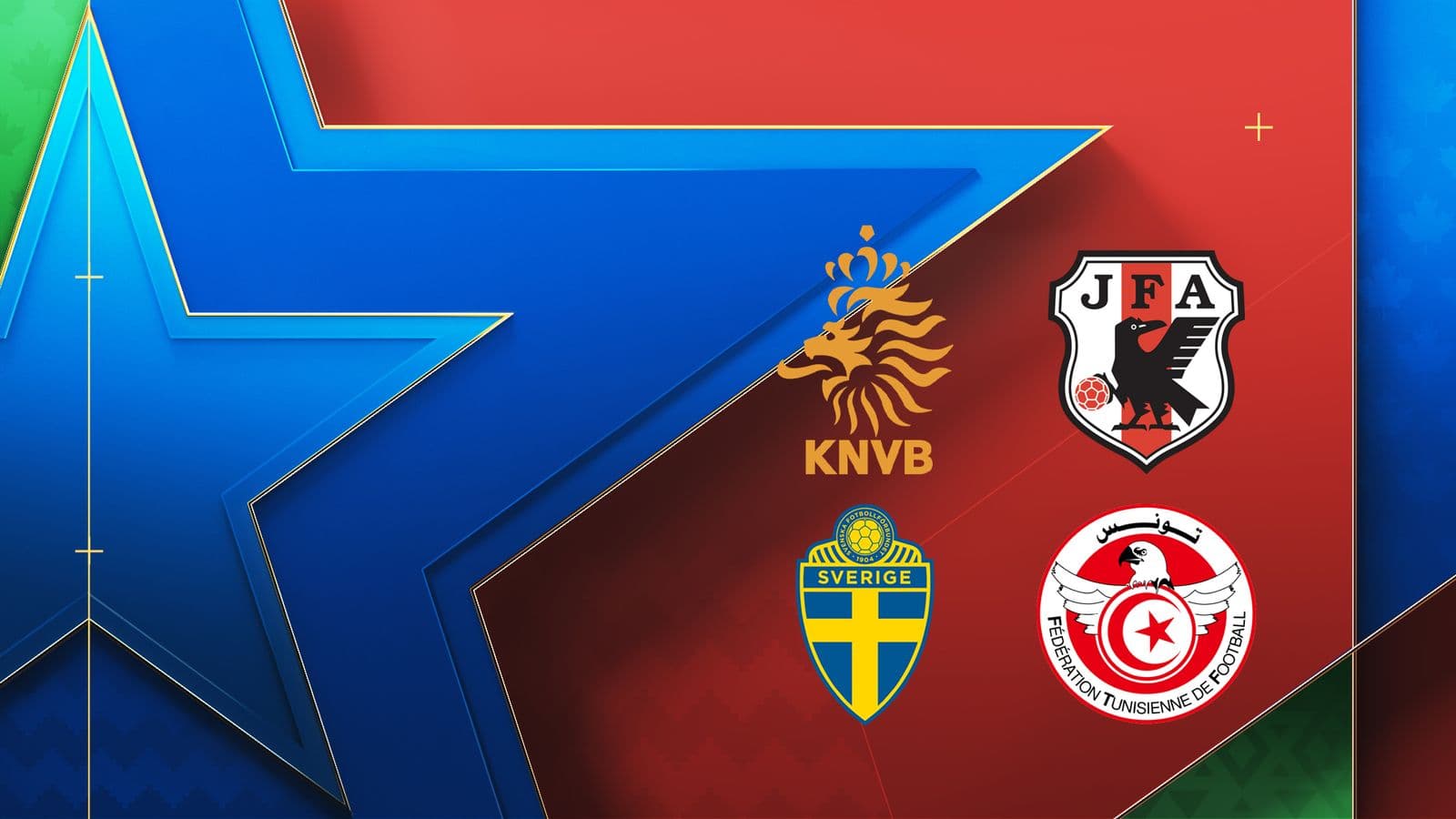
In Group F, the Netherlands are favorites but face injury woes. Japan and Sweden battle for second spot, with Tunisia as a dangerous wild card. A tight race with knockout implications.
The narrative surrounding Group F at the 2026 FIFA World Cup is one of intrigue beneath a surface of assumed order. While the Netherlands, under Ronald Koeman, enter as the frontrunners—a status reflected in odds as short as 1.70 according to Telecom Asia—the true story of this group lies in its competitive depth. Dubbed by the same outlet as "the most evenly balanced group" in the tournament, the quartet of Netherlands, Japan, Sweden, and Tunisia presents a fascinating dynamic where a single slip by the favorites could ignite a fierce scramble for the knockout spots, a race made even more tense by the expanded 32-team format that offers a lifeline to the best third-placed finishers.
The Dutch Mandate: Talent vs. Absenteeism
For the Netherlands, the objective is unambiguous: top the group. Koeman’s side blends hardened experience with dynamic attacking flair, a combination that makes them the benchmark in Group F. The return to fitness of Memphis Depay from a hip injury is a significant boost, as noted by Telecom Asia. His presence adds a layer of craft and goal-scoring nous to an already potent forward line featuring Liverpool’s Cody Gakpo, Donyell Malen, Noa Lang, and the exciting Crysencio Summerville. The sheer variety of options suggests the Oranje should possess the firepower to overwhelm defensive blocks, a common challenge for favorites.
However, the Dutch campaign is not without its vulnerabilities. Significant personnel losses have hit the squad, with center-back Matthijs de Ligt and creative midfielder Xavi Simons both ruled out due to injury, as reported by Telecom Asia. De Ligt’s absence strips the defense of a physically dominant leader, while losing Simons removes a player capable of unlocking stubborn defenses with his dribbling and vision. These are not marginal injuries; they strike at the spine and creative heart of the team. The onus will fall on players like Tijjani Reijnders and Ryan Gravenberch to ensure ball progression doesn’t stall, while the backline of Virgil van Dijk and Nathan Aké must maintain flawless concentration. For a team that has historically oscillated between sublime and fragile, these absences inject an element of peril into what should be a straightforward group progression.
The Chase Pack: A Tangle of Ambition
The battle for the second automatic qualification spot—and potentially a third-place passage—is a three-way tussle steeped in contrasting styles. Japan, under the meticulous Hajime Moriyasu, were Asia’s standout team at the 2022 World Cup, capturing global attention with iconic victories over Germany and Spain before a heartbreaking penalty shootout exit against Croatia in the Round of 16. Their FIFA ranking of 18, as listed by Telecom Asia, marks them as a dangerous faction of technically proficient and tactically astute players. However, a video preview on FOX Sports featuring analysts Alexi Lalas and David Mosse explicitly raised concerns about Japan’s injury situation heading into the tournament, suggesting their ceiling could be impacted by fitness issues to key personnel.
This perception of vulnerability opens the door for Graham Potter’s Sweden. Ranked 38th in the world, Sweden are not a team to be judged purely by their number, especially with a tactician of Potter’s caliber at the helm, as highlighted by Sky Sports. His appointment represents a modern, flexible approach, and Sweden’s post-Zlatan Ibrahimovic identity is built on collective organization and physicality. They are the quintessential team that favorites detest playing against, and their opening match against Tunisia in Monterrey immediately tests their ability to break down a stubborn opponent. A win there sets up a seismic clash against the Netherlands in Houston, where Potter’s strategic acumen will be fully tested.
The Tunisian Wild Card
Tunisia, under coach Sabri Lamouchi, enter as the group’s longest shot at odds of 12.00 with 1xBet, per Telecom Asia. Yet, dismissing them outright would be a mistake. The "Carthage Eagles" have recent history of frustrating heavyweights, most notably securing a famous 1-0 victory against France at the 2022 World Cup. Their squad, while lacking the star power of the Dutch or the collective reputation of the Japanese, is built on a durable defensive base capable of grinding results. Their final group match against the Netherlands at Arrowhead Stadium in Kansas City looms as a potential nightmare for Koeman should the Dutch require a result against a deep-lying, counter-attacking unit with nothing to lose. If the Netherlands have already qualified by then, it provides an opening; if not, it stage-manages a high-stakes drama where Tunisia’s rugged style could prove decisive.
AI Perspective: Tactical Breakdown and Knockout Implications
The knockout bracket implications for Group F intensify the pressure. The group winner will face the runner-up from Group E, while the runners-up have the daunting task of tackling the Group E winner. For the Dutch, winning the group is critical to maintaining a manageable path. The predicted order based on evidence points to the Netherlands securing the top spot, but the margin is slim. Japan’s technical precision, should they fully replicate their 2022 form, gives them the edge over Sweden for second place. The direct confrontation between Japan and Sweden on the final matchday at AT&T Stadium is already being framed by Telecom Asia as a winner-takes-all for the second automatic spot. Tactically, Japan’s ability to control possession will be tested by Sweden’s physical transitions
If Kaoru Mitoma is
fit and operating at his peak for Japan, his one-on-one ability could be the divergent factor Sweden lacks.
Conversely, Sweden’s path relies on neutralizing attackers like Gakpo and Depay in their group-stage meeting with the Netherlands, looking to snatch a draw. A four-point return before facing Japan would give Potter’s side a platform. The looming presence of Tunisia, however, means neither Japan nor Sweden can afford a slip. A drawn match between them, combined with a Tunisian victory against one of them—particularly against Sweden on Matchday One—could reshuffle the entire table and eliminate a heavily fancied European side. The genuine implication of Japan’s injuries, if serious, is that it likely elevates the Sweden vs. Japan game into a more direct physical duel, potentially favoring the Europeans and landing the Japanese a third-place spot at best. Tunisia’s most likely route is a third-place finish, exploiting a possibly rotated Dutch team on the final day to claim a scalp. The most realistic outcome sees the Netherlands winning the group, Sweden leveraging their physicality and Potter’s coaching to edge out an injury-hit Japan for the second spot, leaving the Samurai Blue and Tunisia to rely on the new third-place qualification criteria.
Sources & Further Reading
- https://www.telecomasia.net/blog/fifa-world-cup-2026-group-f-teams-schedule-predictions/
- https://www.skysports.com/football/news/12098/13543097/world-cup-2026-group-f-guide-fixtures-schedule-standings-and-odds-for-netherlands-japan-sweden-and-tunisia
- https://www.foxsports.com/watch/fmc-xliie170beggbegr
- https://www.telecomasia.net/blog/group-f-world-cup-2026-predictions-and-betting-tips-who-will-qualify/