World Cup 2026: Empty Seats Mar Canada Opener as Ticket Prices Spark Fan Revolt
Source: static.independent.co.uk
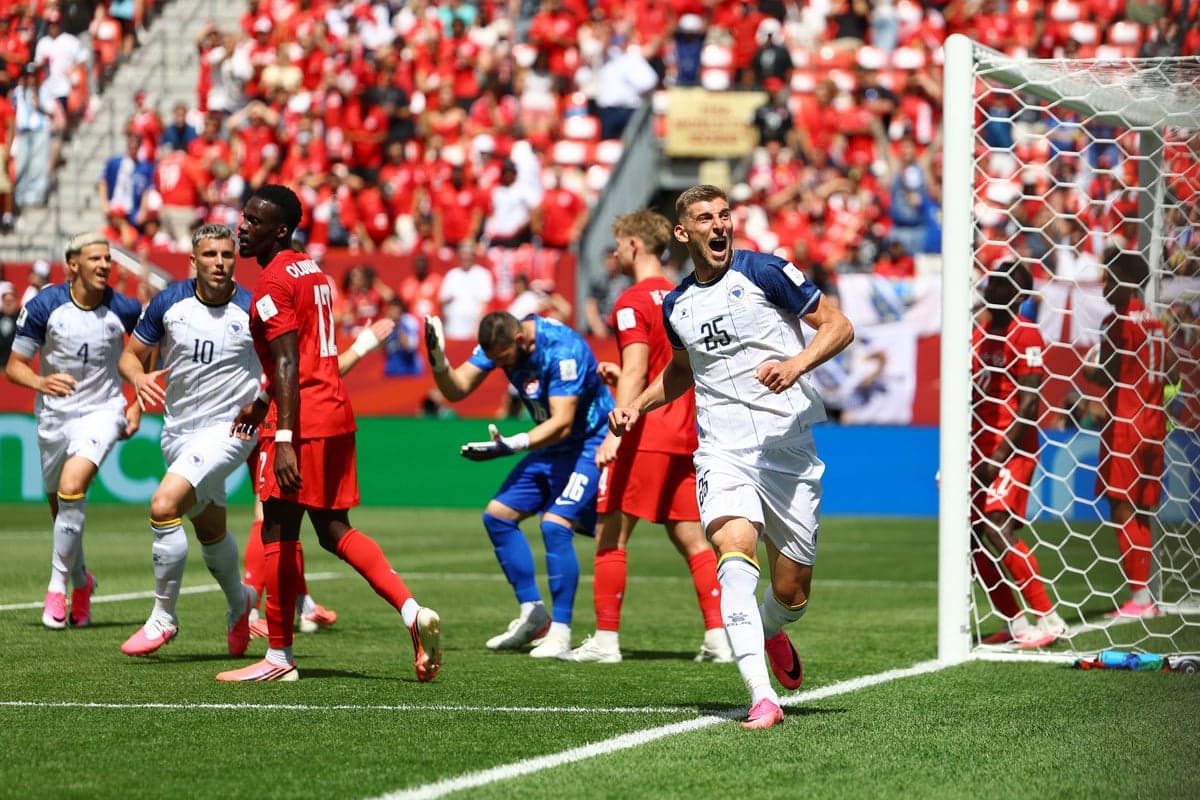
Canada's 2026 World Cup opener against Bosnia saw swaths of empty seats at BMO Field, with tickets priced up to $2,240. Fans and even President Trump criticized the costs, highlighting a disconnect between FIFA and supporters.
The 2026 World Cup kicked off with a whimper rather than a roar, as swaths of empty seats greeted host nation Canada’s opening match against Bosnia and Herzegovina at Toronto’s BMO Field. For a tournament that promised to bring the world’s biggest sporting spectacle to North American shores, the barren stands told a sobering story: exorbitant ticket prices, fan disillusionment, and a growing disconnect between football’s governing body and the grassroots supporters who give the game its soul. The sight of a 44,315-capacity stadium failing to sell out a co-host’s debut match quickly became a symbol of a deeper crisis, one that threatens to overshadow the entire tournament. According to The Independent, tickets for the match remained on sale just hours before kick-off, with Category 1 and Category 2 tiers priced between an eye-watering $1,645 and $2,240. Even US president Donald Trump wryly remarked that he “wouldn’t pay” the four-figure sums, as reported by The Independent. The empty seats in Toronto were not an isolated incident. Just a day earlier, the tournament’s second fixture – South Korea’s gripping 2-1 victory over Czech Republic in a Group A clash in Guadalajara – unfolded in front of thousands of vacant seats, as captured by Reuters images and highlighted by Yahoo Sports. The message was clear: Fifa’s aggressive pricing strategy is alienating fans, and the very spectacle it seeks to monetise is at risk of losing its magic.
The Price of Admission
The cost of attending a World Cup match in 2026 is unprecedented in the tournament’s history. Fifa’s ticket policy for the expanded 48-team event has drawn sharp criticism for pushing pricing into territory that excludes ordinary fans. The Independent pinpointed that for Canada’s opener, the lowest available Category 1 and 2 seats were listed at $1,645 and $2,240 respectively – prices more akin to a luxury experience than a football match. Even with the host nation’s passionate fanbase, the sticker shock proved too much. Donald Trump’s quip, widely circulated after an interview, crystallised public sentiment: the cost has left many questioning whether the tournament is still for the people or solely for corporate hospitality. The ticketing controversy isn’t just about numbers; it’s about the erosion of the inclusive atmosphere that has defined World Cups past. When a host nation’s own supporters stay away because the price of admission equals a month’s rent, the tournament loses a vital ingredient: the authentic, ear-splitting home crowd that buoys a team’s performance and electrifies the global broadcast.
Star-Struck or Priced Out?
The Guardian went further, offering a ground-level view of the disillusionment in Toronto. In an article headlined “I don’t want to give my money to Fifa,” the newspaper profiled local fan Lawrence Yee, a lifelong football devotee who initially described the World Cup coming to his city as “the opportunity of a lifetime.” Yee had imagined cycling to BMO Field and soaking in the atmosphere. Yet as ticket prices soared, his enthusiasm curdled into defiance. He became emblematic of a broader movement of fans who are deliberately turning their backs on the tournament, not out of apathy but out of principle. The Guardian noted that hundreds of tickets remained unsold for Canada’s match, a direct consequence of what Yee and others see as Fifa’s greed. This sentiment is not confined to Toronto; it echoes across all host cities, threatening to turn the 2026 World Cup into a tale of empty seats and muted celebrations.
A Global Pattern? Unfilled Seats in Guadalajara
The problem extended beyond the co-hosts’ borders. Yahoo Sports reported on the second match of the tournament, held at the Estadio Akron in Guadalajara, where South Korea and Czech Republic produced a tense 2-1 contest in Group A. Yet the sporting drama was undercut by the visuals: Reuters photographs showed huge swaths of empty seats in the stands. The Independent also referenced this fixture, noting that thousands of seats went unclaimed, further fuelling the narrative that exorbitant pricing is a global tournament defect, not a local glitch. While Guadalajara has a rich footballing heritage and a capacity crowd was expected for a game featuring two competitive nations, the reality suggested that even in passionate football markets, fans were unwilling to meet Fifa’s financial demands. This pattern – from Toronto to Mexico – suggests a systemic miscalculation by the organisers. If the group stage, traditionally a celebration of global fandom, is marred by rows of vacant seats, the tournament’s commercial appeal could backfire, affecting broadcast atmosphere, sponsor perceptions, and even player motivation.
The Home Advantage Vacuum
The empty seats carry on-pitch consequences. Canada’s men’s national team, playing in its first World Cup on home soil, relies on a raucous crowd to unsettle opponents and inspire its relatively inexperienced squad. Without that wall of noise, the tactical advantage of hosting is diminished. Bosnia and Herzegovina, a disciplined side, faced a far more subdued environment than anticipated, potentially making it easier to execute their game plan. Similarly, in Guadalajara, South Korea and Czech Republic contended not only with each other but with the psychological flatness of a cavernous stadium. While both teams managed to produce a thrilling match, the lack of an impassioned crowd robbed the occasion of the electricity that makes World Cup moments immortal. This vacuum could redefine the tournament narrative: instead of home-field heroics, we might see a series of technically competent but emotionally sterile encounters.
The Bigger Picture
The 2026 World Cup now stands at a crossroads, with empty seats at Canada’s opener and the Guadalajara fixture emblematic of a tournament that has misread its core audience. Teams like Canada, who hoped to ride a wave of national fervour, instead face the stark reality of a disaffected fanbase
South Korea and Czech
Republic, two nations with dedicated followings, played out an exciting fixture that deserved a full house but got a half-empty bowl. The implications are severe: if early matches fail to attract crowds, the commercial model that justifies billion-dollar investments in broadcasting and sponsorship begins to unravel. Fifa may be forced to reconsider its pricing structure mid-tournament, or risk seeing the knockout stages suffer the same fate. For the host nations – the United States, Canada, and Mexico – the empty seats are more than an embarrassment; they are a warning that the soul of the beautiful game cannot be commodified without consequence. The enduring image of the 2026 World Cup may not be a stunning goal or a giant-killing, but an expanse of blue and white plastic seats where fans should have been.
Sources & Further Reading
- https://sports.yahoo.com/articles/fifa-world-cup-match-sees-041146066.html
- https://www.yahoo.com/news/world/article/empty-seats-seen-at-world-cup-game-after-controversy-over-ticket-prices-105442690.html
- https://www.theguardian.com/football/2026/jun/05/toronto-world-cup-fifa
- https://www.independent.co.uk/sport/football/fifa-world-cup-empty-seats-canada-bosnia-ticket-prices-b2994745.html