Morocco Races to Finish 115,000-Seat Stadium by 2027 for 2030 World Cup Final Bid
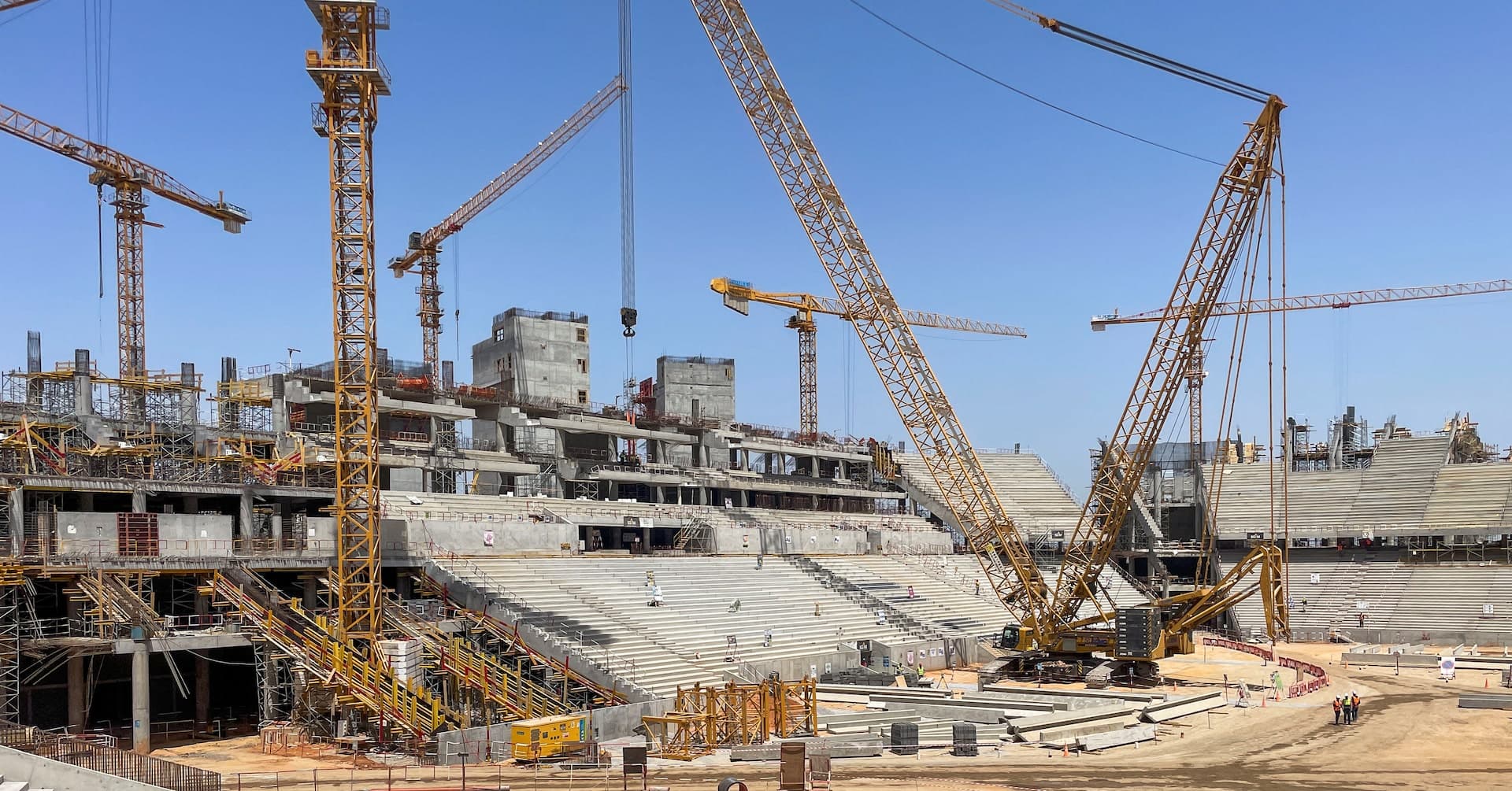
Source: reuters.com
Morocco races to finish Hassan II Stadium by late 2027 to host 2030 World Cup final, competing with Spain for FIFA's decision.
The Race for the 2030 Final: Morocco’s Grand Stadium Ambition
As the 2026 World Cup in North America captures global attention with its freshly released anthem by Shakira and Burna Boy, another fierce competition is quietly unfolding across the Atlantic. According to an exclusive report by Reuters, Morocco is racing against the clock to complete the 115,000-seat Hassan II Stadium near Casablanca by the end of 2027, a decisive milestone in its ambitious bid to host the 2030 World Cup final. The project, confirmed by an official overseeing construction on May 23, 2026, sets the stage for a high-stakes showdown with Spain, whose football federation president has already staked a counterclaim to host the ultimate match. With FIFA yet to make a decision on the tournament jointly hosted by Morocco, Spain, and Portugal, the completion of this colossal venue is not merely a matter of national pride—it is the centerpiece of a geopolitical and logistical power play that could redefine African football history.
The Construction Battleground
Racing Against Spain’s Established Infrastructure
The Reuters dispatch from Benslimane paints a picture of intense activity at the Hassan II Stadium, where construction workers are visibly pushing forward. The proposed deadline of late 2027 gives Morocco roughly 18 months to transform the site into a functional, world-class arena capable of dwarfing nearly every existing football venue. The timeline is exceptionally tight when compared to the deep-rooted infrastructure of rival co-host Spain, which has already positioned iconic venues like the Santiago Bernabéu and Camp Nou as ready-made alternatives. Reuters notes that FIFA has yet to allocate the final, a silence that fuels the competitive undercurrent between the coastal neighbors. To clinch the prize, Morocco is not just building concrete and steel; it is betting on the successful execution of a project that attempts to condense a decade of planning into a few frantic years. The official’s on-site confirmation serves as both a reassurance to FIFA inspectors and a tacit acknowledgment that any delay could be fatal to the bid.
The Monumental Scale of 115,000 Seats
The architectural ambition of the Hassan II Stadium cannot be overstated. With a proposed capacity of 115,000, the venue intends to surpass the iconic Camp Nou and compete only with the world’s largest arenas. This scale is a deliberate strategic signal. By constructing a venue larger than any available in Spain or Portugal, Morocco is arguing that the final deserves a historically unprecedented amphitheater, not a renovated legacy ground. The project’s location near Casablanca merges logistical convenience with the symbolic weight of a nation actively expanding its sporting footprint, having already deeply impressed with their historic semi-final run in Qatar. The structural gamble lies in whether the sheer scale will be matched by the technical delivery, a factor FIFA will scrutinize relentlessly as the organizational hierarchy for the 2030 tournament slowly takes shape in the shadow of the 2026 event.
The Geopolitics of the Centennial Final
The Spanish Counter-Bid and FIFA’s Conundrum
Spain’s positioning, as reported by Reuters citing the RFEF president, frames the venue battle as a clash between heritage and novelty. The Spanish argument leans heavily on proven operational capacity and a century of footballing infrastructure. For FIFA, the decision is agonizingly complex. Awarding the final to Morocco would symbolize a long-awaited breakthrough for Africa, aligning with the governing body’s rhetoric of global inclusivity. However, Source 3 from BBC Sport indirectly highlights a critical vulnerability: the technical execution of a flawless pitch. The 2024 Copa America debacle in Atlanta, where Argentina’s Ángel Di María suffered visibly on a temporary grass surface laid over artificial turf, is a cautionary tale. Scientists told the BBC that cultivating championship grass requires decades of obsessive data, lighting, and soil management
If the Hassan II
Stadium’s tight construction schedule squeezes the turf establishment period, the on-field product could become a catastrophic pressure point that undermines the grandeur of the concrete bowl, giving Spain—with its established agronomic cycles—a significant technical edge.
An African Dream or a Logistical Mirage?
Morocco’s bid is buoyed by more than just national aspiration; it represents a continental dream. The North African nation’s recent friendly results, as tracked by FOX Sports, show a team in formidable form, defeating Senegal 3-0 in the Africa Cup of Nations and overcoming Paraguay 2-1. A competitive host team advancing in the 2030 tournament would create a marketing and atmospheric crescendo that Madrid or Barcelona would struggle to replicate emotionally. Yet, the pressure of the Reuters-confirmed 2027 deadline introduces a significant risk. If the construction falls behind even by a few months, the stadium’s readiness for test events—a mandatory FIFA protocol—becomes impossible. The final would default to Spain by necessity, not choice. Morocco’s officials are therefore not just managing a construction project; they are managing a narrative of inevitability, attempting to shift the global conversation from “if” to “when” regarding an African World Cup final.
AI Perspective: Implications for 2030 and Beyond
Based on the convergence of the Reuters construction timeline and the BBC’s agronomic deep dive, the primary tournament implication for the 2030 World Cup is a likely bifurcation of the hosting spotlight
If the Hassan II Stadium
meets its “end of 2027” hard stop, Morocco immediately becomes the prohibitive favorite for the opening match and the final, potentially relegating Spain to hosting a semi-final at the Bernabéu. The biggest risk factor remains the exact science of pitch preparation detailed in BBC Sport. The AI analysis suggests FIFA’s inspection team will not merely inspect the structure but will intensely probe the root depth and hybridization process of the turf in mid-2027. A specific consequence for the tournament opener could see the Morocco national team—featuring stars like Achraf Hakimi—playing the inaugural match in Casablanca. Conversely, any hint of a surface capable of breaking up like the Atlanta pitch during Argentina’s match, however small, will be seized upon immediately by the RFEF to redirect the final to Spain. The concrete winner of this bidding war won’t be the one with the most seats, but the one that can guarantee the grass doesn’t trip the stars.
Sources & Further Reading
- https://www.nbcnewyork.com/world-cup/shakira-burna-boy-official-2026-fifa-world-cup-anthem-dai-dai/6502123/
- https://www.bbc.com/future/article/20260515-world-cup-2026-these-scientists-have-spent-eight-years-growing-grass-for-the-pitches
- https://www.foxsports.com/soccer/friendlies-men-morocco-vs-madagascar-jun-02-2026-game-boxscore-843467
- https://www.reuters.com/sports/soccer/morocco-aims-complete-stadium-world-cup-final-bid-by-end-2027-official-says-2026-05-23/