Gordon Oldest at World Cup, But Gunn Gets Scotland No 1 as Veterans Abound
Source: ichef.bbci.co.uk
Craig Gordon will become the oldest World Cup player at 43, but Scotland's No 1 jersey goes to Angus Gunn, highlighting the balance between experience and form.
Craig Gordon will make history at the 2026 World Cup as the oldest player to grace the tournament at 43, but the Scotland goalkeeper has been conspicuously denied the No 1 jersey. Instead, that honour goes to Angus Gunn, a decision that speaks volumes about the delicate balance between experience and current form as the finals loom. This narrative of veteran presence versus first-choice status is not unique to Scotland; across the 48-nation tournament, a remarkable cohort of forty-somethings is preparing to take the field, from Manuel Neuer’s shock Germany recall to the increasingly divisive figure of Cristiano Ronaldo.
Scotland's Squad Numbers: Experience vs. First Choice
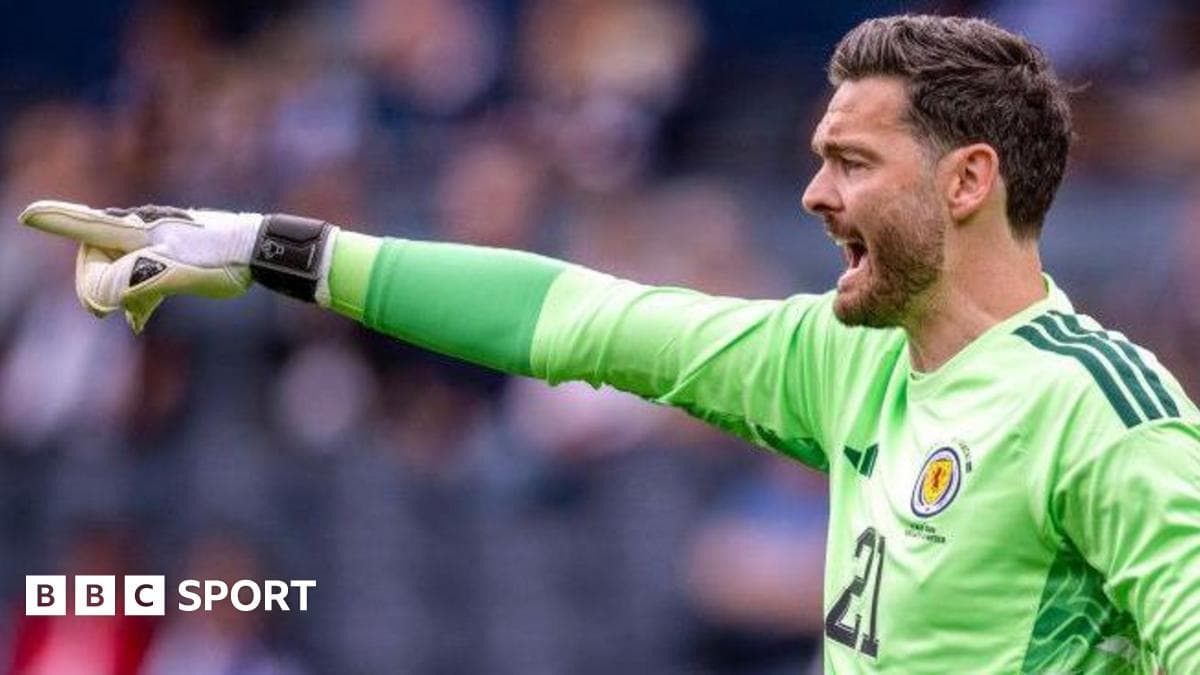
Steve Clarke’s allocation of squad numbers for Scotland has offered a tantalising glimpse into his thinking ahead of the tournament. While Gordon’s longevity is celebrated – he started the recent 4-1 friendly win over Curacao – the No 1 shirt has gone to Angus Gunn, with Liam Kelly taking No 12 and Gordon himself wearing No 21. According to BBC Sport, this distribution strongly suggests Gunn is Clarke’s preferred starter between the posts, with Gordon’s vast experience likely to be deployed as a mentor and backup in a challenging Group H that includes Haiti, Morocco, and Brazil.
The numbers elsewhere in the squad reinforce a sense of a settled hierarchy. Lyndon Dykes has been handed the No 9, Che Adams the No 10, and Grant Hanley the No 5, all traditional indicators of starting roles. A late twist came with the inclusion of Manchester United teenager Tyler Fletcher, who took the No 8 shirt after replacing the injured Billy Gilmour. Scotland’s final warm-up against Bolivia, live on the BBC, will be the last chance for Clarke to fine-tune before their opener against Haiti on 14 June. The decision to elevate Gunn over Gordon is pragmatic: at 43, Gordon’s reflexes may not be what they once were, but his presence in the squad provides invaluable cover and leadership.
The Veterans' Parade: A World Cup of Golden Oldies
Scotland’s goalkeeping situation is mirrored in microcosm across the tournament, where a generation of footballing icons is refusing to fade away. Germany manager Julian Nagelsmann has not only recalled 40-year-old Manuel Neuer from international retirement but has unequivocally stated that the Bayern Munich stalwart will be his first-choice keeper. “Everyone knows the aura and quality Manu has, what he brings to a team,” Nagelsmann said, as reported by BBC Sport. Neuer, who won the 2014 World Cup, has been instrumental in Bayern’s Bundesliga title and Champions League semi-final run this season, making his return a calculated gamble on proven class rather than a sentimental pick.
Neuer is far from alone. Portugal’s Cristiano Ronaldo, 41, Croatia’s Luka Modric, 40, and Bosnia-Herzegovina’s Edin Dzeko, 40, have all been named in their nations’ squads. The Guardian notes that Argentina’s Lionel Messi, 39, remains central to their hopes despite a “muscular overload” that forced him out of an Inter Miami match, while Mexico’s Guillermo Ochoa and Cape Verde’s Vozinha, both 40, add to the goalkeeping old guard. Germany’s squad also features a blend of youth and experience, with Arsenal’s Kai Havertz, Brighton’s Pascal Gross, and Liverpool’s Florian Wirtz joining Neuer for a group stage campaign against Curacao, Ivory Coast, and Ecuador. The contrast with Scotland is stark: where Clarke has opted for the younger Gunn, Nagelsmann is betting on Neuer’s aura to anchor a relatively kind group.
The Ronaldo Conundrum: Blessing or Curse?
While Neuer’s recall has been framed as a positive, the inclusion of Cristiano Ronaldo has sparked a far more critical discourse. In a scathing analysis for The Guardian, Jonathan Wilson argues that the 41-year-old’s presence is “more a curse than a blessing,” describing a player “barely able to move, lacking the explosive power that once made him great.” Wilson contends that an obsession with celebrity could undermine Portugal, who risk building their attack around a fading icon rather than embracing more dynamic options.
This critique gains weight when set against the backdrop of other veterans. Modric, at 40, continues to dictate play for Croatia with his enduring technical quality, while Messi, despite injury concerns, remains the talisman for Argentina. Neuer, too, is still performing at an elite level for Bayern. Ronaldo, however, appears to be the outlier – a player whose reputation may now outweigh his contribution. Portugal’s group-stage opponents will likely target his lack of mobility, and Wilson’s piece raises the uncomfortable question of whether sentiment is clouding selection decisions. The World Cup has always been a stage for legends, but the line between inspiration and liability is perilously thin.
AI Perspective: The Age Factor and Tournament Implications
The 2026 World Cup will serve as a litmus test for the value of experience in the modern game. For Scotland, the decision to start Gunn over Gordon is a clear-eyed recognition that agility and shot-stopping sharpness are paramount against the firepower of Brazil and Morocco. Gordon’s role as a veteran presence in the dressing room could prove crucial, but Clarke has placed his faith in the younger man – a move that could define Scotland’s campaign.
Germany’s reliance on Neuer is a bolder gamble. Nagelsmann has no obvious like-for-like replacement if the 40-year-old’s form dips, and the group stage, while manageable, offers little margin for error. Portugal face the most acute dilemma: if Ronaldo’s decline is as pronounced as Wilson suggests, his continued selection could derail a talented squad. The broader trend of ageing stars dominating squad lists points to a transitional moment in football, where the next generation has yet to fully displace the old guard. Whether that leads to triumph or heartbreak will be one of the tournament’s defining storylines.
Sources & Further Reading
- https://www.bbc.com/sport/football/articles/c775kgzdmzgo
- https://www.theguardian.com/football/2026/may/30/cristiano-ronaldo-world-cup-lionel-messi-luka-modric
- https://www.foxsports.com/articles/soccer/england-forward-anthony-gordon-set-to-complete-his-transfer-to-barcelona-from-newcastle
- https://www.bbc.com/sport/football/articles/cy02ex2pq2po