Goalkeeper Tactical Timeouts Banned at 2026 World Cup: FIFA's Collina Drops the Hammer
Source: ichef.bbci.co.uk
FIFA will prohibit players from gathering at the technical area when a goalkeeper is injured, aiming to curb gamesmanship. The rule change, approved by IFAB, will be enforced at the 2026 World Cup.
The 2026 FIFA World Cup is set to clamp down on one of football's most contentious tactical ploys: the so-called 'goalkeeper tactical timeout.' Pierluigi Collina, FIFA's referees' chief, revealed that players will be prohibited from congregating at the technical area for impromptu coaching when a goalkeeper goes down injured. The move, designed to preserve the flow of the game, has already sparked debate among managers and fans alike, with some hailing it as a necessary crackdown on gamesmanship, while others fear it may disrupt legitimate injury assessments.
The Rule Change: Collina's Crackdown
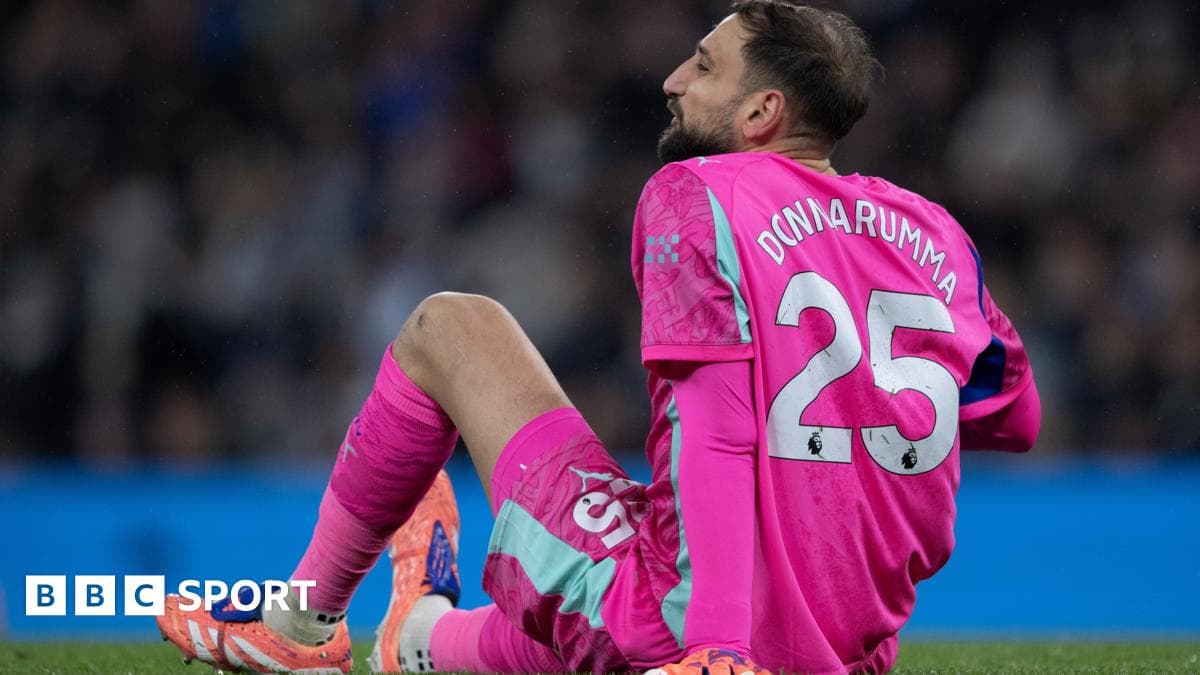
According to BBC Sport, the International Football Association Board (Ifab) has greenlit the change specifically for the 2026 tournament, with leagues worldwide invited to trial potential enforcement mechanisms during the 2026-27 season. Collina's announcement underscores a growing frustration with goalkeepers feigning injury to allow managers to relay tactical instructions or break an opponent's momentum. The issue gained notoriety in November when Leeds United manager Daniel Farke accused Manchester City's Gianluigi Donnarumma of 'bending the rules' by sitting down mid-match to engineer a team huddle at the touchline.
Collina was blunt: 'All players leaving the field for a team talk is not good,' a partial statement from the BBC article that encapsulates FIFA's determination to curb the practice. The new directive means that when a goalkeeper requires treatment, the rest of the players—from both sides—will be prevented from rushing to the bench. Instead, they will likely be required to stay in their positions or gather in a designated area, mirroring a temporary rule introduced by the National Women's Soccer League (NWSL) earlier this year.
The NWSL Pilot: A Glimpse of the Future
The NWSL's solution, as noted in the BBC report, could serve as a blueprint. In the U.S. women's league, if a goalkeeper goes down, teammates must remain where they are or convene in the center circle, effectively neutralizing any advantage gained from a tactical pow-wow. This interim measure has already shown promise in reducing time-wasting, and its early adoption may influence how the World Cup enforces the ban.
The Donnarumma Incident and Wider Context
The flashpoint between Farke and Donnarumma crystallized why officials feel compelled to act. During a Premier League clash, Donnarumma suddenly sat on the turf, summoning medical staff while City players trotted over to manager Pep Guardiola for a quick tactical briefing. Within seconds, Donnarumma was back on his feet, and Leeds' rhythm had been shattered. Farke's frustration reflected a broader sentiment: such 'injuries' are often strategically timed to halt counter-attacks or disrupt high-pressure periods.
Goalkeepers have historically exploited this gray area because the laws of the game mandate that if the goalkeeper is injured, play must stop. Outfield players, meanwhile, rarely enjoy the same automatic stoppage. This asymmetry allowed savvy coaches to use their goalkeepers as on-field messengers. Now, with the World Cup ban, teams will have to rely solely on pre-planned set-pieces and in-play communication.
Impact on Stars: Neuer and the New Reality
While no specific team has been singled out, the rule change will affect every squad that has relied on such timeouts. Take Germany, for example: Bayern Munich veteran Manuel Neuer, confirmed in the German squad for 2026 according to a report by Telecom Asia, is one of the game's most experienced goalkeepers. Neuer's leadership and ability to organize a defense mid-game have often included moments where a brief pause might have been exploited. Under the new directive, he—and every other goalkeeper—will have to adapt to a quicker restart environment.
The ban also raises questions about how top managers like Guardiola, who frequently use the goalkeeper interval to tweak tactics, will adjust. The World Cup's high-stakes knockout format may now see an increase in genuine, pre-planned tactical instructions from the bench via hand signals or player rotations, rather than the theatrical collapses that had become commonplace.
AI Perspective: A Cleaner Game, but at What Cost?
From a tournament analytics viewpoint, the elimination of goalkeeper timeouts could sharpen the sport's entertainment value by reducing stoppages and maintaining tempo—a crucial factor in a competition watched by billions. However, the practical enforcement might prove tricky. Referees will need to discern between legitimate injuries and feigned ones, and the threat of punishment alone may not deter players accustomed to bending the rules. The NWSL trial offers a practical template: by forcing players to stay centrally, the onus shifts to quicker medical assessments.
Crucially, this change will test teams' preparedness. Coaches who have leaned on mid-match tactical huddles—notably in the cauldron of World Cup knockout matches—must now front-load their strategic communication. Squads with deep tactical versatility, like France or Argentina, might find alternative ways to adapt, while less cohesive units could struggle without the safety net of an impromptu team talk. The 2026 World Cup will thus not only crown a champion but also redefine the in-game role of the goalkeeper.
Sources & Further Reading
- https://www.foxsports.com/stories/soccer/world-cup-positions-goalkeepers-defenders-midfielders-forwards
- https://www.telecomasia.net/news/football/congo-fans-may-be-banned-from-the-united-states-for-the-2026-world-cup/
- https://www.telecomasia.net/news/football/bayern-munich-goalkeeper-neuer-named-to-germany-s-2026-world-cup-squad/
- https://www.bbc.com/sport/football/articles/c9v39x2v8yxo