DR Congo World Cup Squad Ordered to Isolate for 21 Days Amid Ebola Fears
Source: ichef.bbci.co.uk
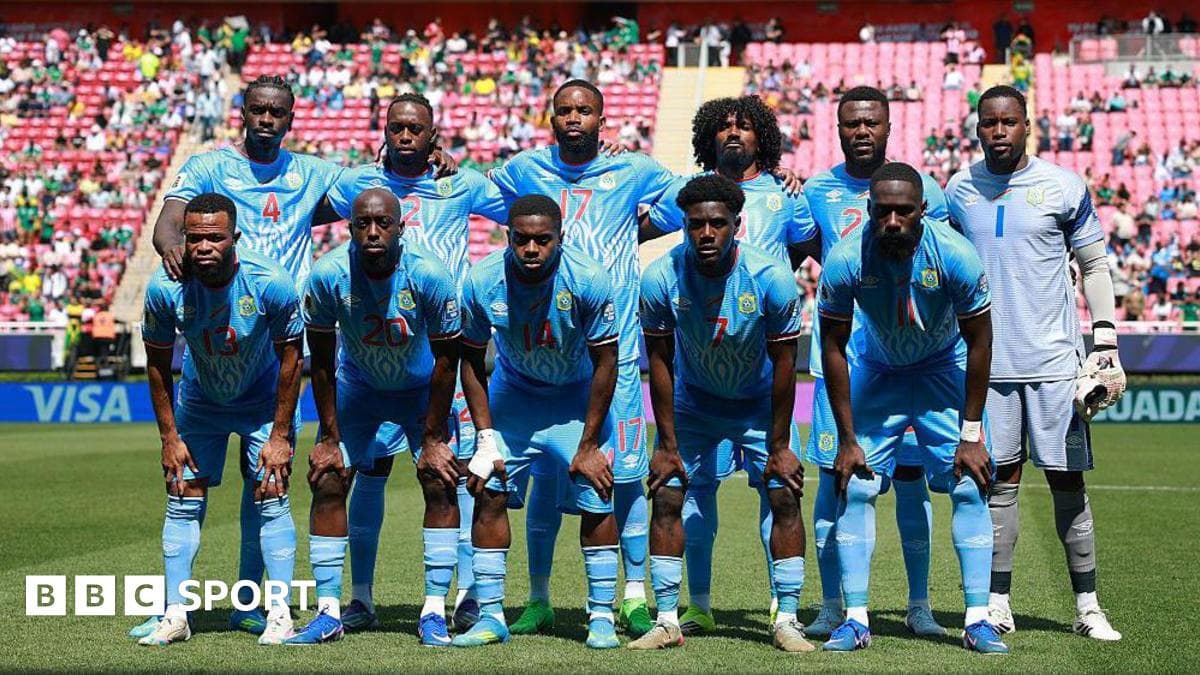
DR Congo's national team must isolate for 21 days in Belgium or be barred from entering the US for the 2026 World Cup, due to an Ebola outbreak.
The countdown to the 2026 World Cup has taken an extraordinary turn as the Democratic Republic of Congo’s national team faces a race against a public health crisis rather than a traditional opponent. With less than a month until the tournament kicks off, the squad has been ordered to isolate for 21 days in a tightly controlled bubble in Belgium, or risk being barred from entering the United States entirely. The directive, issued by the White House Task Force for the World Cup, stems from a rapidly escalating Ebola outbreak in DR Congo that has already claimed more than 139 lives and prompted the World Health Organization to raise the public health risk to “very high.” For a team that celebrated its historic qualification only weeks ago, the path to Group K matches against Portugal, Colombia, and Uzbekistan now runs through a medical quarantine unlike anything seen in modern World Cup history.
The Unprecedented Isolation Order
The isolation mandate was delivered in stark terms by Andrew Giuliani, executive director of the White House Task Force for the World Cup. In an interview with ESPN, Giuliani stated that the U.S. has informed FIFA, the Congolese football federation, and the Congolese government that the team “must maintain the integrity of their bubble for 21 days before they can then come to Houston on June 11th.” He added a blunt warning: “If they end up coming, and any of those people end up symptomatic, they are risking the entire team being able to come and compete in this World Cup.” The BBC confirmed that the Centers for Disease Control and Prevention (CDC) has banned entry for non-Americans who have been in DR Congo, Uganda, or South Sudan within the previous 21 days, effectively forcing the squad to sever all physical ties with their homeland.
Originally, the Leopards had planned a pre-tournament training camp in Kinshasa, but that was swiftly cancelled. Instead, the team relocated to Belgium, where all players and head coach Sébastien Desabre are already based outside of DR Congo. According to the BBC, this means the players themselves are not directly affected by the travel restrictions, as they have not been in the outbreak zone. However, the risk lies with any staff or late arrivals who might have been in the country. Giuliani stressed that any additional personnel “need to have a separate bubble from that team,” because a single symptomatic individual could trigger a cascade that prevents the entire squad from traveling. The CDC has deployed staff in Europe to monitor the situation, underscoring the seriousness with which U.S. authorities are treating the threat.
Public Health Emergency and Escalating Risks
The sporting drama is unfolding against a grim backdrop. Ynetnews reported that more than 139 people have died from the virus in DR Congo, while over 600 suspected cases are being tested. The outbreak has sparked riots and widespread fear, with residents queuing for testing as health workers struggle to contain the spread. On Friday, the WHO elevated the public health risk assessment from “high” to “very high” at the national level, though the global risk remains low. WHO Director-General Dr. Tedros Adhanom Ghebreyesus noted that the regional risk in Africa is “high,” a classification that has clearly influenced the U.S. government’s uncompromising stance.
This is not merely a bureaucratic hurdle. The 21-day isolation period aligns with the Ebola virus’s incubation window, meaning that any individual who has been exposed could develop symptoms within that timeframe
For the DR Congo
squad, the bubble in Belgium is both a training base and a quarantine zone. The team is scheduled to play warm-up friendlies against Denmark on June 3 and Chile on June 9, both in Belgium, as reported by the BBC. These matches will serve as critical preparation, but they also carry risk: any breach of the bubble during these fixtures or in the days surrounding them could unravel months of planning. Giuliani’s message to ESPN was unambiguous: “We cannot be any clearer.”
Disrupted Preparations and the Road to Houston
The logistical challenge facing the Leopards is immense. Normally, a World Cup-bound team would use the final weeks to fine-tune tactics, integrate players, and build match fitness in a controlled but flexible environment. Instead, coach Desabre must manage a squad under constant health surveillance, with every interaction scrutinized. The players, most of whom compete in France and other European leagues, are accustomed to professional bubbles, but the psychological weight of knowing that a single misstep could end their World Cup dream is unprecedented.
The timeline is tight. After the Chile friendly on June 9, the team is expected to travel to Houston on June 11, provided the 21-day isolation period has been completed without incident. Any delay or positive test would not only jeopardize their entry but could also force FIFA to consider contingency plans—though no official replacement mechanism has been discussed publicly. The situation places enormous pressure on the Congolese federation to enforce the bubble with military discipline, and on the players to accept a level of restriction that goes far beyond typical tournament protocols.
AI Perspective: What This Means for the Tournament
From a competitive standpoint, the isolation order introduces a volatile variable into Group K. DR Congo were already facing a daunting task against Portugal, Colombia, and Uzbekistan, but the disruption to their preparation could widen the gap. If the bubble holds and the team arrives in Houston on schedule, they will have had only two friendly matches to build cohesion under their French coach—far from ideal for a squad that relies on tactical discipline. The psychological toll of the quarantine cannot be overstated; players will be isolated from family and normal support networks at the very moment they need to be mentally sharp.
Should the worst happen and the team is barred, the consequences would ripple far beyond the Congolese camp. A World Cup without one of its qualified nations due to a public health emergency would be a historic first, raising urgent questions about FIFA’s crisis management and the viability of hosting mega-events during active outbreaks. The presence of CDC monitors in Europe and the direct involvement of the White House task force signal that the U.S. is prioritizing border security over sporting inclusivity. For now, the Leopards’ fate rests on their ability to remain symptom-free and bubble-intact for three weeks. The world will be watching not just their performance on the pitch, but their resilience off it.
Sources & Further Reading
- https://www.espn.com/soccer/story/_/id/48844229/congo-team-isolate-risk-world-cup-andrew-giuliani
- https://www.ynetnews.com/sport/article/syukyia1fl
- https://www.telecomasia.net/news/football/congo-fans-may-be-banned-from-the-united-states-for-the-2026-world-cup/
- https://www.bbc.com/sport/football/articles/cpdp8geyqxeo