Canada's 'Best Team Ever' Aims to Rewrite World Cup History at Home
Source: ichef.bbci.co.uk
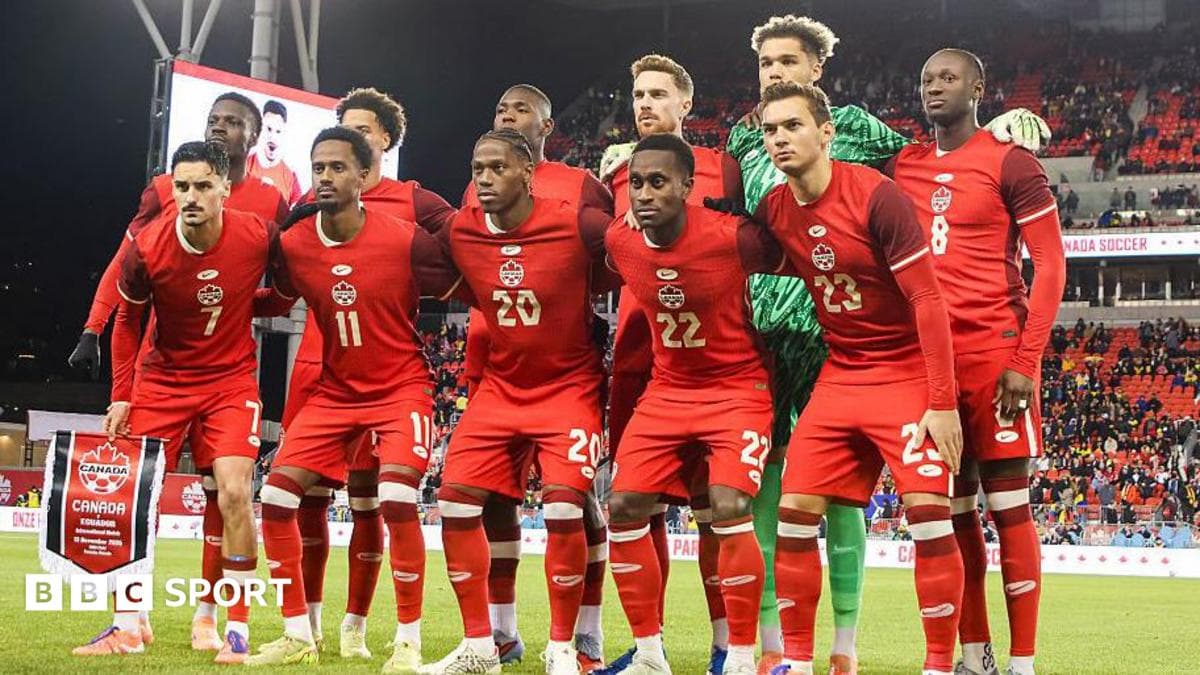
Canada enters the 2026 World Cup as a quiet co-host, boasting its strongest squad ever. After a winless history and a harsh 2022 exit, the team looks to Alphonso Davies and a new defensive core to make a statement, starting against Bosnia-Herzegovina in Toronto.
Amid the political turbulence in the United States and the swirling debates over potentially moving matches out of Mexico, it has been easy to forget that there is a third, quieter co-host for the 2026 FIFA World Cup. Canada, often stereotyped for its politeness, is preparing to make a seismic statement on home soil. According to BBC Sport, Canadian football journalist Har Johal embraces the nation’s under-the-radar status, stating, “Canada is often overlooked, we will be fine about that... We will smile, be polite, and allow the countries down south take the headlines.” However, behind that modesty lies a steely resolve within a squad being billed as arguably the greatest in the nation’s history. As they prepare to open their campaign against Bosnia-Herzegovina in Toronto, this is more than just a participation story; it is a bid to erase the pain of past failures and prove that Canadian soccer has truly arrived on the global stage.
The Golden Generation
For a nation whose men’s World Cup history consists of six matches, six defeats, and a mere two goals scored before Qatar 2022, the current roster represents an unprecedented leap in quality. The 2022 tournament in Qatar was a harsh reality check. As detailed by BBC Sport, Canada entered the competition backed as potential dark horses following a dominant qualification campaign, only to be outclassed in a difficult group containing Belgium, Croatia, and Morocco. Despite the three losses, there was a historic moment of catharsis when Alphonso Davies scored the country’s first-ever World Cup goal against Croatia, a milestone visually immortalized in a photo published by PA Media and featured in a BBC guide to the team.
This summer, the narrative has shifted from celebrating firsts to expecting results. The squad now boasts Champions League experience and defensive steel that previous generations lacked. The Sporting News profile of the team highlights the crucial role of Moïse Bombito, who has developed into a key center-back for the national team, providing a layer of security that was sorely missing during the high-octane, but defensively frail, 2022 run. The evolution from making up the numbers to being a genuine threat is the central thread of Canada’s 2026 story.
Alphonso Davies: The Talisman
At the heart of the “best Canada team ever” tag is Alphonso Davies. The Bayern Munich star is not just a captain; he is the symbol of the program’s rise. His blistering pace and technical ability allow Canada to transition from defense to attack with world-class efficiency. As the team prepares to face Bosnia-Herzegovina on the second day of the tournament, the pressure rests heavily on Davies’ shoulders to translate his club pedigree into victories for his country on the sport’s biggest stage.
The Home Field Advantage
Playing a World Cup at home can be a suffocating burden or a rocket fuel for underdogs, and Canada is banking heavily on the latter. Unlike some American venues that have been criticized for logistical nightmares and exorbitant travel costs for away fans, Canada’s hosting plan is distinctly fan-focused. BBC Sport notes that both host cities, Vancouver and Toronto, feature stadiums situated in the city center, a massive advantage that will keep the local fanbase integrated into the festivities and create an intimidating atmosphere for visiting teams.
However, this home-field dream comes with a steep price tag that has priced out many local supporters. While the on-field talent generates optimism, the ticket pricing structure imposed by FIFA mirrors the controversial costs seen across the border. The accommodation situation is even more severe. According to data cited by the BBC from downtown Vancouver, hotel rates have skyrocketed for the tournament. Compared to an average of $359 per night during the 2010 Winter Olympics, World Cup 2026 rates have surged by over 300%, with some match-day nights exceeding $2,000. This financial barrier will likely reshape the demographic of the crowd Canada is playing in front of, potentially turning a passionate, hockey-style cauldron into a more corporate affair.
The First Hurdle: Bosnia-Herzegovina
To avoid another group-stage exit, Canada must capitalize on a winnable opener. Their first fixture against Bosnia-Herzegovina in Toronto is a must-win for a team desperate to rewrite its record book. While Canada found the step up to elite nations like Belgium and Croatia too steep in 2022, Bosnia represents a tier of opponent that a maturing home nation should expect to beat. A victory here would not only register Canada’s first win at a men’s World Cup but would also defuse decades of tension before tougher tests arrive.
The Bigger Picture
The 2026 tournament offers Canada a rare chance to permanently alter the nation’s sporting identity. For years, soccer has competed with hockey and basketball for relevance; a successful run would cement the sport in the mainstream. If the defense, marshalled by the emerging Moïse Bombito, can hold firm where the 2022 team faltered, Canada could move beyond the “polite host” stereotype. They are positioned to potentially disrupt the bracket and create a legacy that finally puts Canadian football out of the shadow of its American and Mexican neighbors. A loss to Bosnia-Herzegovina, however, would risk repeating the heartbreak of Qatar, proving that despite the star power, the same old Canada still exists. The game in Toronto is more than a match; it is a defining crossroads for a generation.
Sources & Further Reading
- https://sports.yahoo.com/articles/best-canada-team-ever-bid-061531608.html
- https://www.bbc.com/news/articles/c1kyenz90m7o
- https://www.sportingnews.com/us/soccer/news/canada-world-cup-roster-2026-squad/97d5edeb349045ee8838e51c
- https://www.bbc.com/sport/football/articles/c4g8w635v49o