Canada Earns Historic First World Cup Point as Larin Rescues 1-1 Draw
Source: ichef.bbci.co.uk
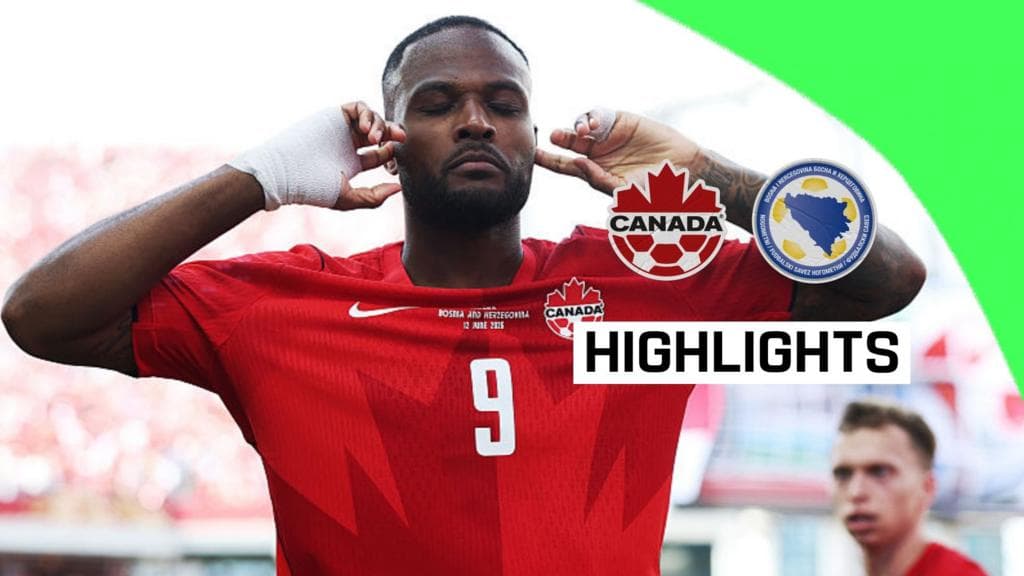
Substitute Cyle Larin scored a second-half equaliser to earn Canada a 1-1 draw with Bosnia and Herzegovina, securing the co-hosts' first ever World Cup point in a rain-soaked clash at BMO Field in Toronto.
Canada’s men’s national team finally has a World Cup point to celebrate. In a tense, rain-soaked clash at Toronto’s BMO Field, substitute Cyle Larin struck a second-half equaliser to earn the co-hosts a 1-1 draw against Bosnia and Herzegovina, marking the first point in Canadian World Cup history. The moment, captured by BBC Sport, saw Larin slot home a cutback just minutes after entering the fray, sending the home crowd into raptures and igniting hopes that the Canadians can turn their tournament debut into something more than a participation story.
The Historic Moment
The breakthrough came in typical Larin fashion. According to BBC Sport’s match recap, the Southampton forward was introduced off the bench with Canada trailing to an early Bosnia goal. Within a quarter of an hour, he had pounced on a loose ball inside the penalty area, firing low past the goalkeeper. It was a moment of pure instinct from a player who has made a career out of clutch goals for both club and country.
Fox Sports’ FIFA World Cup Now crew of Kaylyn Kyle, Bob Bradley, and Brad Guzan immediately dissected the draw, highlighting Canada’s resilience after falling behind. Bradley, a former US national team coach, praised Jesse Marsch’s tactical switch that pushed wing-back Tajon Buchanan higher up the pitch, ultimately creating the space for Larin’s equaliser. The reaction underscored that while Canada wasn’t at its fluent best, the point was a reward for their growing composure under pressure — a trait that deserted them in 2022 when they lost all three group-stage matches.
The Road to the Point
To fully appreciate the significance, one must recall Canada’s painful World Cup history. After qualifying for the first time in 36 years for Qatar 2022, Alphonso Davies’ early penalty gave them a fleeting lead against Croatia before a 4-1 collapse. They then lost narrowly to Belgium and Morocco, exiting with zero points and a single goal, Davies’ penalty. The 2026 tournament, co-hosted alongside the United States and Mexico, was supposed to be different — but the pressure was immense.
As reported by Fox Sports in late May, Marsch named a 26-player roster that blended that 2022 experience with fresh firepower. Jonathan David, now a proven Juventus striker, was the headline act, while Larin and Buchanan provided supporting firepower. Yet the shadow hanging over the squad was the fitness of captain Davies. A hamstring injury suffered in Bayern Munich’s Champions League semifinal exit to Paris Saint-Germain left his World Cup opener status in serious doubt. Marsch included the defender in the squad, but admitted it was “too soon to tell” if Davies would be ready for the Bosnia match.
Alphonso Davies’ Injury Conundrum
The Davies situation forced Marsch to prepare for life without his talisman. The squad announcement revealed a heavy defensive contingent — nine defenders in total — suggesting a flexible back-three system could be deployed with or without the speedy left-back. While no official replacement was named to start in place of Davies, the presence of experienced MLS-based defenders like Alistair Johnston and Richie Laryea gave Canada viable options to mirror Bosnia’s physical attacking style. The fact that Canada conceded from a set-piece before Larin’s goal indicated that while the defensive organisation held up decently, the absence of Davies’ recovery pace was felt in transition moments.
Reaction from the Analysts
Fox Sports’ Kyle, Bradley, and Guzan were unanimous in believing that the draw was a fair result, but they diverged on whether Canada had done enough to push for a winner. Guzan, the veteran goalkeeper, pointed to the importance of earning a point rather than risking a second defeat, noting that “in group play, staying alive after Matchday 1 is everything.” Bradley, meanwhile, highlighted that Marsch’s decision to bring on Larin and shift to a more direct approach was a clear signal that Canada would not be content simply defending their first-ever point. The move paid off, but the lack of clear-cut chances in the final minutes suggested a team still learning how to close out winnable games at this level.
The Bigger Picture
Canada’s 1-1 draw with Bosnia immediately reshuffles the dynamics of Group B, which also includes Switzerland and a yet-to-open New Zealand side. With three points likely needed for a shot at the knockout rounds, the point against Bosnia — a physically robust European side that had been tipped to battle for second spot — is a foundational result. Canada next face Switzerland, a team ranked well inside FIFA’s top 20, before closing the group against the All Whites. A draw against the Swiss would suddenly make the final match against New Zealand a high-stakes decider. For a nation that until now had only known defeat on the game’s grandest stage, even such hypotheticals feel transformative.
Larin’s equaliser might be remembered as the moment Canada’s World Cup journey truly began. And with the hope that Davies can return for the Switzerland clash, the co-hosts have reason to believe their story is far from over.
Sources & Further Reading
- https://www.foxsports.com/watch/fmc-klw3nyfqnq9p7y2p
- https://www.foxsports.com/stories/soccer/alphonso-davies-named-to-canadas-world-cup-squad-despite-hamstring-injury
- https://www.skysports.com/football/news/11095/13551279/canada-1-1-republic-of-ireland-chiedozie-ogbene-earns-draw-with-world-cup-co-hosts-in-friendly
- https://www.bbc.com/sport/football/videos/cjdgnm0m7z8o