2026 World Cup: Politics, Profits, and Pollution Overshadow the Beautiful Game
Source: ichef.bbci.co.uk
The 2026 World Cup, hosted across the US, Mexico, and Canada, faces criticism for politicization, record costs, and environmental damage, overshadowing the tournament's expansion.
"Simply the greatest event that humanity, that mankind, has ever seen" — so proclaimed FIFA president Gianni Infantino as he hyped the 2026 World Cup, the first to stretch across the United States, Mexico, and Canada. But with the opening match between Mexico and South Africa set to thunder through the iconic Estadio Azteca, a different set of superlatives is emerging: the most politicised, the most expensive, and potentially the most environmentally damaging World Cup in history. As 48 teams prepare to compete in a tournament unlike any other, the off-field controversies threaten to overshadow the action on the pitch.
The Politicized World Cup
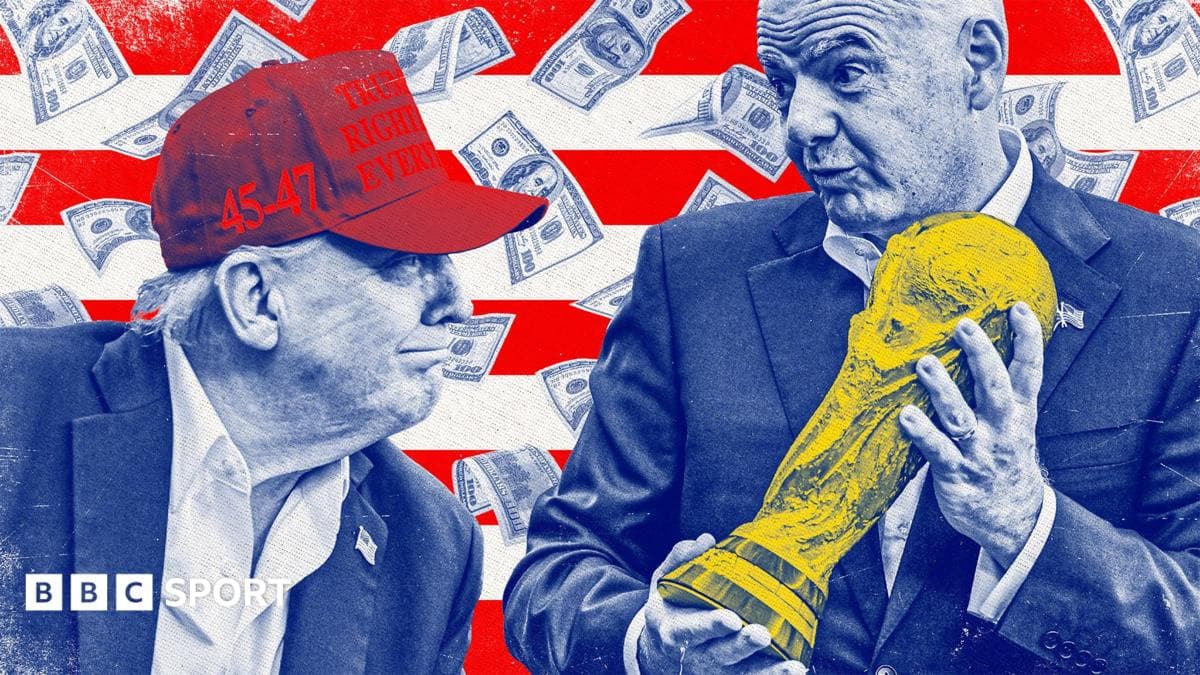
FIFA’s statutes demand political neutrality, yet this tournament has already been deeply entangled in geopolitics. According to DW, Infantino has been seen repeatedly alongside US President Donald Trump, even presenting him with a newly created "FIFA Peace Prize" during the World Cup draw. That gesture came as the United States was actively engaged in a military conflict with Iran — a fellow World Cup participant. The sight of Infantino donning a red USA baseball cap at a Trump "Board of Peace" meeting has fueled accusations that FIFA is aligning itself with a host nation’s foreign policy. The BBC adds that Trump’s immigration policies and broader political stance have sparked concerns over how fans and players from certain nations will be received, injecting an unprecedented level of diplomatic tension into the event.
The Iran Factor and Diplomatic Fallout
The presence of Iran in the tournament — and the logistical and security nightmares it could provoke — is a stark example. DW highlights that never before has a World Cup been staged while a host nation is at war with a participating country. The potential for protests, visa denials, or even player boycotts looms large. While FIFA insists the tournament will be a unifying force, critics see a governing body that has traded neutrality for access and profit.
The Financial Burden on Fans
If politicisation is the moral cost, the financial toll on supporters is equally staggering. Business Insider’s investigation, titled "How America Broke The World Cup," reveals that FIFA is set to generate a record $13 billion during the 2026 cycle, thanks in large part to ticketing practices imported from North America. Dynamic pricing and an official secondary resale market have pushed ticket prices far beyond the reach of ordinary fans. According to the report, even group-stage matches are seeing prices skyrocket, with some cities reportedly inflating public transit fares on matchdays. The BBC echoes this, noting that the soaring cost of flights, accommodation, and in-stadium concessions across the three host nations is pricing out many traditional footballing communities.
A New Era of Exclusivity
Business Insider’s data shows that this profit-driven model marks a clear shift away from FIFA’s traditional approach. By running its own resale platform, FIFA effectively sanctions scalping, capturing fees at both the initial sale and resale stages. For fans, the result is a tournament that feels more like a corporate hospitality event than a people’s festival.
Environmental and Logistical Concerns
Hosting matches across a 4,000-kilometre stretch from Mexico City to Vancouver to New York carries an enormous carbon footprint
DW and the BBC
both flag the environmental impact, with teams, officials, and hundreds of thousands of fans flying between venues up and down the continent. FIFA’s sustainability pledges ring hollow when the tournament’s very structure encourages carbon-intensive travel. The BBC also points to the searing summer heat in many US and Mexican host cities, which could endanger players and fans alike, further straining local resources and healthcare systems.
The Strain on Host Cities
Major American metropolises are already experiencing spikes in accommodation costs and security expenditures. The BBC reports that around 75% of matches will take place in the US, forcing a handful of cities to absorb the bulk of the infrastructure burden. Meanwhile, Mexico and Canada risk being side-lined as junior partners in a tournament that overwhelmingly serves American commercial interests.
The 48-Team Expansion: Dilution or Opportunity?
The expansion from 32 to 48 teams was sold as a way to bring more nations into the fold, but it has also diluted the quality of the competition. While the opening match between Mexico and South Africa offers a nostalgic nod to World Cup history, many fixtures will lack the intensity of the old 32-team format. DW notes that this dilution is a direct consequence of Infantino’s drive for more broadcast and sponsorship revenue, with the integrity of the sport taking a back seat to financial growth.
The Bigger Picture
The 2026 World Cup is a high-stakes gamble on a commercialised, politicised model that could permanently alter the nature of football’s greatest tournament. If it succeeds, future editions will likely follow the same blueprint: more teams, more host nations, and ever-higher costs. But if the controversies — from the Iran-USA conflict to fan exclusion and climate concerns — lead to widespread protest or empty stadiums, FIFA may be forced to reckon with a profound loss of credibility. For now, as the globe tunes in to Mexico City, the world is watching not just the players, but a governing body walking a tightrope between mega-event spectacle and the soul of the beautiful game.
Sources & Further Reading
- https://www.dw.com/en/what-is-wrong-with-the-2026-world-cup/a-77402635
- https://www.politico.com/news/2026/06/07/new-york-world-cup-cost-00952082
- https://www.businessinsider.com/how-america-broke-the-world-cup-2026-6
- https://www.bbc.com/sport/football/articles/cg4wqr2ev33o